Tag Archive: Alberta


Rufous hummingbird flight spider fledglings final WM

A round trip migration of over 12000 km, a heart rate of 1200 beats/minute, a wing beat rate of 3000-3700 beats/minute, having to go into torpor every evening to survive the long cold nights. Hummingbirds are about as close to mythical that exists in the bird world. I have held them in my hands, felt the vibrations of their little hearts beating and marveled at how something so small  and fragile can survive, but it’s still hard to believe they can eek out a living  in the harsh environment of the Canadian Rockies. Until this year I had never seen an active nest in the wild. So to say I was ecstatic when, with a bit of help, I came across this one would be a bit of an understatement!

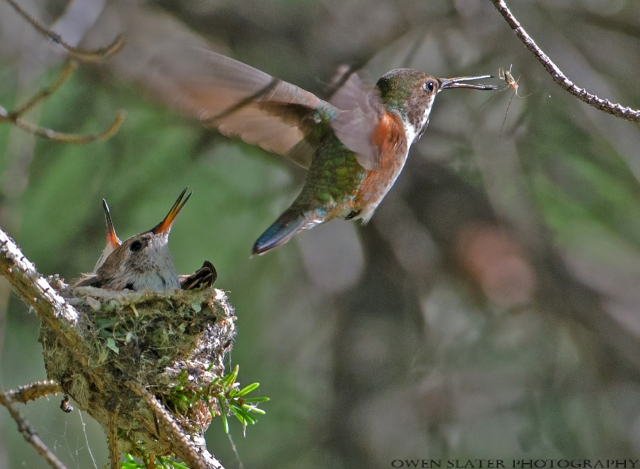
Hummingbird nests, which in themselves are works of art, are constructed with the soft silk of spider webs! Imagine how many spider webs are needed to make a nest like this?  It was placed on a thin drooping branch that wouldn’t support the weight of any potential predators (crows, squirrels, martens, etc.). It was woven around the branches and then lichen and moss were attached to the outside to provide camouflage.  As is typical, 2 eggs the size of small jellybeans were laid and incubated for just over 2 weeks. The chicks grow at an exponential rate and within 19 days they fledge, fly off with mom and never return to the nest again.

When I came across this one, the chicks were already about 1.5 weeks old and had tiny pin feathers. Contrary to what many believe, hummingbirds don’t rely on nectar to feed their young. The rapidly growing chicks need a high protein diet so they are almost exclusively fed insects. This is why in early summer if you have a hummingbird feeder you won’t see females at it. They return to the feeders later in the summer with their fully grown offspring to teach the young about the best feeding spots. This lasts all but a few days at which point the offspring are self-sufficient.

Watching a hummingbird can be dizzying, not to mention painful from all of the mosquito bites, and while I wish I could say I planned to get this photo, simply put, I didn’t nor could I have imagined it possible given the conditions! The light was low, the nest was well hidden, multiple small branches were getting in the way and as you know these birds do everything at warp speed. I knew the only way I was ever going to have a chance at being successful was if the sun’s rays found a break in the trees to penetrate into the forest and if I set my camera up on a tripod and manually focused on the nest. With the settings locked in I stepped back from the camera with my remote in hand to take in the action from a distance so I didn’t disturb them. After a few minutes the sun was low enough to get through the dense canopy and light up the area around the nest. Now all I needed was for the mom to come back and feed her babies.

Luck was on my side. She flew in and started plunging food down the throats of her chicks. After feeding them she would usually zoom off into the surrounding meadows to catch more food, but this time she did something different. She flew up from the nest but remained hovering right next to it in the beautiful soft light of the sun!  I was too far away to see what she was looking at so instead I clicked the remote as fast as possible hoping I would get one good photo of her in flight. The whole sequence lasted less than two seconds but I managed to snap off a few frames that were in focus. It wasn’t until afterwards when I zoomed in on the images that I saw what she was so intent on. Under the watchful eyes of her chicks she had spotted and caught a spider!  If you look at this photo closely you can see one of the legs of the unsuspecting spider in her beak just before she clamped down on it! The spider tried to get away by hiding behind the branch but it was no match for the hummingbird and was quickly snapped up and eaten!

While I have other images of the mom and her chicks, none tells the story of the life of this hummingbird family as well as this one! The background and shadows are a bit distracting but this photo is still to date my favourite photo of the year. I hope you like it as much as I do!
Coast is clear black bear family WM

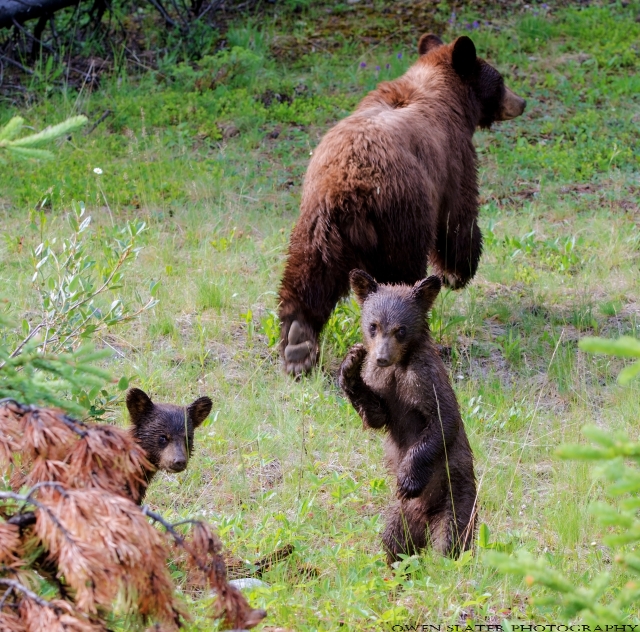
Two young of year black bears check to make sure the coast is clear before running off to catch up with mom.

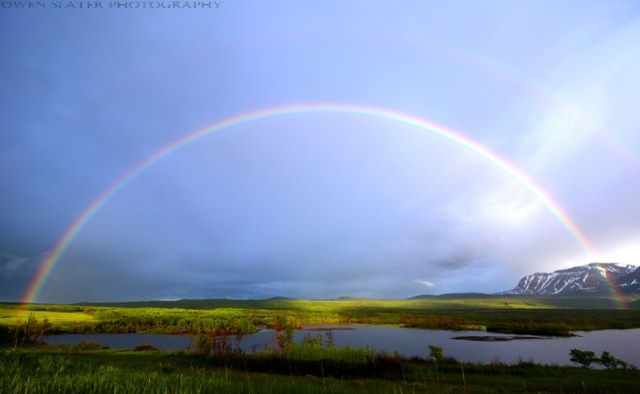
Waterton rainbow WM

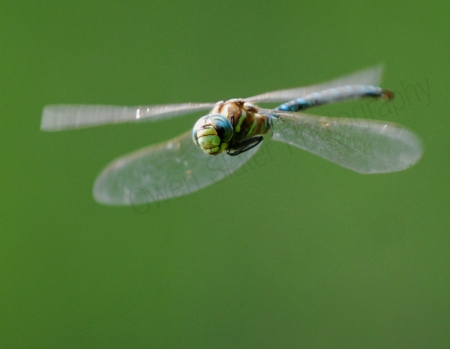
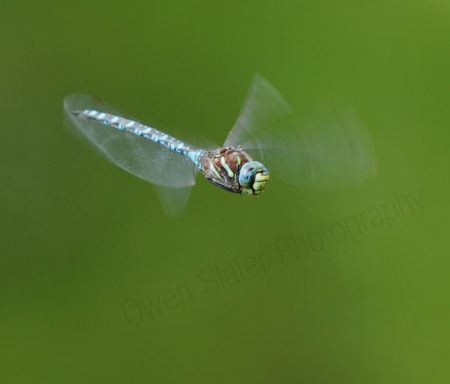
Aerial Acrobat

It took a bit of luck and a lot of patience but eventually I got a few pictures of this dragonfly (I believe it’s a paddle tailed darner) that I was happy with.
Grizzly 3 year old balanced on log WMJust like a kid (or a big kid) trying to balance themselves while walking along the railway tracks or a parking rail, this 3 year old grizzly seemed to prefer to move between feeding sites by sauntering along a bunch of dead-fall trees than following his siblings through the grass.

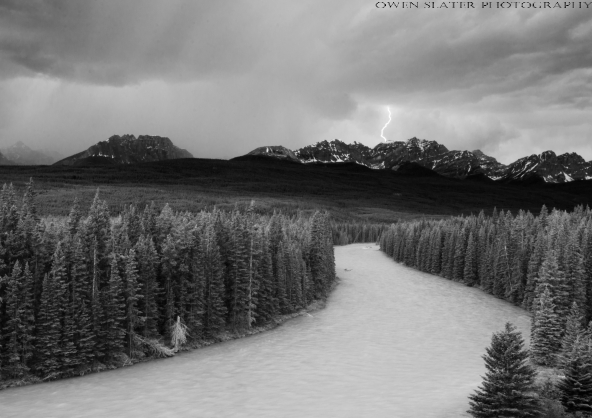
Lightning strike from Storm mountain lookout best WM

With the Bow river discoloured brown and already bursting at the seams  from all the runoff, a new storm built up and rumble over the Rocky Mountains. I had about 10 minutes before I was engulfed in the  thunderstorm, which gave me just enough time to set up my gear and safely get a few photos of the clouds and lightning strikes off in the distance. As luck would have it this strike happened in the perfect spot for my composition. Not wanting to push my luck, I packed up my gear and ran for my car as the clouds opened up above me.

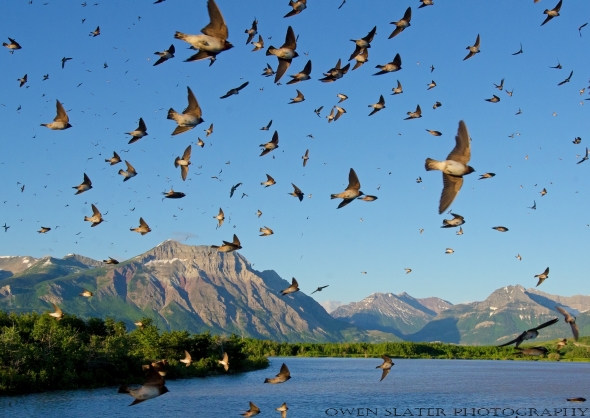
Barn swallow flock flight Waterton landscape WM

I don’t get down to Waterton as much as I would like these days but when I do make the trip it is always special. Having spent lots of time there in the past, I have certain spots I like to revisit to see if the wildlife is still following the same rhythms. Even though much of the park was closed due to the recent flooding I wasn’t disappointed when we came across the huge flock of cliff swallows I have been watching for a few years now. I took this photo with a 12-24mm wide angle lens so that gives you an idea of how close the birds get. It felt like I was in the middle of their flock and they didn’t seem concerned in the least by our presence, often times hovering only a few feet away as the strong winds blew through the mountain passes.

Barn swallow in flight 2 WM

The strong winds were perfect for the swallows to use to hover above the water in search of insects. I used the opportunity to try to get a few close-ups of them in flight. Not an easy feat even when they are close-by and cooperative.

Barn swallow in flight 1 WM

This one is my favourite of the close-ups. It clearly shows the aerodynamic profile of the wings and how the birds use their tail feathers to help stabilize and steer themselves through the air.

Barn swallow in flight 3 WM

I’m in the danger zone taking this picture but thankfully none of the swallows took issue with me and I made it out no worse for wear!


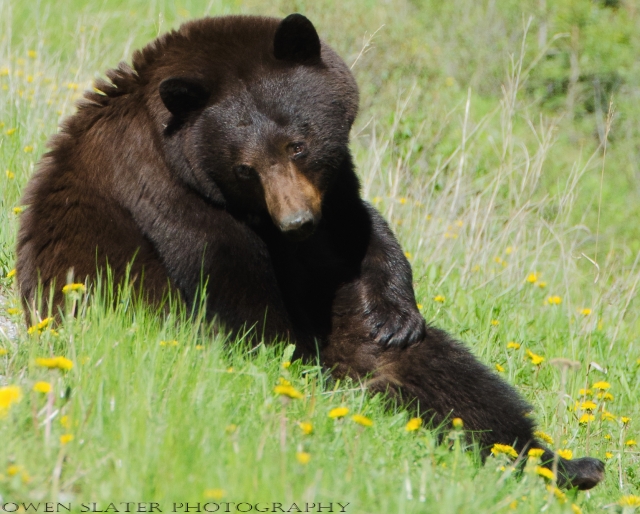
Black bear sitting and looking at dandelions WMEven when taking a break from eating, thoughts of fresh dandelions never appears to be far from this bear’s mind!


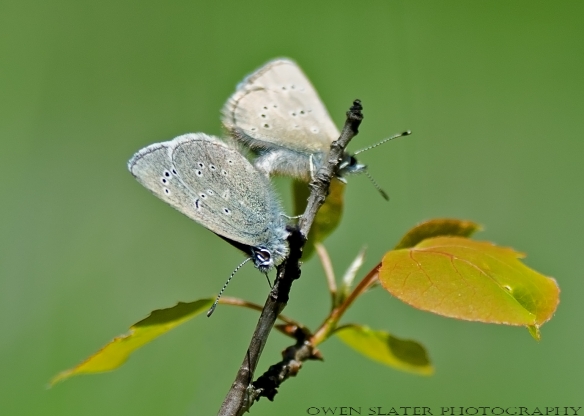
Silvery blue butterflies mating aspen sapling WMA female (closer and in focus) and male silvery blue butterfly have an intimate moment as they try to pretend to be aspen leaves! Eggs are laid singly and from this point on their adopted parents and bodyguards are ants!  The eggs hatch and the larvae feed on the young tree leaves. The ants protect the larvae from predators and parasitic wasps and as compensation for this protection the larvae feed the ants a sugary concoction known as honeydew.  The honeydew isn’t given up easily by the larvae. It’s only when the ant climbs onto the back of the larvae and uses its antenna to stroke the larvae’s hairs  that the honeydew is secreted! Overwintering occurs in a chrysalis where they transform into a butterfly and emerge in the spring to repeat the whole process.


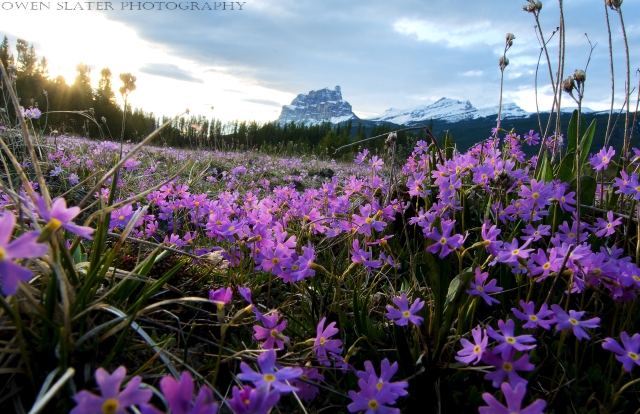
Forget me nots castle mountain WMSpring seems to take a long time in the mountains, but when it does arrive it’s always spectacular. This spring I timed it just right to be in this meadow when the forget me not flowers were in full bloom. It was well worth the year-long wait!

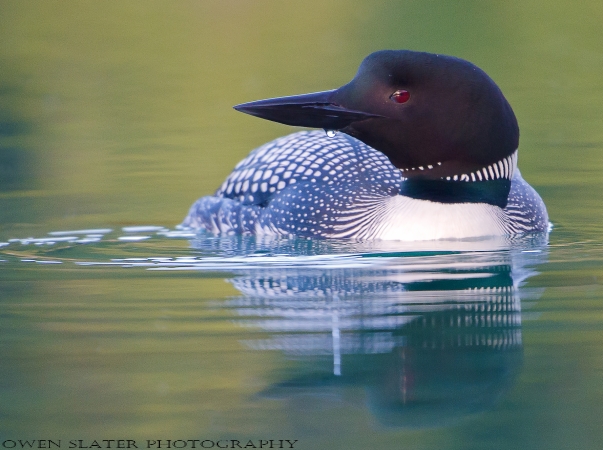
There are few sounds in nature that signify wilderness and pristine waters than that of the song of a loon.  They are one of my favourite signs of spring in the mountains and it’s always a thrill to see them! I lucked out with this one as it actually approached me when I noticed it along the river’s edge.

Loon PS WM

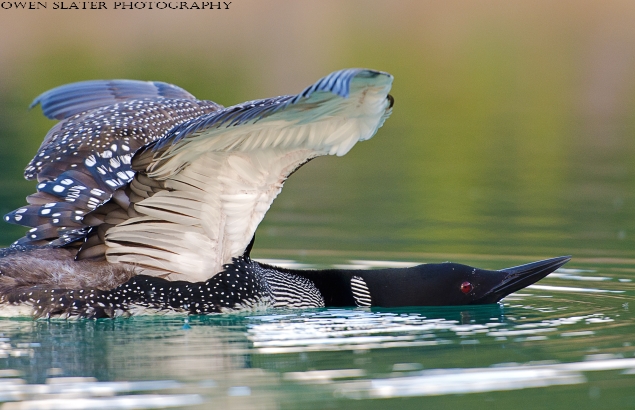
The loon swam closer and closer before it stopped a short distance away. I’m not sure if it saw its reflection in my lens or if he was displaying for some other reason, but whatever the cause he proceeded to give me a wonderful territorial display by stretching out his neck and legs and lifting his wings. After getting a few photos of this interesting behaviour I packed up my gear and left him be as he resumed his fishing nearby.

Loon territorial display PS WM

Snow Geese Migration

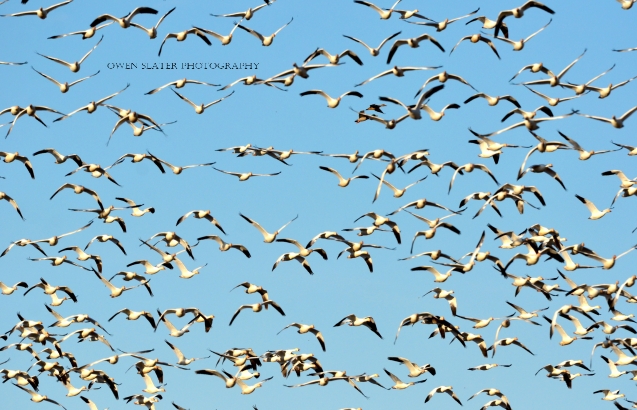
Snow geese massive flock WM

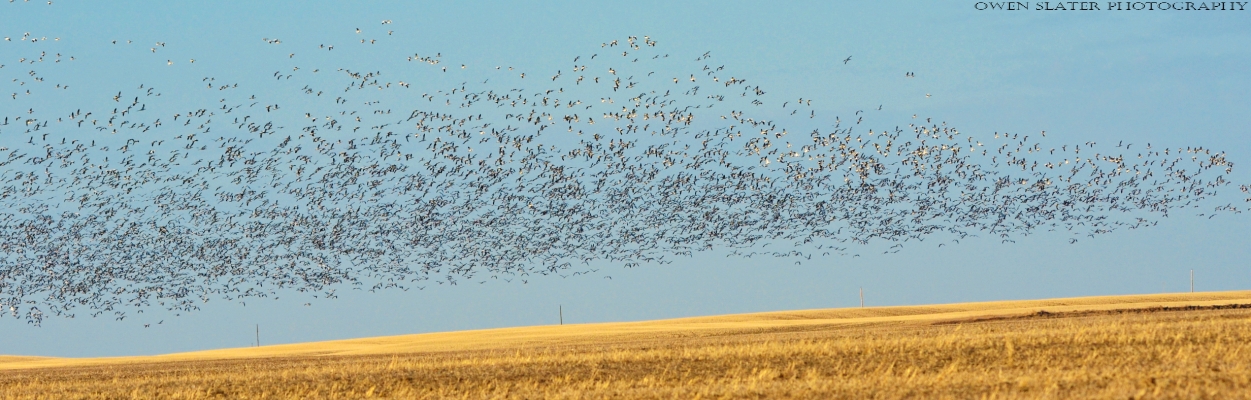
One of the most remarkable wildlife sights I have ever seen happened by chance on the drive back from Yellowstone last month. Initially it started off with a relatively small flock of about 50 snow geese passing overhead.  Soon I noticed another flock and then another, but it wasn’t until I glanced west to take in the Rockies on a clear, beautiful day that I saw almost the entire western horizon dotted with these geese! I had heard about the snow geese migration, but I had never witnessed it before. To see hundreds of thousands of birds in the sky at once was so amazing I had a hard time keeping my eyes on the road. As luck would have it, a large majority of them were headed in our direction. No more than a few kilometers up the road, thousands of these birds starting landing in a farmer’s field. This must have been a cue for the rest of the massive flock to land for the night, because within minutes there were thousands upon thousands of snow geese fluttering to the ground while making their distinctive calls along the way. I found a side road to turn off onto and started firing off photos.  In the below photo a small fraction of the goose flock flew overhead. See if you can spot another species of bird in with the geese.

Snow geese and mallards WM

A few minutes later, about a 1 kilometer stretch of the field was covered with these geese. They continued to honk as they gobbled up grain, which prompted the geese still in the sky to circle around and start landing as well. Within 10 minutes there were hundreds of thousands of birds on the ground!

There are a few examples of animals that have adapted to living with the billions of us! Snow geese are one of these. Their population has grown to over 5 million breeding birds, a 300 fold increase since the 1970’s! Much of this has been attributed to the rapid agricultural expansion that has occurred in the west, creating a smorgasbord of food for these birds as they make their way to and from the Arctic every Spring and Fall.  Other possible factors include rising Arctic temperatures. However, that only partly explains their population expansion. A lot of it also has to do with their behavioural adaptation to a changing environment.  Historically they fed in marshes but a few of the smart ones or maybe by chance some stumbled across the fact that people leave tonnes of uneaten food in the fields every year.  With the flat rolling prairies it’s also easier to see predators approaching from a distance or from the sky. This new-found migration strategy must have been passed along to the point that almost all the geese stop over in these fields to fuel up before continuing their journey.

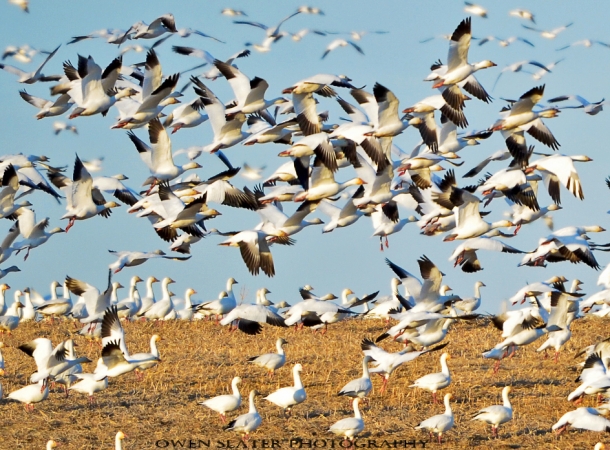
Below is a photo of the organized goose chaos.  Multiply this photo hundreds of times and you will get an idea of what it was like to be next to this massive flock. It’s remarkable that they manage to coordinate their movements enough that they are able to land, take off and feed without colliding into each other and plummet  to the ground. It certainly is an experience I will never forget.

Snow geese standing and flight WM

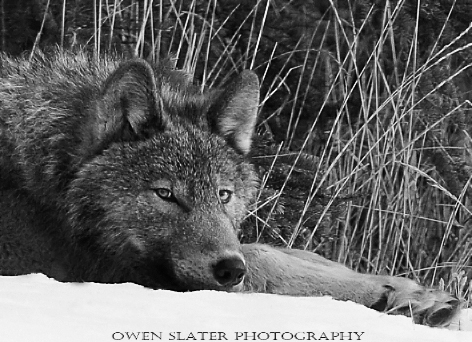
Grey pup BW PS SF WM

I guess I spoke too soon in my recent post about this wolf helping the pack with puppy chores in the spring. Just a few days ago, on the morning of Friday, April 5th this wolf’s life was cut short by a CP train in Banff National Park.  The young male was just shy of its one year birthday.

It really shouldn’t come as a surprise to anyone that it was killed by a train, after all this has been a routine event in Banff for years now. Trains remain the number one killer of Banff grizzly bears and in the past year numerous black bears and several wolves have also met their demise on the tracks. This is not even mentioning the elk, deer, moose and coyotes. Everything from the smallest birds to the largest mammals are commonly hit by the trains as they travel through the park.

The pack that this wolf belonged to has 2 of 6 pups remaining from last years litter.  Only 1 of 7 pups from the previous year has survived. Of the two surviving 1-year-old pups, one was hit by a train in late fall while she and the rest of her family were feeding on a rail killed deer carcass next to the tracks.   Somehow this wolf managed to survive the strike and miraculously has made it through the winter and appears to have almost completely healed from what I suspect was a fractured left hind limb. Of the seven pups born the previous year all but the surviving wolf were either hit by trains or cars.

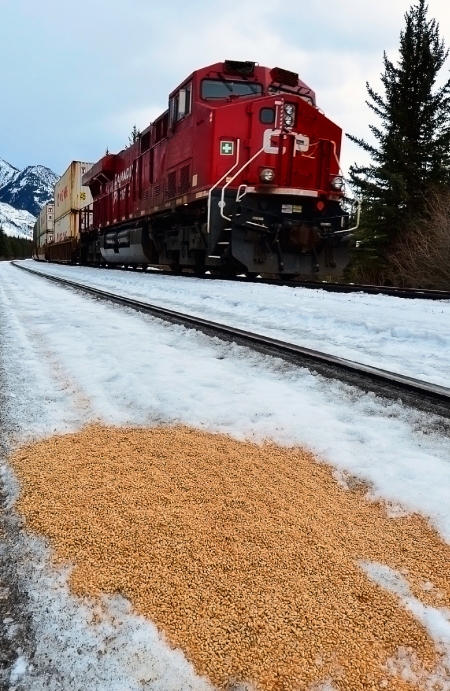
Efforts continue between Parks Canada and CP Rail to research the factors that influence these train mortalities.  While it’s great that they have committed time, money and staff to this problem, the fact remains that train caused wildlife deaths in the park have occurred on a frequent basis for years and despite some attempts to address the problem, it continues to happen on a very regular basis.The vacuum truck that is supposed to remove the grain spills doesn’t seem to come along the high risk areas of the tracks during the winter and it would seem that grain spills, which as you will see are pretty obvious, go unreported. Wildlife-train collisions are also not always reported and the strikes that are reported are not always appropriately removed from the tracks.  Add in that parks staff have been cut thin to the point that they can’t always adequately respond to all the human wildlife conflict events in a timely manner and several other variables that are a product of chronic underfunding and we have a recipe for more wildlife carnage.

CP train and spilled grain PS SSOne has to see the hypocrisy that signs in Banff state it’s illegal to feed wildlife and yet these trains are doing just that, like a giant cafeteria conveyor belt. Expecting others to act responsible while allowing this to occur is a perfect example of do as I say and not as I do.

While it is simplistic to say that all the train mortalities are caused either directly or indirectly from the grain, one has to accept the fact that even if grain or other food attractants aren’t present at the time of the event, animals will still travel the tracks looking for the free handouts whether they are there or not. After all, this has become a learned behaviour passed down from generation to generation. They have been condition from the time they are old enough to walk or fly that the tracks offer a steady supply of food so one cannot truthfully state that a particular train mortality wasn’t associated with grain or a carcass simply because these attractants weren’t present at the time of death. This is misconstruing the root of the problem. It will take years of continuous negative feedbacks for animals to stop coming to the tracks to look for handouts. The reduction in spillage to current levels is a start but breaking this pattern will require no less than complete prevention of these spills and quick removal of any carcasses from the area.  Only then will researchers be able to tease apart the other minor factors that might be at play.

In the grand scheme of things this is only one more human induced wildlife death in the long record of deaths that have happened in Banff and all along the tracks from Saskatchewan to Vancouver. However, it should serve as a prime example to every stakeholder that sooner than later added actions are required to address this problem and there is no better place to start than in Banff.  Parks and CP rail should not simply state ongoing research will be used to investigate possible solutions. Short term solutions are required now while the longer term options are investigated. However, the buck doesn’t just stop with them. Instead of visitors just complaining about all the most recent deaths and demanding something be done, they too should take actions of their own. If you are a visitor to the park and are walking near the tracks, report any carcasses, grain spills or any other concerns to Parks by calling Banff Dispatch at 403-762-1470 (24hrs/day). Even better if you can follow-up to make sure that the problem has been addressed and if it hasn’t, report it again. Every time a call is made a paper record is created that must be reviewed by Parks Canada management to make sure that the problem is taken care of. Other options include photographing what you see and forwarding it along or contacting Parks and CP staff directly with your concerns.

My hope is that this most recent death helps initiate more concerted efforts by everyone to actually solve this decades old problem. One can still hope can’t they?

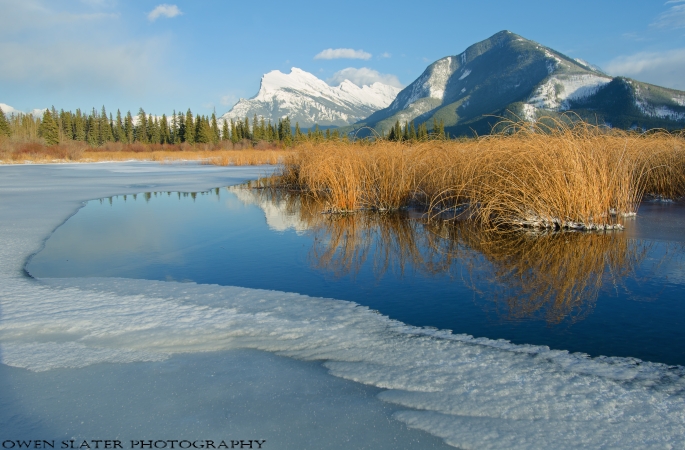
Rundle reeds ice PS LF WM

These reeds have been encased in ice and snow for much of the winter but over the past several weeks it has slowly started to melt away. The robins, starlings and male red winged blackbirds have returned, the bears are coming out of their dens and we have daylight past 8pm. A great time to be in the Rockies!

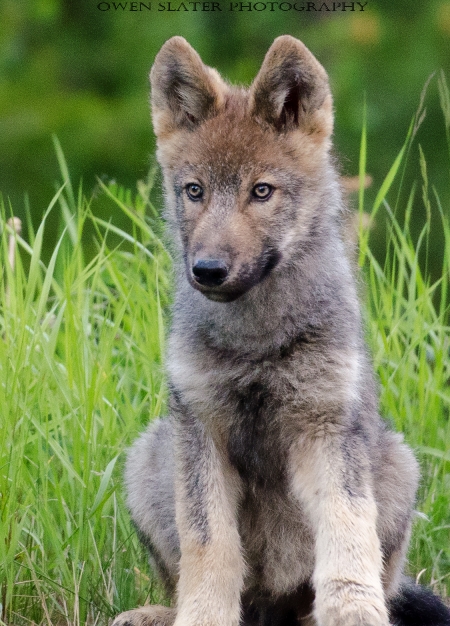
Grey pup 3 months PS SS WMA 3 month old grey wolf pup takes in its surroundings after recently leaving the den.

Grey wolf pup 10 months PS LFSeven months later he has grown into an impressive animal with thousands of miles under his feet and has learned how to hunt deer and other small prey on its own. Over the coming months he will be relied upon to help provide food, puppy sitting duties and protection for a new litter of pups.