Latest Entries »

Dall sheep lamb watermark

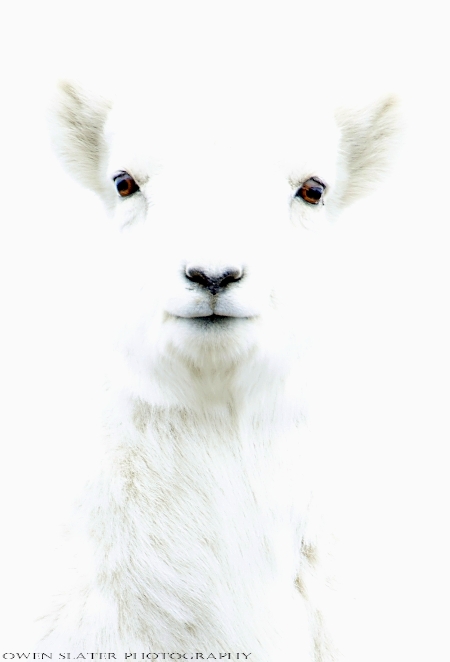
One more for today. This lamb of the year watched me from a comfortable distance on a snow covered mountain near Destruction Bay, Yukon. The herd blended in so well with the snow it was hard to spot them initially. I wanted to mimic this in my photo so I overexposed more than typical to create this effect.

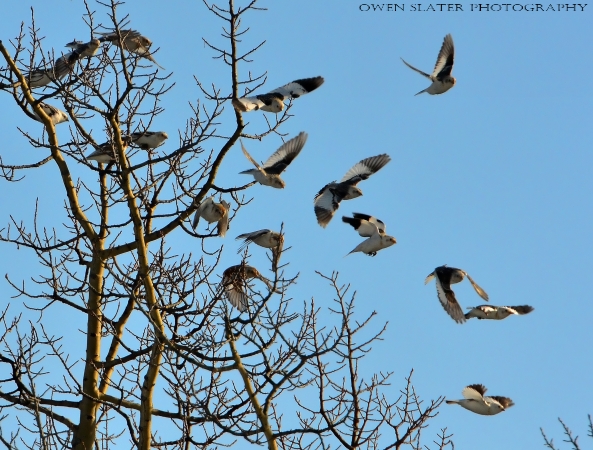
Snow buntings in flight 1 watermark

In a co-ordinated burst, a flock of snow buntings cascades from a tree to fly off in search of food.

Mountains sunset duck ripples watermarkA green winged teal creates ripples in the water as the sun sets in Banff National Park

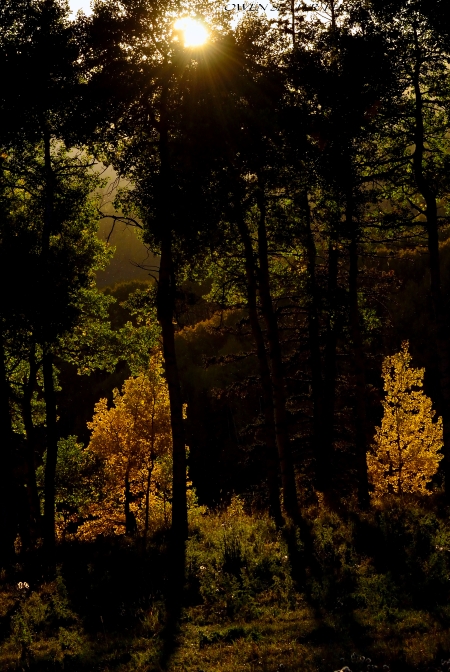
Sunlight through trees fall colours adobe watermark

Bald Iceagle

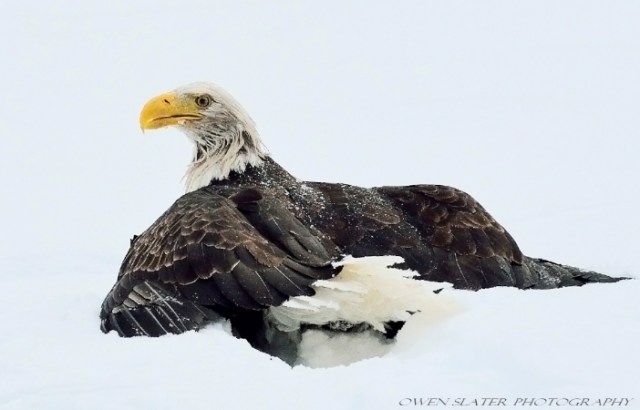
Iced up Eagle watermarkLast weekend I came across a peculiar scene with this bald eagle literally swimming across an icy cold river using its wings as oars.  Up in the sky the distinctive call of ravens could be heard as they circled. The eagle managed to make its way to shore, climbed up a bank and rested in the snow. After several minutes it attempted to fly off but was unable to get any lift. It did this a few more times but still couldn’t get off the ground. Thinking that it had fractured one of its wings, I put my gear down and hiked into the forest to try to keep out of its sight while I approached it. I got to within about 30 feet before I ran out of any tree cover. By then the eagle had spotted me and I made a dash for it (don’t worry, I’m a trained professional and I have handled many birds of prey!). It quickly beat its wings and ran through the snow as fast as it could. Just as I was getting close enough to grab it, it managed to get out onto an ice-flow that would not support my weight. It seemed to know this because it turned and watched me as I came to a halt. Thinking that it might come back onto more stable land, I headed back into the forest to wait. About thirty minutes later, I moved into a better vantage point but it must have caught sight of me. With its powerful legs it sprang up into the air and managed to get just enough lift to take off. Thankfully, it cleared the river, flew several hundred feet and managed to perch in a nearby tree!

While I didn’t see the initial incident it is highly likely that the ravens managed to ground the eagle in the river. Once there, it became waterlogged. By resting in the powdered snow, some of the water was absorbed while the rest turned to ice. By repeatedly trying to take off, the ice crystals on the tips of the feathers would have been knocked off, which must have been just enough for it to regain flight. Thankfully no broken bones, but likely a bruised ego and a new respect for ravens! I on the other hand learned that eagles can swim and I have a new respect for their ability to tolerate frigid conditions and still survive!

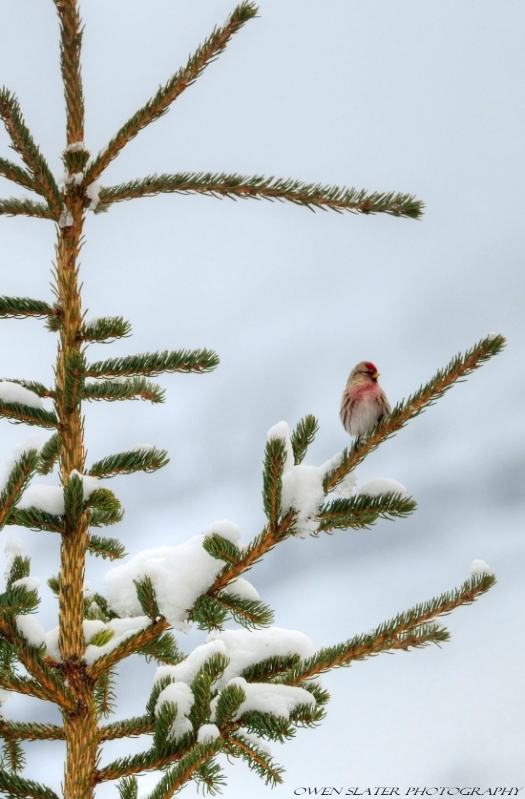
Red Poll

Male red poll watermark

A male red poll (males have crimson breast feathers in addition to the red cap) sits on snow covered fir tree in Banff National Park

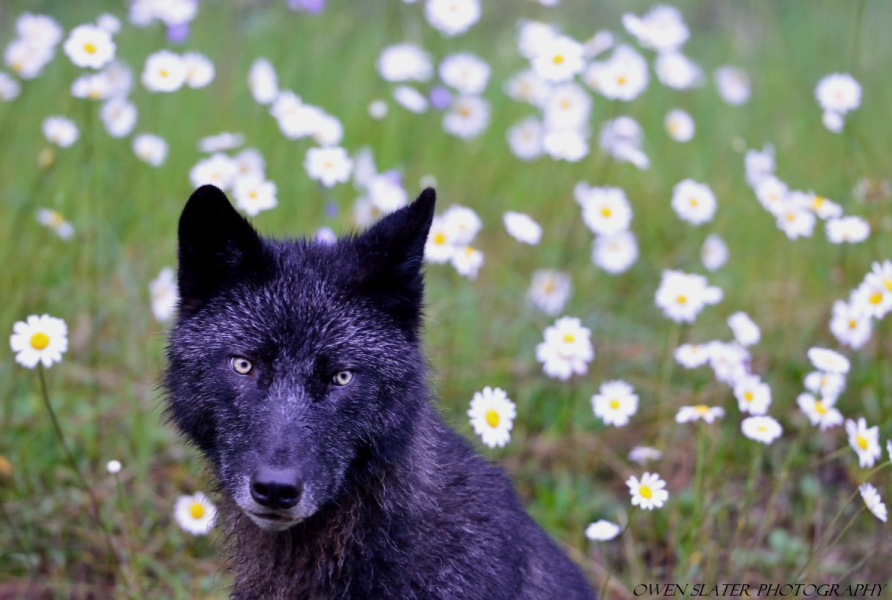
From Little Red Riding Hood to present day, the wolf is often given an image that is not even close to factual. Hollywood continues to portray wolves as human killers (eg. the latest Jason Bourne film) and groups advocate for open hunting seasons because they feel the wolf is killing all their deer or free ranging livestock. On the other extreme are the advocates that think wolves can do no harm. As usual, somewhere in between these two extremes is where the wolf belongs. Here, one sits down in a field of daisies just long enough for me to snap off a few pictures before rejoining the pack.

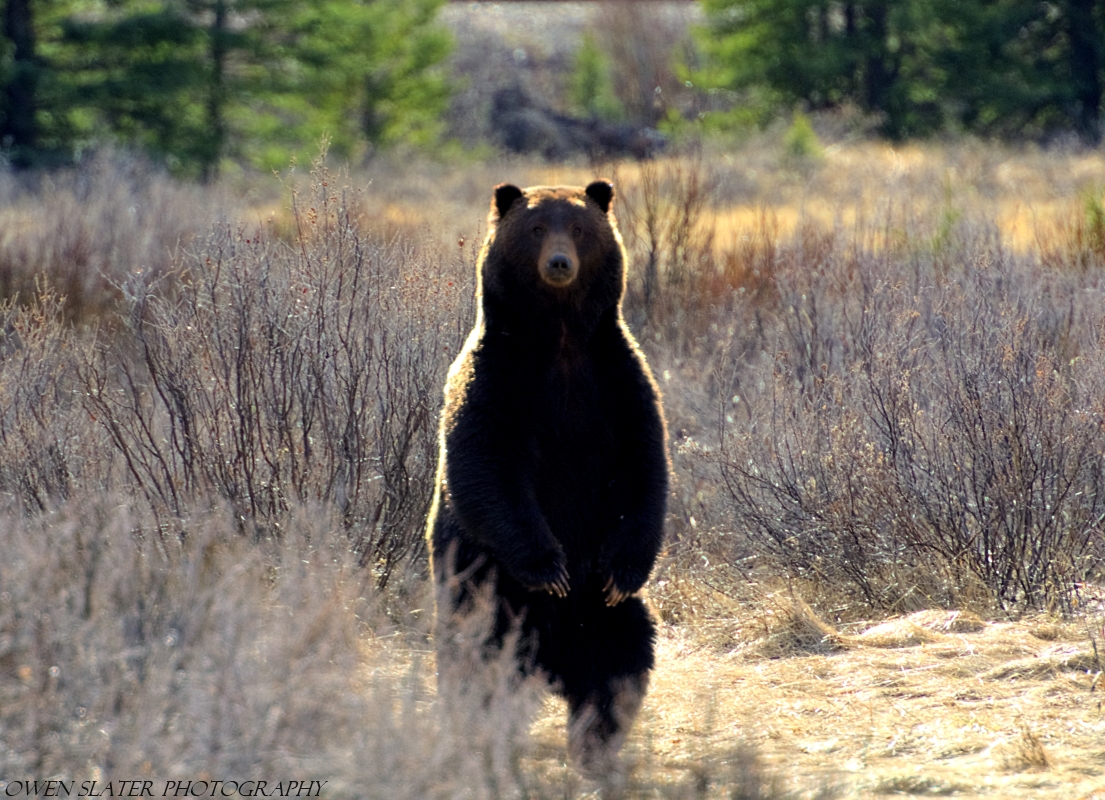
During dusk and dawn when wildlife are usually more active, I spend most of my time in the car since it serves as a natural blind that animals are less likely to react to. Obviously, this involves a lot of sitting so after several hours I need to stretch my legs. With some of the best scenery around, it is not hard to find somewhere to hike and take photographs.  On this particular day I loaded my gear into my backpack, made sure I had my bear spray and headed out with camera in hand. As I came around a clump of spruce trees I spotted some movement in the thickets about 200 feet away. I immediately retraced my steps back into the shadows of the trees to not be as visible and from there I was able to get a good enough look to figure out that it was a large grizzly coming in my general direction. It wasn’t until I had my bear spray in hand that I called out and stepped into the open to alert it to my presence. Only then did I notice an adult wolf was only a few feet behind the bear! Before I had time to take any photos, the wolf disappeared back into the thicket, while the bear stopped and went up on its hind legs to get a better look at me. Facing the bear, I slowly backed away. The bear went back down on all fours, turned to its right and ambled off while I retraced my steps back the way I came. I’m sure the wolf was watching everything from a distance making sure that both the bear and I continued out of the area.

In October, with the fall colours at their height,  I came across this seven month old wolf pup making its way along the banks of this river. Since I was on foot, I quickly hid behind a tree to not be spotted. Luckily the wind direction was in my favour as well.  Without knowing I was there, it stopped and appeared to look at its reflection in the turquoise waters, rooted around for some rodents and then I thought it would disappear into the thicket. However, it came around the corner and started trotting towards me. I crouched down on the ground and stopped taking photos to not give my position away, as the faint sound of the camera would have easily been picked up my the wolf. It proceeded to walk about 30 feet from me before it rounded another corner and went out of sight.

Herd of Moose

Continuing with the theme of unusual animal sightings, this one occurred earlier this year.  Unlike in Newfoundland, moose generally live very solitary lives in Alberta.  Prior to this day, the only time where I have seen more than two unrelated animals together was during the breeding season. So it was very surprising to be driving along a back country road and come across this scene! We immediately slammed on the brakes, grabbed our cameras and started taking photos. In total there were 11 moose in this one meadow, with 7 in this frame. There were two mothers with calves and several yearlings and two-year olds. With hunting season just over they were still a bit skittish, so we grabbed a few photos, got back into the car and continued on.

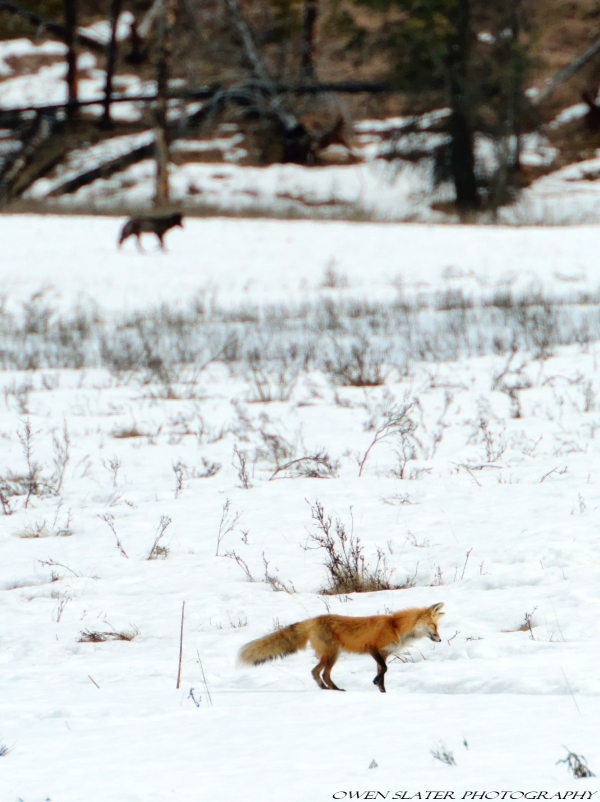
A wolf was hunting for rodents in the back of this meadow when a red fox nonchalantly trotted into the middle of the meadow right in front of the wolf. Since wolves are known to kill other carnivores if they come across them, I expected to see either the fox quickly run and hide or the wolf chase after and try to kill it. Instead they both just glanced at each other and then almost in unison, they resumed hunting. For several minutes they mimicked each others hunting stance, before the fox decided to move on and look for prey elsewhere.

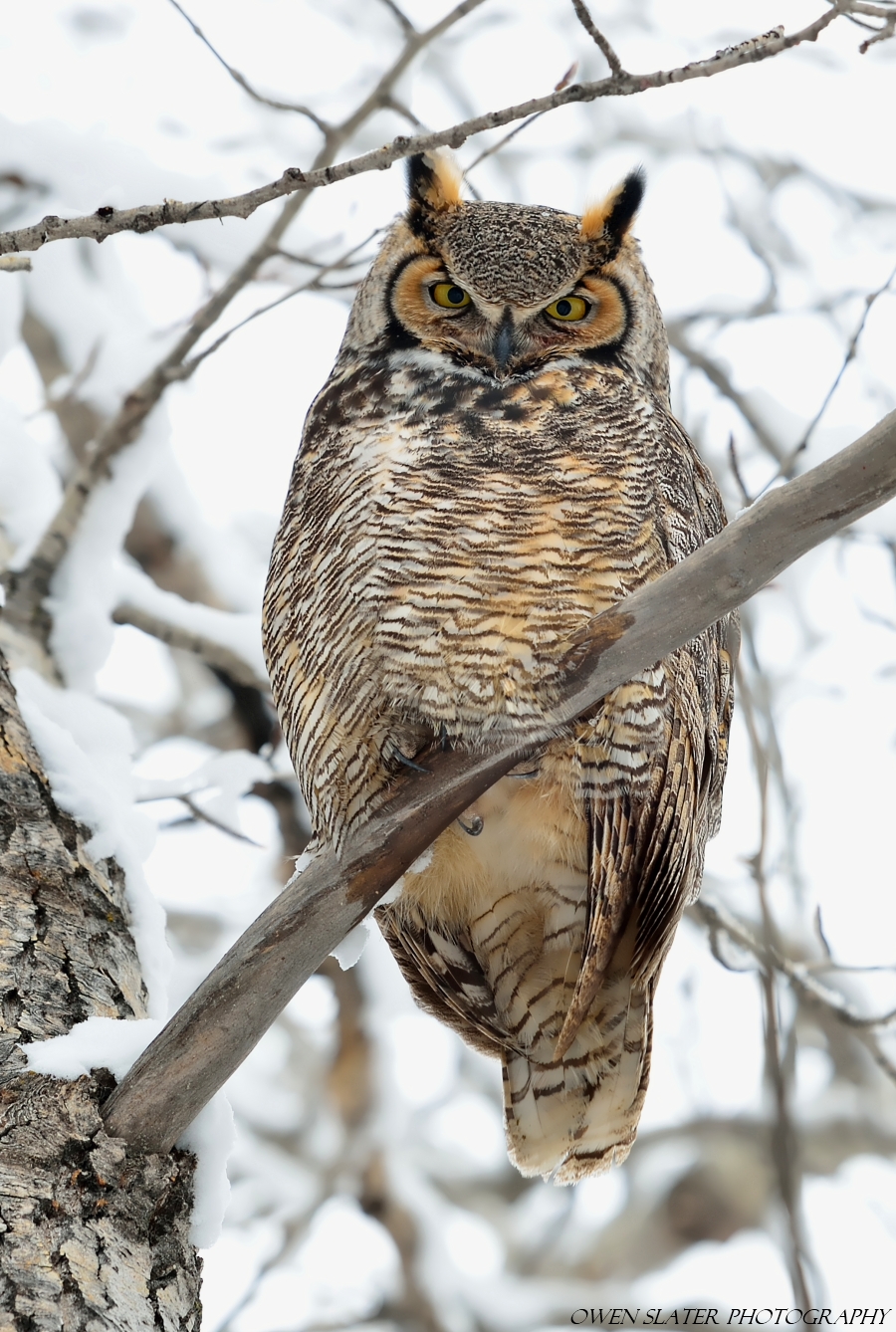
I often drive several hundred kilometers and spend countless hours outside trying to find wildlife to photograph. However, sometimes it’s much easier. This past week I  just had to look out my office window!  Sitting in a stand of aspen trees was this great horned owl. Not surprisingly the usual four squirrels that frequent the backyard were nowhere to be seen. I quickly grabbed my camera, took a few photographs and returned to the warmth of my office to watch the owl from a distance.

Please click on the image to view a much larger version.

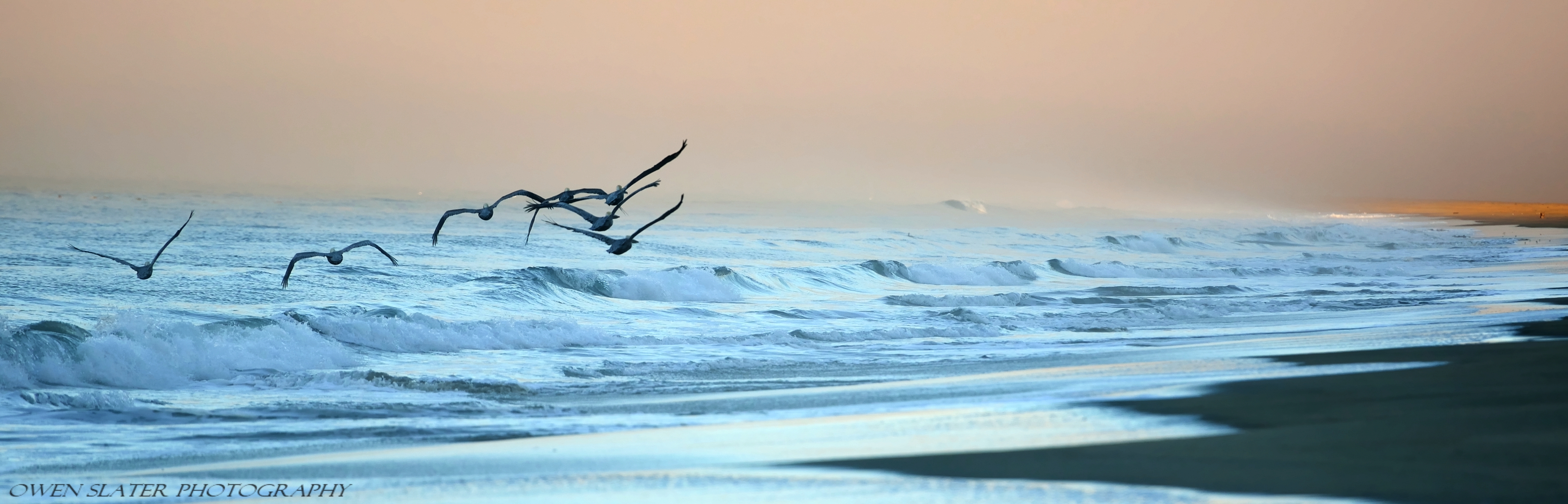
Similar to surfers, pelicans have figured out how to harness energy from waves. However, it is actually more closely related to what a pilot does during take off and landing than to surfing. Interestingly, it appears pelicans are one of only a few coastal birds to have figure this out.  By flying so close to the rolling wave, they are able to gain lift, speed and decreased wind resistance created by the air that gets trapped between the water surface and the underside of the wing. This air cushion essentially supports the bird’s weight just above the water’s surface. As the wave increases in height the pelican rises up parallel to the wave to maintain lift. Just prior to the wave breaking, the bird will then descend along the leading edge of the wave, gaining speed along the way much like a surfer does. By doing this they can greatly increase their flight speed without ever having to flap their wings.  The key for the pelican is to build up as much speed as possible before the wave breaks. Just as the wave starts to crash over itself the pelican resumes flying to get above the resulting air turbulence. As the next incoming wave moves into shore they reposition themselves along its leading edge and repeat the maneuver. In this way they can travel much longer distances much more quickly and with less effort than other birds. While pelicans and albatross were showing us how to use this effect well before we recognized its existence, it wasn’t until the Wright brothers came along that anyone used it. Even then, no one knew what it really was. Now the phenomenon is well described and in the aviation world it’s known as ground effect. Anyone that has flown in an airplane has felt this either at take off or landing. In large planes it is most noticeable just before landing, when the plane seems to hover just above the ground and actually gain speed just prior to touchdown. In small planes it is more noticeable at take-off, when the pilot maintains the airplane just off the ground to help increase the ground speed before ascent.  Next time you fly watch for this effect and you will surely notice it if you haven’t already.

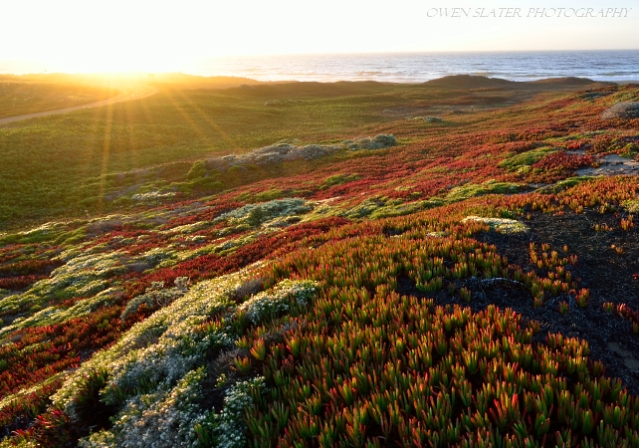
Enough of the winter photographs from Alberta for this week. Back in California I took this photo near the lighthouse at Point Reyes. The dominant plant in the landscape is known as ice plant (Carpobrotus edulis), which was originally introduced from South Africa to prevent soil and sand erosion. However, the plant has become invasive, strangling out other native species. Making matters worse, since the plant has a shallow root system when it rains the leaves engorge with water, get too heavy and actually cause entire slopes to collapse when the roots can no longer support the weight of the plant. Efforts are ongoing to remove it from much of the coastline to restore the landscape to its original form. Complicating efforts is its appeal with local gardeners for the bright red colour that the leaves turn in the fall.
PS. Too all the Boardwalk Empire fans out there…sorry that your favourite character was killed off in the TV series. However, thanks for checking out my site!

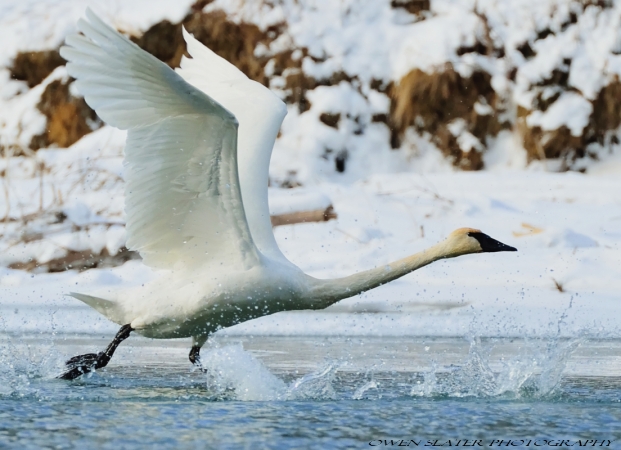
Back in Alberta last weekend, a trumpeter swan propels itself up and out of a narrow section of the Bow river that hadn’t frozen over yet.