

With the boat only a few inches above water, two fisherman attempt to catch Nile perch and tilapia in Lake Victoria.
With the boat only a few inches above water, two fisherman attempt to catch Nile perch and tilapia in Lake Victoria.
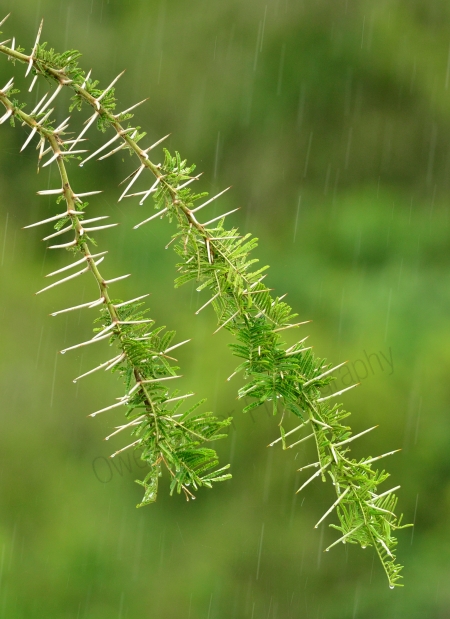
With thorns up to 4-5cm in length, the leaves of the acacia tree are somewhat protected from grazing herbivores. By using a slow shutter speed I was able to get the raindrops streaking through the photo during a downpour in Lake Mburu National Park.
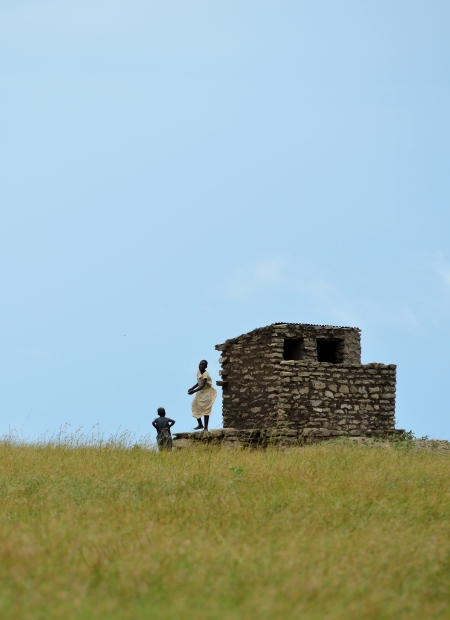
With an audience of one, a young girl puts on a dance show in a small village adjacent to Queen Elizabeth National Park.

I’m not a big fan of Mitsubishi vehicles but I took this SUV through everything and it never once got stuck. This photo was taken from Pelican Point in Queen Elizabeth National Park. It is very infrequently visited and so the ‘road’ had grown in with grasses and acacia thorn trees, but the view was well worth the trip. In the distance is the Rwenzori mountain range which is a UNESCO World Heritage site and still on my list of places to visit in Uganda.
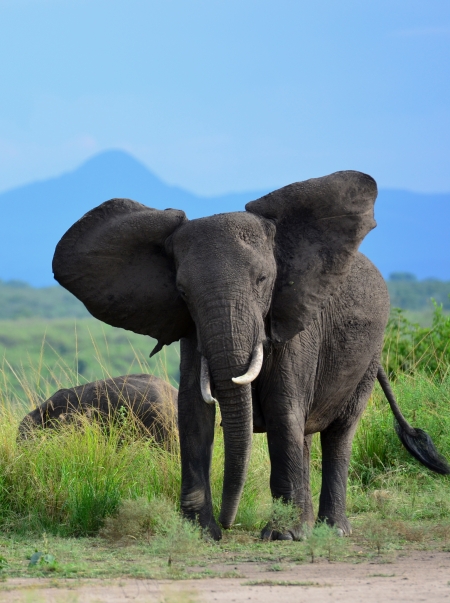
Even from a 50 meters away, this matriarch of the herd was not satisfied and made it known with her ear flapping and trunk waving. I moved further up the dirt road to give her more space to safely cross with her baby and the rest of the herd.
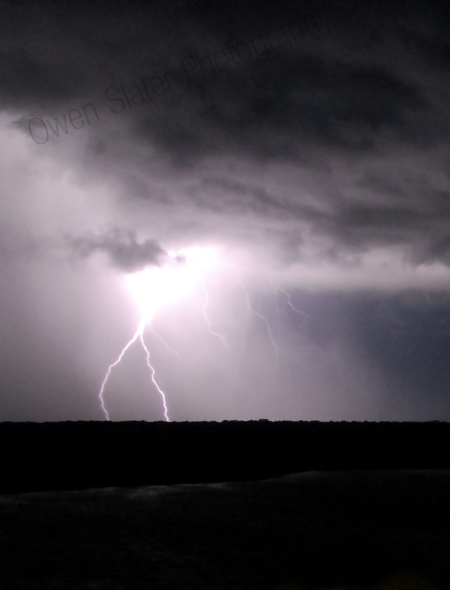
All afternoon the skies were threatening to put a damper on my game drive but thankfully they held off until I was under a patio at Mweya Safari Lodge overlooking the gorge and peninsula. The lodge was much too expensive for my budget but they served an excellent 4 course meal for a reasonable price to anyone that wondered in. The place I was staying was just down the road and the food was not nearly as good, nor was the view anything to marvel at so the lodge was perfect. I didn’t have room to bring my tripod on this trip so when the storm hit I used the dinner table to set the camera on and set the shutter speed to 20 seconds. The first few tries I was unsuccessful, but eventually I got lucky. At least seven different bolts of lightning can be seen in this photo.

One of my favorites…four men and a boy sped past me on a motorbike along a narrow dirt road in the western tip of Queen Elizabeth National Park near Pelican Point. It is doubtful that they were late for an appointment as there never really are exact times for anything in Africa! The two long sticks carried by the guys are used to herd cattle and so maybe they were heading out to herd their livestock. As I snapped off a few photos the man on the back and the little boy turned to have another look at me, causing the driver to firmly grasp the handlebars and try to keep the bike on track. Thankfully the delicate balance was maintained and they continued on up the road. It never ceases to amuse me to see the various means of transporting people and possessions in Africa, and likewise Ugandans never cease to be amused by seeing a “mazungu” (Swahili for European).
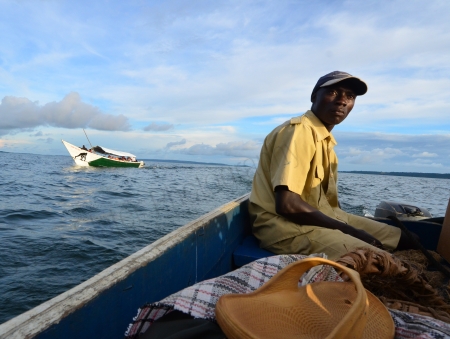
It is hard for me to believe that it has been 10 years since my first trip to East Africa and Uganda in particular. At the time I was contemplating going back to school to become a veterinarian and my time at Ngamba Island solidified this for me. To come back to Uganda as such and to help teach fellow veterinarians about great ape medicine was a very rewarding and reflective experience for me. Over the next few weeks I will post some of my photos and experiences from my most recent trip. I took this photo of the captain of our boat heading back across Lake Victoria after a day at Ngamba Island Chimpanzee Sanctuary.
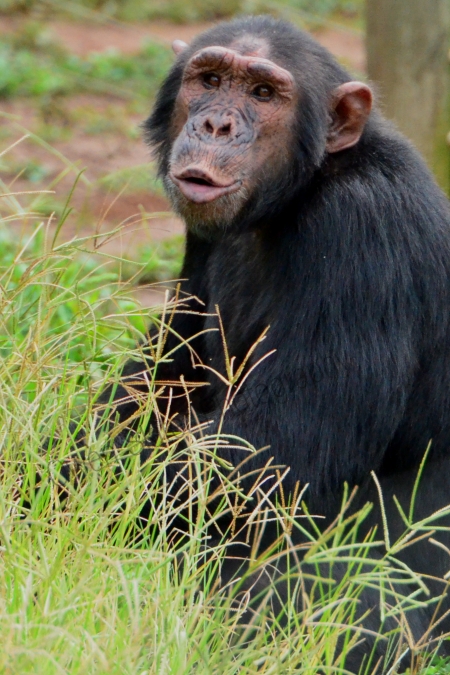
First a disclaimer…this photo was taken in captivity unlike the rest of my wildlife photographs. Baluku was about two years of age when I met him at the headquarters for the Ngamba Island Chimpanzee Sanctuary in Entebbe, Uganda. Like almost all of the chimpanzees at this sanctuary, Baluku was orphaned due to illegal poaching. His family was shot and killed for bushmeat and Baluku was taken into a town in the southeastern tip of the Democratic Republic of Congo where he was to be sold as a pet. Thankfully, he was confiscated and brought to Ngamba Island where he now lives. The sanctuary is on a 100 acre island, with about 97% of the tropical rainforest for the chimpanzees. The sanctuary has done an incredible job at not only improving the welfare of the chimpanzees, but also helping the local communities by providing them with various resources to improve their livelihoods. Outreach programs throughout Uganda educate the public about the threats to chimpanzees and other native wildlife and the need to conserve this endangered species. The sanctuary is a member of the Pan African Sanctuary Alliance (PASA), which is dedicated to animal welfare, including all aspects of primate conservation and health. PASA holds an annual veterinary healthcare workshop, which I have been assisting with for several years. The purpose of this workshop is to train national veterinarians in all aspects of primate health, including veterinary aspects related to reintroductions of great apes back into native habitats. Both of these organizations have done a tremendous amount for great apes in Africa and I encourage you to visit their websites to learn more about what they do and to make a donation.



 Owen Slater Photography