Category: Mammals


muskrat and ducks water 2 watermark

One afternoon I crouched by a small piece of shallow open water on an otherwise frozen lake trying to get some decent photos of green winged teal. Just as the ducks went bottoms up to forage for food a muskrat appeared from the bank. It immediately spotted the teals and to my surprise, swam directly towards them. The unsuspecting birds continued to dabble away at the bottom of the lake as the muskrat quickly closed the gap. Just as it was about to reach one of them, the ducks spotted him and in a burst of energy they frantically splashed and paddled away. Not to be discouraged, the muskrat picked up his pace and gained ground (or water) on them. Like a wolf separating off the weakest animal, the muskrat honed in on the slowest one. With less than a foot between them, the muskrat went into stealth mode. It dove under the water and in a burst of speed went for the underside of the duck. I’m not sure if it was successful at biting the duck or not, but the duck flew up into the air and the muskrat surfaced in its wake. Before the teal could land, the muskrat turned its attention to the others and another chase ensued.  After several close calls with the other teals the muskrat took a break. It dove down, grabbed a plant and headed back to its lodge.

Muskrat chasing ducks watermark

Seeing that the muskrat was gone the ducks resumed feeding. After no more than a few minutes the muskrat returned. This time the ducks were prepared. Seeking refuge from the marauding muskrat, some of the teals jumped out of the water and rested along the frozen shoreline.  As they preened themselves the muskrat chased after the remaining teals still in the water. They quickly decided to join the others along the shoreline, which seemed to placate the muskrat. It found some more food and returned to its lodge. Some of the teals sat down on the ice while the others kept a lookout. They were soon on high alert again as the muskrat made its way back to the feeding area. With its head above water the muskrat must have spotted the ducks. It swam back and forth directly in front of them but the ducks stood their ground.  That is until the muskrat launched itself out of the water and literally started running after the teals on the frozen lake! After a bit of frantic waddling the teals took flight and landed back in the open water. This only resulted in a brief reprieve. The muskrat dove back into the lake and resumed the cat and mouse chase. This cycle continued off and on for over an hour. By then the teals must have had enough and flew off, no doubt in search of a muskrat free patch of open water!  I made my way back to my car, chuckling to myself along the way. Just before I was out of sight, I turned for one last look and there was the muskrat eating a plant in the middle of the water with no teals to be seen!
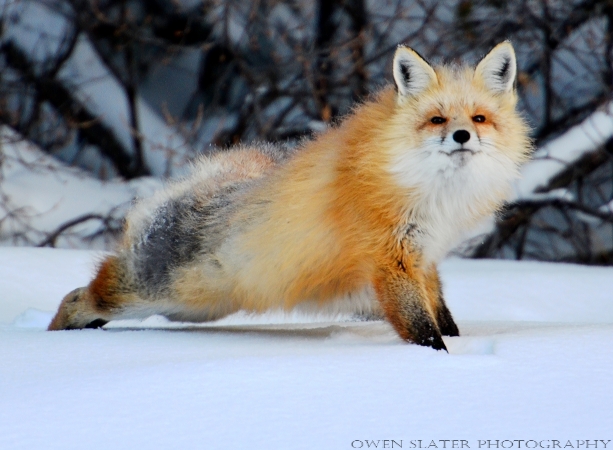
Foxy Lady

Stretching fox watermark

After waking up from a nap, this female red fox stretched out and struck a pose as if she were competing for best in show.  She gets my vote!

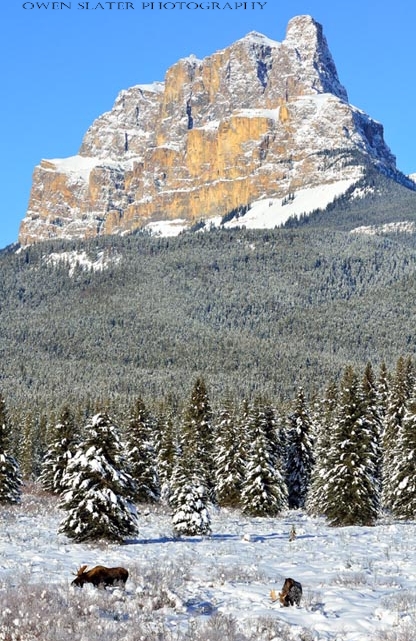
Moose two bulls castle mountain crop watermarkHappy New Year! Thanks for stopping by and for those returning, thanks for your support in 2012! It was my best year to date with visits from over 110 different countries! I had several amazing wildlife experiences resulting in a few of the photos you see here. It will be hard to top 2012, but I’m looking forward to seeing what develops in 2013 and sharing my photos and stories with you here.
On one of my recent trips to the mountains I watched a pack of wolves slowly wander along a frozen river and took in a beautiful sunrise as the moon set over the mountains. I also came across these two bull moose in a large meadow surrounded by mountains.  Moose in the Bow Valley ecosystem are the hardest of the ungulates to find and it’s even more rare to see more than one adult together at a time. However, this past year I have seen more moose than ever before and there is evidence to suggest that their numbers will steadily increase in the park over the next decade (as long as rail and vehicles strikes can be minimized).

These two large males just came through the rutting season. Just before the start of the rut, their testosterone levels surge and they essentially become the human equivalent of an Olympic caliber athlete on performance enhancing drugs. For over a month they battled other males, wander large distances to find reproductively active females and hardly eat a thing, all  for the opportunity to breed. The end of the season is marked by a gradual decrease in their testosterone levels. They no longer view each other as competition but instead, periodically seek out the company of other males and forage together.  These two spent the day trying to replenish their energy reserves by eating and resting together in a large meadow. The mountain in the background is known as Castle Mountain, which on its own is one of my favourite mountains to photograph in Banff National Park. Add in a sunny day with clear skies, a great vantage point and a couple of moose and it was the perfect recipe for getting a good photograph.

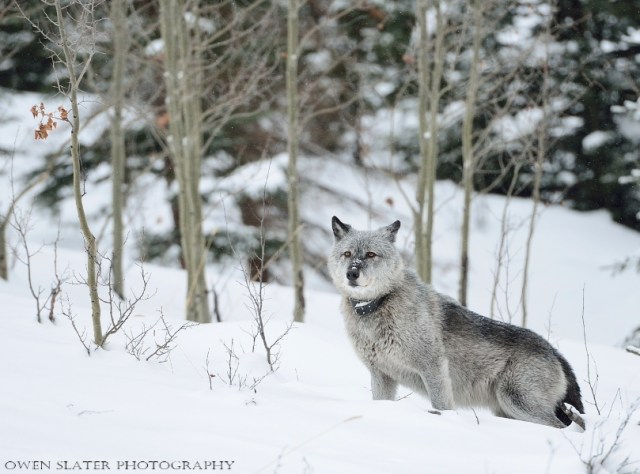
Wolf Faith Snow watermark

A radio-collared wolf pauses to survey her surroundings before plowing through the deep snow. While looking ahead she used one ear to listen for members of the pack following behind as they co-ordinated their movements up a hill in search of prey.

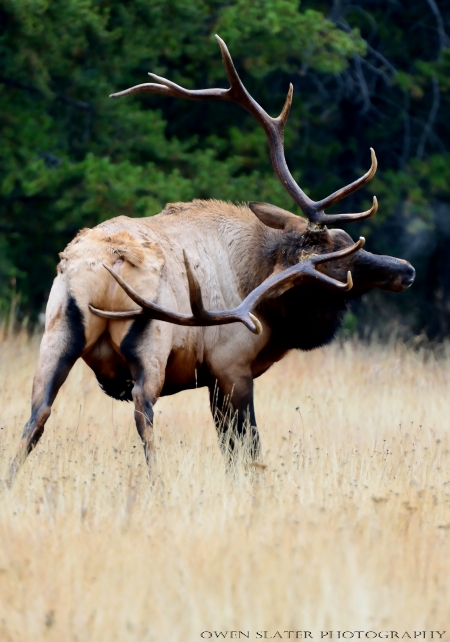
Elk antler scratch watermark

When not using his antlers to fight  over breeding rights, this elk delicately used his antlers to scratch a hard to reach spot!

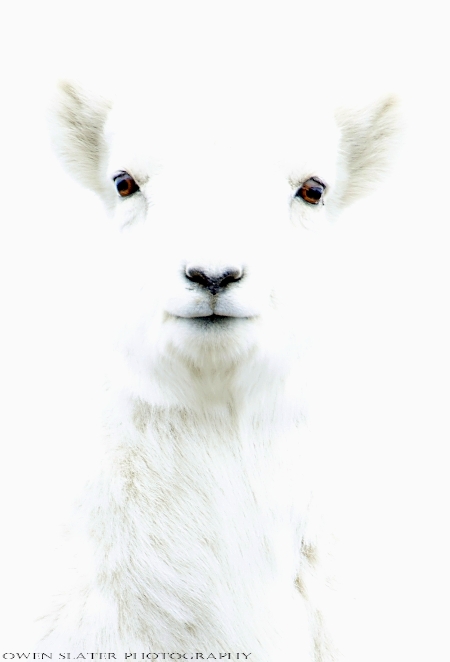
Dall sheep lamb watermark

One more for today. This lamb of the year watched me from a comfortable distance on a snow covered mountain near Destruction Bay, Yukon. The herd blended in so well with the snow it was hard to spot them initially. I wanted to mimic this in my photo so I overexposed more than typical to create this effect.

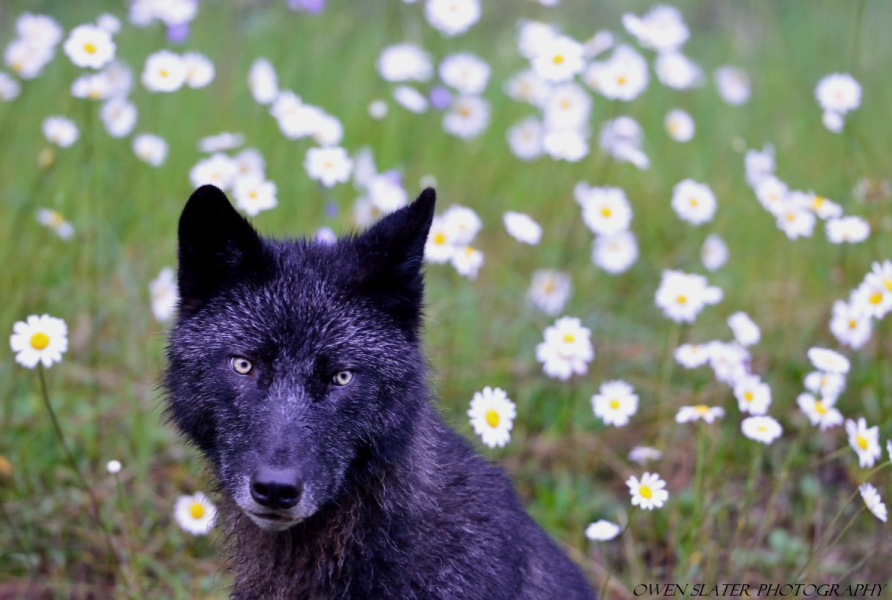
From Little Red Riding Hood to present day, the wolf is often given an image that is not even close to factual. Hollywood continues to portray wolves as human killers (eg. the latest Jason Bourne film) and groups advocate for open hunting seasons because they feel the wolf is killing all their deer or free ranging livestock. On the other extreme are the advocates that think wolves can do no harm. As usual, somewhere in between these two extremes is where the wolf belongs. Here, one sits down in a field of daisies just long enough for me to snap off a few pictures before rejoining the pack.

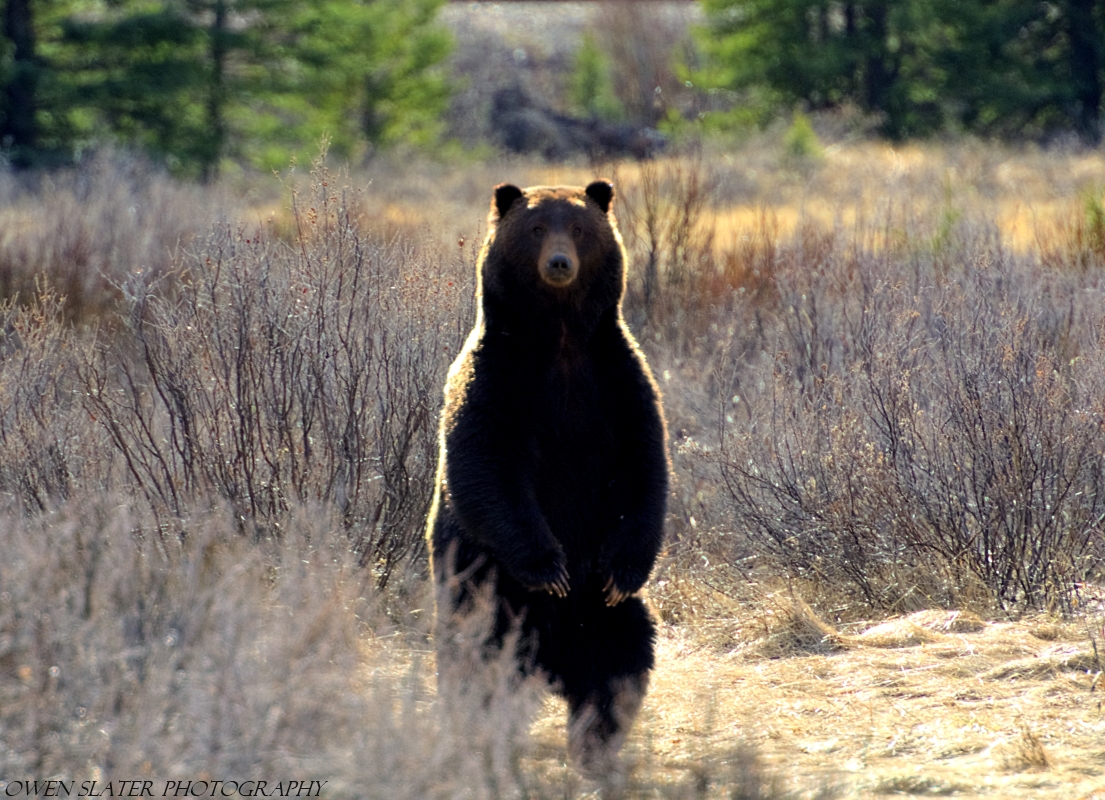
During dusk and dawn when wildlife are usually more active, I spend most of my time in the car since it serves as a natural blind that animals are less likely to react to. Obviously, this involves a lot of sitting so after several hours I need to stretch my legs. With some of the best scenery around, it is not hard to find somewhere to hike and take photographs.  On this particular day I loaded my gear into my backpack, made sure I had my bear spray and headed out with camera in hand. As I came around a clump of spruce trees I spotted some movement in the thickets about 200 feet away. I immediately retraced my steps back into the shadows of the trees to not be as visible and from there I was able to get a good enough look to figure out that it was a large grizzly coming in my general direction. It wasn’t until I had my bear spray in hand that I called out and stepped into the open to alert it to my presence. Only then did I notice an adult wolf was only a few feet behind the bear! Before I had time to take any photos, the wolf disappeared back into the thicket, while the bear stopped and went up on its hind legs to get a better look at me. Facing the bear, I slowly backed away. The bear went back down on all fours, turned to its right and ambled off while I retraced my steps back the way I came. I’m sure the wolf was watching everything from a distance making sure that both the bear and I continued out of the area.

In October, with the fall colours at their height,  I came across this seven month old wolf pup making its way along the banks of this river. Since I was on foot, I quickly hid behind a tree to not be spotted. Luckily the wind direction was in my favour as well.  Without knowing I was there, it stopped and appeared to look at its reflection in the turquoise waters, rooted around for some rodents and then I thought it would disappear into the thicket. However, it came around the corner and started trotting towards me. I crouched down on the ground and stopped taking photos to not give my position away, as the faint sound of the camera would have easily been picked up my the wolf. It proceeded to walk about 30 feet from me before it rounded another corner and went out of sight.

Herd of Moose

Continuing with the theme of unusual animal sightings, this one occurred earlier this year.  Unlike in Newfoundland, moose generally live very solitary lives in Alberta.  Prior to this day, the only time where I have seen more than two unrelated animals together was during the breeding season. So it was very surprising to be driving along a back country road and come across this scene! We immediately slammed on the brakes, grabbed our cameras and started taking photos. In total there were 11 moose in this one meadow, with 7 in this frame. There were two mothers with calves and several yearlings and two-year olds. With hunting season just over they were still a bit skittish, so we grabbed a few photos, got back into the car and continued on.

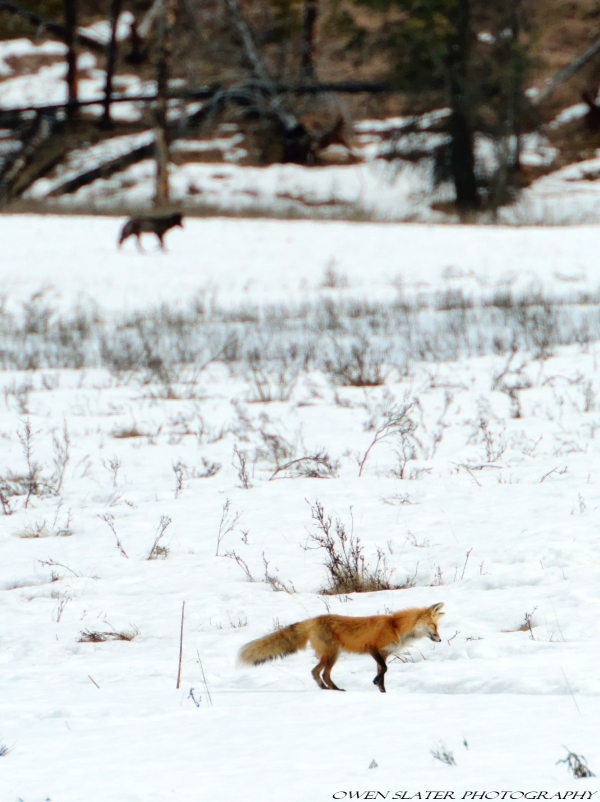
A wolf was hunting for rodents in the back of this meadow when a red fox nonchalantly trotted into the middle of the meadow right in front of the wolf. Since wolves are known to kill other carnivores if they come across them, I expected to see either the fox quickly run and hide or the wolf chase after and try to kill it. Instead they both just glanced at each other and then almost in unison, they resumed hunting. For several minutes they mimicked each others hunting stance, before the fox decided to move on and look for prey elsewhere.

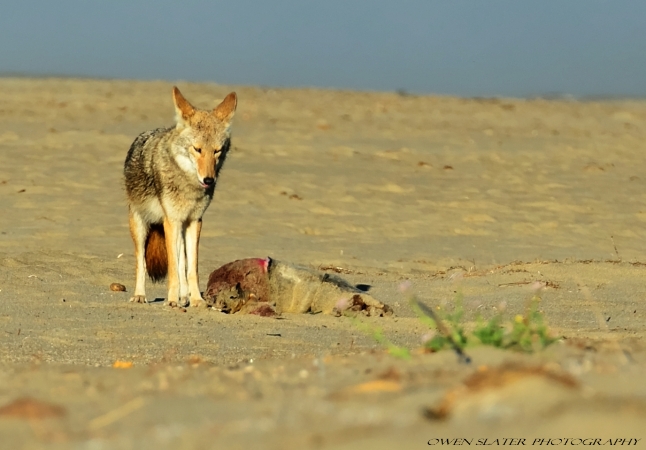
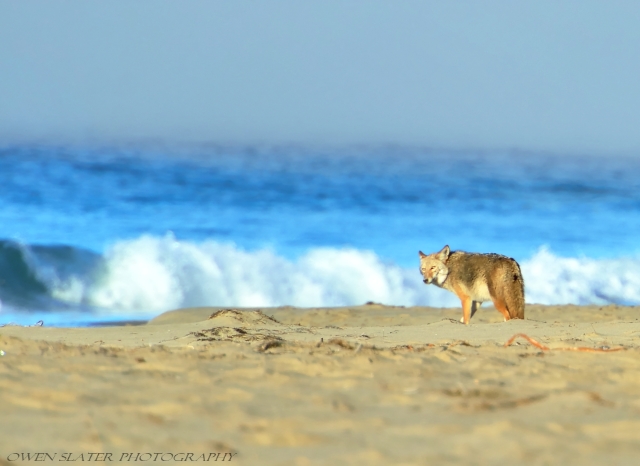
The beach combing coyote used its strong sense of smell to locate breakfast along the shores of Point Reyes. It paused briefly over the body of the deceased harbor seal pup before feasting on the left overs. Once full, it wandered off leaving the what remained for the turkey vultures, ravens and crows.

Beach combing coyote


With over 25 centimeters of snow to fall within the next day in Calgary, I find myself thinking back to about a week ago when I was on a warm beach in California! On this particular morning, I watched a beautiful sunrise before coming across a lone coyote feeding on the carcass of a harbor seal pup. After eating its fill it walked about 100 feet away from me combing the beach for other washed up delicacies.


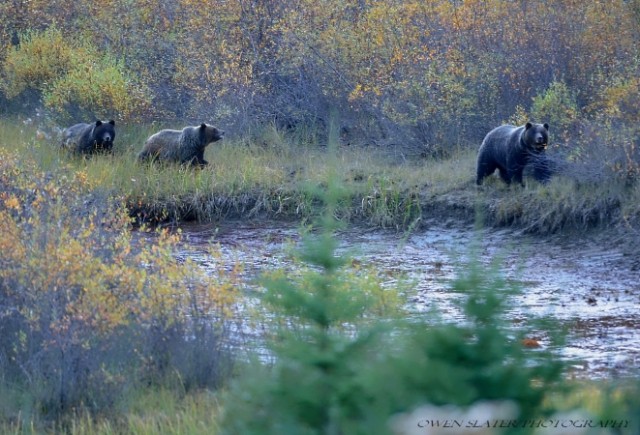
I drove out to Banff last Friday in the hopes of seeing some wildlife. Almost immediately I knew it was going to be a good day for wildlife spotting. Within a few hours I had spotted 12 mountain goats and seven different grizzlies. It was capped off by seeing and photographing the very shy grizzly mom known as bear 130. I had seen her a few times this year and I couldn’t believe how healthy and big her cubs had gotten. Bear 130 was given that name this spring when she was anesthetized to place a GPS collar on her as part of the CP rail and Parks Canada initiative to study grizzly bear mortalities in Banff National Park. Train strikes are the leading cause of death to grizzly bears in the park and every year a few are lost.  Up until this weekend, for this year there had not been any known grizzly bear deaths associated with the trains. However, moose, deer, black bears and just last weekend a wolf pup had all been killed by the train, so it seemed like it was only a matter of time before a grizzly would meet the same fate.

Unfortunately, Friday night around 8:45pm was that time. Less than a two hours after taking this photo, these two cubs were hit by a train and instantly killed. Initially it wasn’t know if bear 130 had survived as she wasn’t seen for at least a day afterwards. However, on Sunday morning I was relieved to spot her walking along the tracks and quickly reported the sighting to Parks Canada staff who were thrilled to hear she was alive and well.  That morning, she did not stop to feed on grain spilled between the tracks. Instead, she walked back and forth sniffing the rails, likely picking up the lingering scent of her now deceased cubs. She stayed in the area for days on end, and while we can’t know for sure why, I don’t think it is a stretch to assume it was likely because she was searching for her cubs. While the loss of two cubs is horrible, the loss of a reproductively active female would have been devastating, especially seeing as bear 130 is such a good mother that does an excellent job of staying away from high human use areas until people are not present. A testament to her skills were that both cubs were in excellent condition, and seemed to be thriving until they made a mistake.

It’s hard to know why they didn’t get off the tracks when the train approached. At night, the high powered lights of the train can be blinding. That is all they would have seen. They would not have recognized that it was a train and may have actually charged at it in self defense.  Hopefully, with the data obtained from her collar, CP and Parks Canada can formulate solutions to this ongoing problem that has plagued all the wildlife in the Bow Valley. Otherwise, it will only be a matter days before the next body is collected. The only question will be, which species will be next…

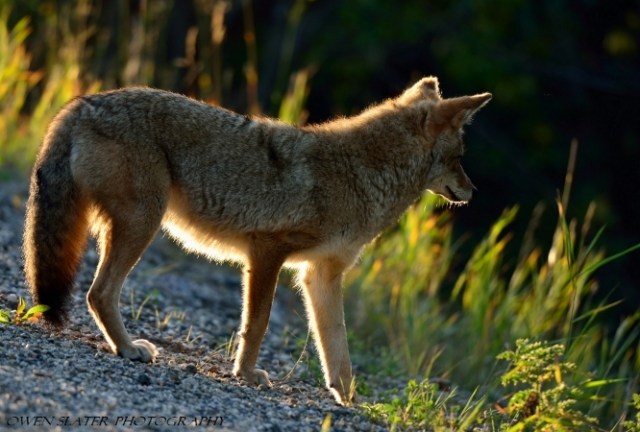
A couple of weekends ago I took some friends out to Banff to try to spot some wildlife. They were hoping to see bears and maybe even wolves, but as luck would have it we had an even rarer carnivore sighting. As I came into Banff I decided to drive up the road to a ski hill as I had seen bears, sheep and coyotes up there throughout the summer. After rounding a corner I spotted a coyote on the road headed in our direction. I quickly pulled over and stopped the car, but surprisingly it paid no attention to us. Instead it ran to the side of the road, raised its hackles and started barking at something down below. For about 10 minutes it continued barking at whatever it was. While my friends excitedly took photos of the coyote, I scanned the ravine as I knew from the coyote’s reaction that it was alarmed at whatever was below and therefore, it had to be a large carnivore! The coyote slowly walked in our direction and stopped every few minutes to bark down into the ravine. After passing my car and paying little attention to us, I turned the car around to face down the road. At this point the coyote must have lost sight of whatever it was, so like us,  it sat down and waited. A few minutes later a large light brown object appeared by the side of the road. Before I had time to react it bounded across the road with the characteristic movement and shape of a cougar! A few strides later and it was on the other side of the road, leaping up the bank and disappearing into the forest. Not wanting to disturb it but also not wanting my first wild cougar sighting be so fleeting, I waited until it was in the trees before driving down to where it had entered the forest. I spotted it again as it disappeared behind some trees. Based on its direction of travel I realized it was heading in the direction of a clearing just west of where it was so I quickly drove down to the spot and waited. Sure enough, a few minutes later it appeared at the top of the clearing and walked right out into the open. It stopped and stared at us before slowly walking through the clearing and disappearing out of sight! It was such an impressive animal; a healthy adult male with massive muscles over the limbs and a powerful gait. No wonder the coyote was terrified of it! In fact, the coyote wouldn’t go into the forest for some time afterwards. Instead it patrolled the road and searched the ravines for the cougar to make sure it was gone. An adult cougar can easily catch and kill a coyote and so coyotes always have to be on the lookout for them. Thankfully for us, the coyote not only spotted it but also let me know it was around as otherwise I’m sure we would never have seen it. For those wondering where the cougar photos are, I wish they were good enough to post here, but with such low light at the time of the sighting, even at 2500 ISO the images are blurred. That’s OK for me, as I will never forget experience!