 Happy New Year! Thanks for stopping by and for those returning, thanks for your support in 2012! It was my best year to date with visits from over 110 different countries! I had several amazing wildlife experiences resulting in a few of the photos you see here. It will be hard to top 2012, but I’m looking forward to seeing what develops in 2013 and sharing my photos and stories with you here.
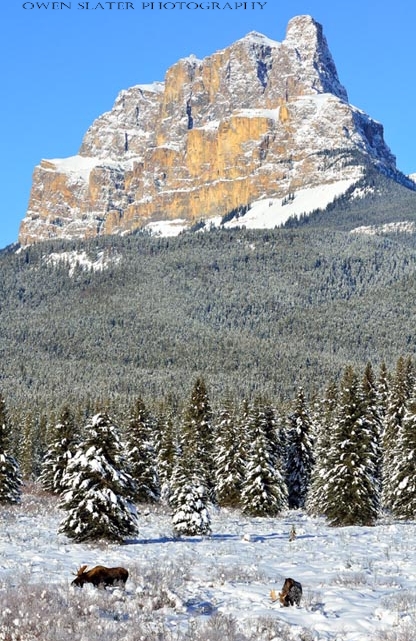
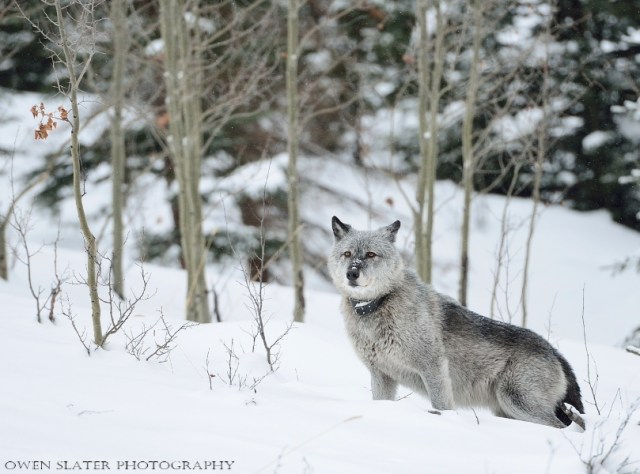
On one of my recent trips to the mountains I watched a pack of wolves slowly wander along a frozen river and took in a beautiful sunrise as the moon set over the mountains. I also came across these two bull moose in a large meadow surrounded by mountains. Moose in the Bow Valley ecosystem are the hardest of the ungulates to find and it’s even more rare to see more than one adult together at a time. However, this past year I have seen more moose than ever before and there is evidence to suggest that their numbers will steadily increase in the park over the next decade (as long as rail and vehicles strikes can be minimized).
These two large males just came through the rutting season. Just before the start of the rut, their testosterone levels surge and they essentially become the human equivalent of an Olympic caliber athlete on performance enhancing drugs. For over a month they battled other males, wander large distances to find reproductively active females and hardly eat a thing, all for the opportunity to breed. The end of the season is marked by a gradual decrease in their testosterone levels. They no longer view each other as competition but instead, periodically seek out the company of other males and forage together. These two spent the day trying to replenish their energy reserves by eating and resting together in a large meadow. The mountain in the background is known as Castle Mountain, which on its own is one of my favourite mountains to photograph in Banff National Park. Add in a sunny day with clear skies, a great vantage point and a couple of moose and it was the perfect recipe for getting a good photograph.


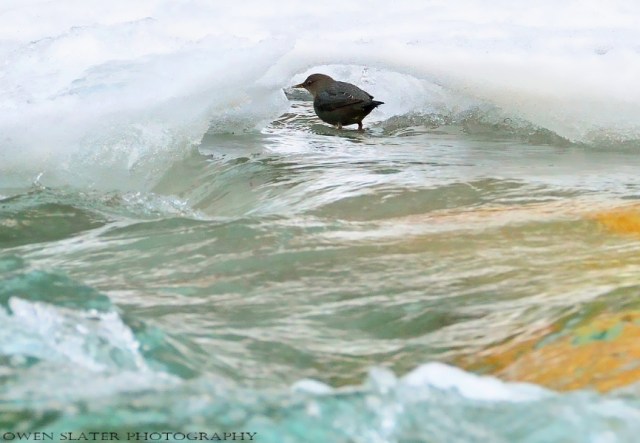
 A green winged teal creates ripples in the water as the sun sets in Banff National Park
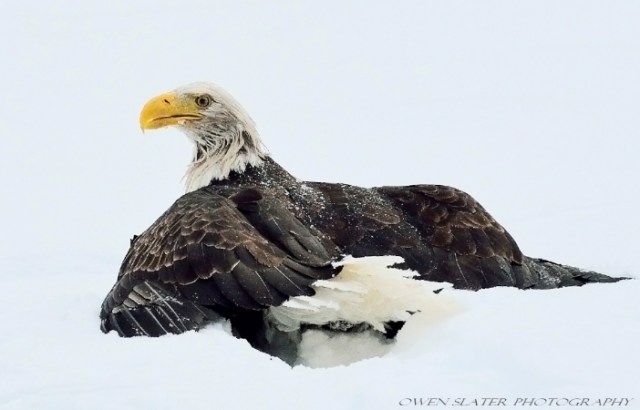 Last weekend I came across a peculiar scene with this bald eagle literally swimming across an icy cold river using its wings as oars. Up in the sky the distinctive call of ravens could be heard as they circled. The eagle managed to make its way to shore, climbed up a bank and rested in the snow. After several minutes it attempted to fly off but was unable to get any lift. It did this a few more times but still couldn’t get off the ground. Thinking that it had fractured one of its wings, I put my gear down and hiked into the forest to try to keep out of its sight while I approached it. I got to within about 30 feet before I ran out of any tree cover. By then the eagle had spotted me and I made a dash for it (don’t worry, I’m a trained professional and I have handled many birds of prey!). It quickly beat its wings and ran through the snow as fast as it could. Just as I was getting close enough to grab it, it managed to get out onto an ice-flow that would not support my weight. It seemed to know this because it turned and watched me as I came to a halt. Thinking that it might come back onto more stable land, I headed back into the forest to wait. About thirty minutes later, I moved into a better vantage point but it must have caught sight of me. With its powerful legs it sprang up into the air and managed to get just enough lift to take off. Thankfully, it cleared the river, flew several hundred feet and managed to perch in a nearby tree!




 Owen Slater Photography