A group of bull elk, having just gone through the rut, gather together in a meadow during a snow storm in Banff National Park. With the long, harsh winter just starting these bulls will have to use their hooves to dig down through the deep snow to find what little food remains for them. Any that become weakened will be tested by wolves and undoubtedly a few won’t make it to spring. Natural selection will favour the strong and the adaptable.
Category: Banff National Park
First let me say that this post was already in the works before today, which is why I got quite the laugh this morning when fellow blogger and wildlife photographer, Lyle Krahn awarded me the dubious distinction of the ‘Forgot to Leave’ award! Check out Lyle’s site for the full story as well as his great wildlife photos and stories!
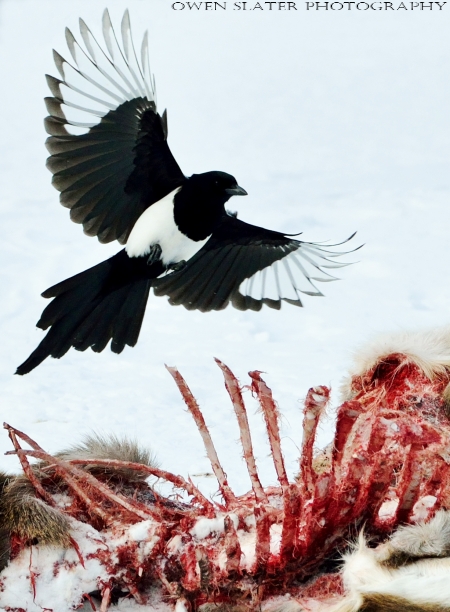
Whenever I come across a carcass I have visions of wolves or cougars, or the even more elusive wolverine catching the scent and coming in to feed. The thought of witnessing these rarely observed animals in the wild doing things that I or few others have ever seen before keeps me out in the wilderness for hours on end. So with that optimism in mind, I hunkered down and waited. As you can probably imagine, sitting around in -15 degree Celsius temperatures is no fun. You can’t move around to keep warm since that will scare off any wildlife and the cold has a way of quickly removing any resolve that might have initially been there. But that day I was determined to give it a few hours so I waited some more. Within about an hour some magpies showed up and distracted me from the cold. In between feeding on the kill, they flew off to cash their food. Before flying back down to get more pieces of meat they perched in nearby trees and called out. This was great for me since it gave me enough time to turn the camera back on, compose the image and get my finger out of my glove to fire off the shutter. In their typical dramatic aerial flare, they swooped down to the carcass and fanned out their beautiful wings and tail feathers. I was treated to these displays for hours but eventually my resolve was broken. The tipping point was the hot packs I had placed in my boots and gloves could no longer keep my toes and fingers warm. Getting a few images like this made the surrender a little easier but as I hiked back to my car I wondered what I would have seen if I had waited a bit longer.
Happy New Year! Thanks for stopping by and for those returning, thanks for your support in 2012! It was my best year to date with visits from over 110 different countries! I had several amazing wildlife experiences resulting in a few of the photos you see here. It will be hard to top 2012, but I’m looking forward to seeing what develops in 2013 and sharing my photos and stories with you here.
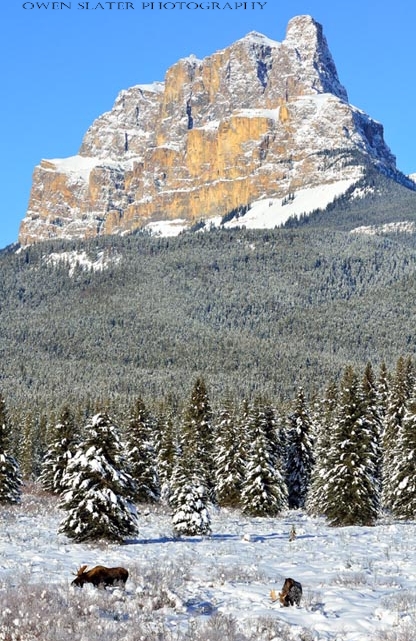
On one of my recent trips to the mountains I watched a pack of wolves slowly wander along a frozen river and took in a beautiful sunrise as the moon set over the mountains. I also came across these two bull moose in a large meadow surrounded by mountains. Moose in the Bow Valley ecosystem are the hardest of the ungulates to find and it’s even more rare to see more than one adult together at a time. However, this past year I have seen more moose than ever before and there is evidence to suggest that their numbers will steadily increase in the park over the next decade (as long as rail and vehicles strikes can be minimized).
These two large males just came through the rutting season. Just before the start of the rut, their testosterone levels surge and they essentially become the human equivalent of an Olympic caliber athlete on performance enhancing drugs. For over a month they battled other males, wander large distances to find reproductively active females and hardly eat a thing, all for the opportunity to breed. The end of the season is marked by a gradual decrease in their testosterone levels. They no longer view each other as competition but instead, periodically seek out the company of other males and forage together. These two spent the day trying to replenish their energy reserves by eating and resting together in a large meadow. The mountain in the background is known as Castle Mountain, which on its own is one of my favourite mountains to photograph in Banff National Park. Add in a sunny day with clear skies, a great vantage point and a couple of moose and it was the perfect recipe for getting a good photograph.

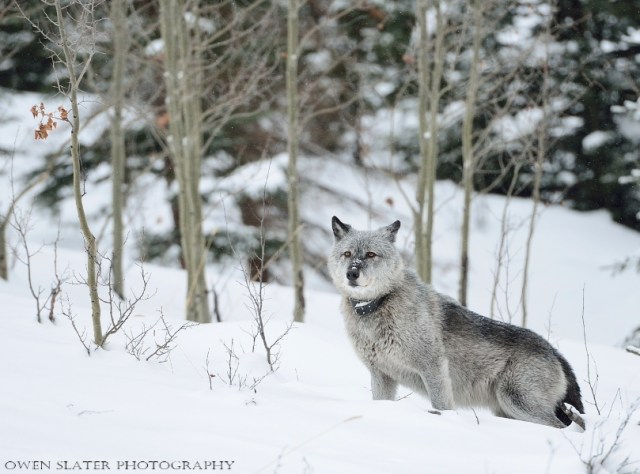
A radio-collared wolf pauses to survey her surroundings before plowing through the deep snow. While looking ahead she used one ear to listen for members of the pack following behind as they co-ordinated their movements up a hill in search of prey.

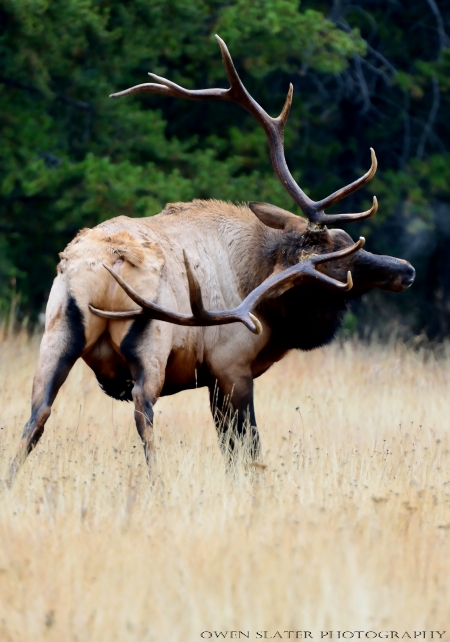
When not using his antlers to fight over breeding rights, this elk delicately used his antlers to scratch a hard to reach spot!

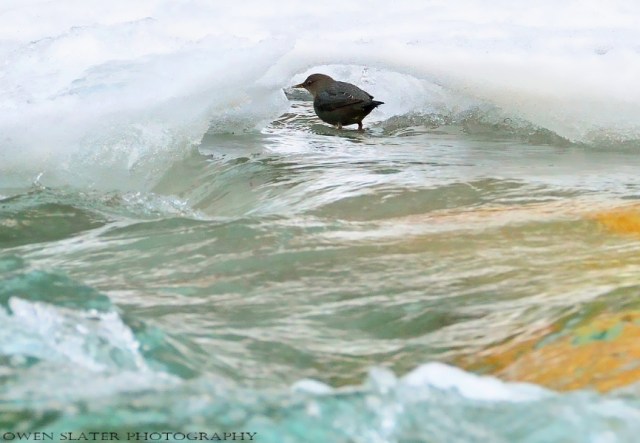
The dipper gets the distinction of being the only aquatic passerine (songbird) in North America. Remarkably, it makes its living diving and swimming in frigid glacier fed waters and then flies around in temperatures as low as -40 degrees. Adaptations that allow this bird to survive include an extra layer of feathering, an enlarged preen (oil secreting) gland for waterproofing, a nictitating membrane (third eyelid), enlarged muscles of the eye to accommodate for underwater vision, nasal flaps and increased hemoglobin levels to boost their blood oxygen carrying capacity that is essential for underwater swimming for up to 30 seconds at a time! I spotted this one along a partially frozen river as it entered a small ice cave in search of food.
A green winged teal creates ripples in the water as the sun sets in Banff National Park
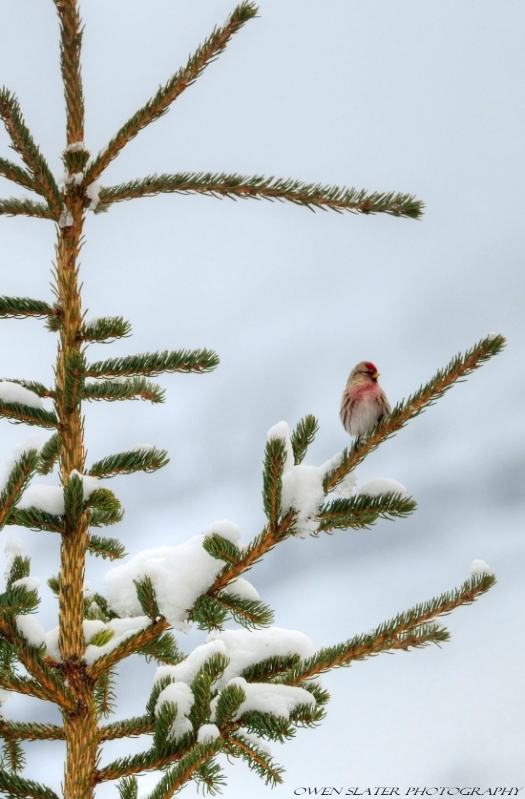
A male red poll (males have crimson breast feathers in addition to the red cap) sits on snow covered fir tree in Banff National Park
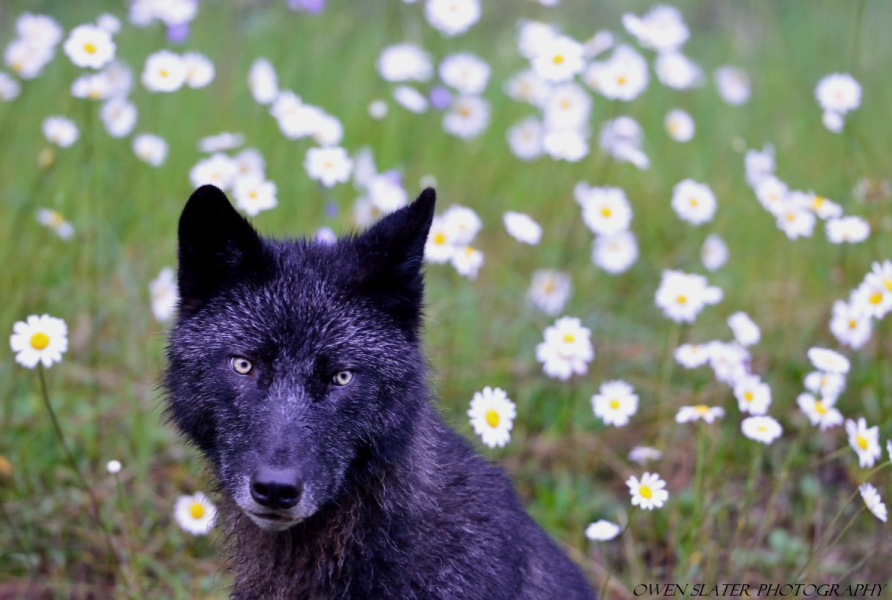
From Little Red Riding Hood to present day, the wolf is often given an image that is not even close to factual. Hollywood continues to portray wolves as human killers (eg. the latest Jason Bourne film) and groups advocate for open hunting seasons because they feel the wolf is killing all their deer or free ranging livestock. On the other extreme are the advocates that think wolves can do no harm. As usual, somewhere in between these two extremes is where the wolf belongs. Here, one sits down in a field of daisies just long enough for me to snap off a few pictures before rejoining the pack.
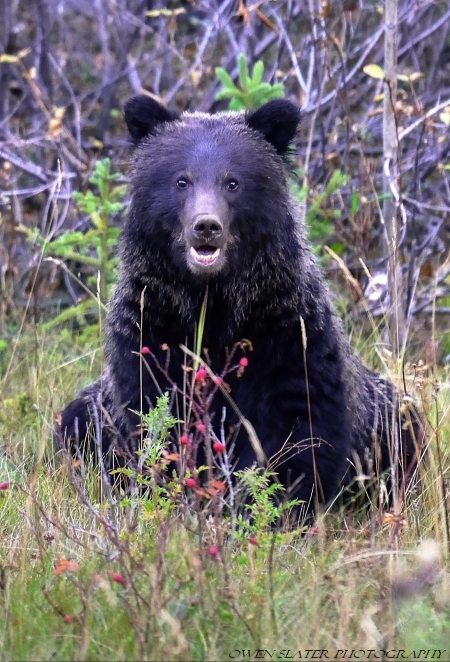
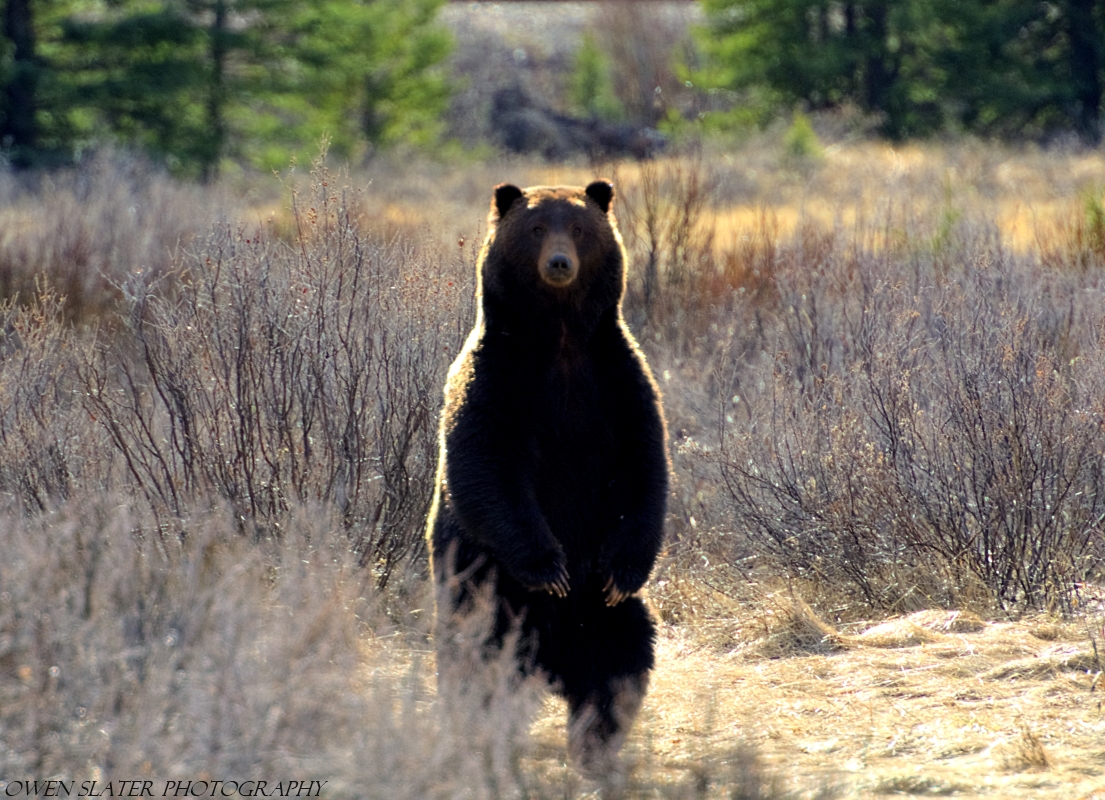
During dusk and dawn when wildlife are usually more active, I spend most of my time in the car since it serves as a natural blind that animals are less likely to react to. Obviously, this involves a lot of sitting so after several hours I need to stretch my legs. With some of the best scenery around, it is not hard to find somewhere to hike and take photographs. On this particular day I loaded my gear into my backpack, made sure I had my bear spray and headed out with camera in hand. As I came around a clump of spruce trees I spotted some movement in the thickets about 200 feet away. I immediately retraced my steps back into the shadows of the trees to not be as visible and from there I was able to get a good enough look to figure out that it was a large grizzly coming in my general direction. It wasn’t until I had my bear spray in hand that I called out and stepped into the open to alert it to my presence. Only then did I notice an adult wolf was only a few feet behind the bear! Before I had time to take any photos, the wolf disappeared back into the thicket, while the bear stopped and went up on its hind legs to get a better look at me. Facing the bear, I slowly backed away. The bear went back down on all fours, turned to its right and ambled off while I retraced my steps back the way I came. I’m sure the wolf was watching everything from a distance making sure that both the bear and I continued out of the area.
In October, with the fall colours at their height, I came across this seven month old wolf pup making its way along the banks of this river. Since I was on foot, I quickly hid behind a tree to not be spotted. Luckily the wind direction was in my favour as well. Without knowing I was there, it stopped and appeared to look at its reflection in the turquoise waters, rooted around for some rodents and then I thought it would disappear into the thicket. However, it came around the corner and started trotting towards me. I crouched down on the ground and stopped taking photos to not give my position away, as the faint sound of the camera would have easily been picked up my the wolf. It proceeded to walk about 30 feet from me before it rounded another corner and went out of sight.
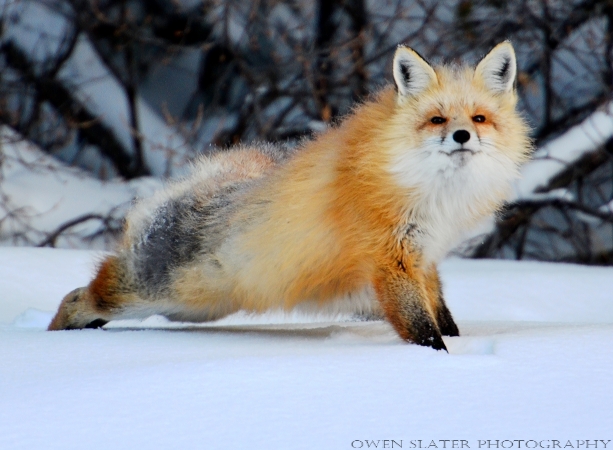
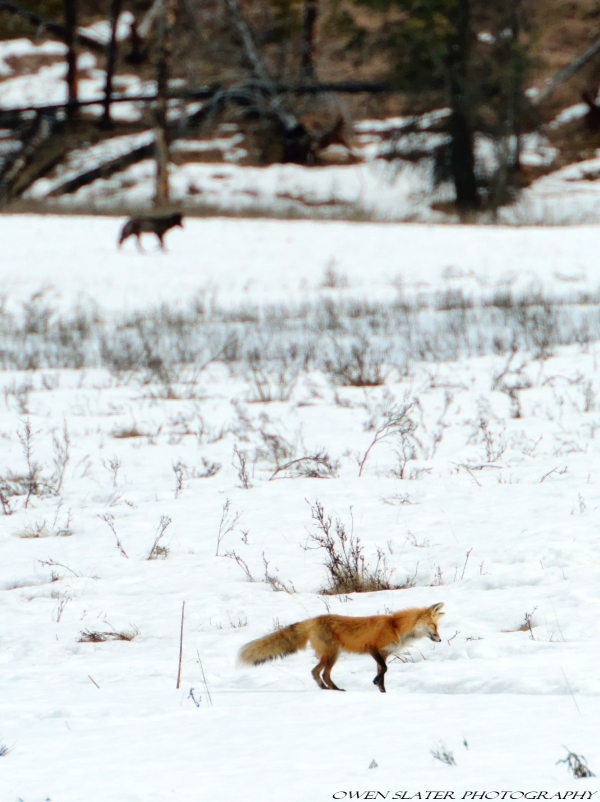
A wolf was hunting for rodents in the back of this meadow when a red fox nonchalantly trotted into the middle of the meadow right in front of the wolf. Since wolves are known to kill other carnivores if they come across them, I expected to see either the fox quickly run and hide or the wolf chase after and try to kill it. Instead they both just glanced at each other and then almost in unison, they resumed hunting. For several minutes they mimicked each others hunting stance, before the fox decided to move on and look for prey elsewhere.

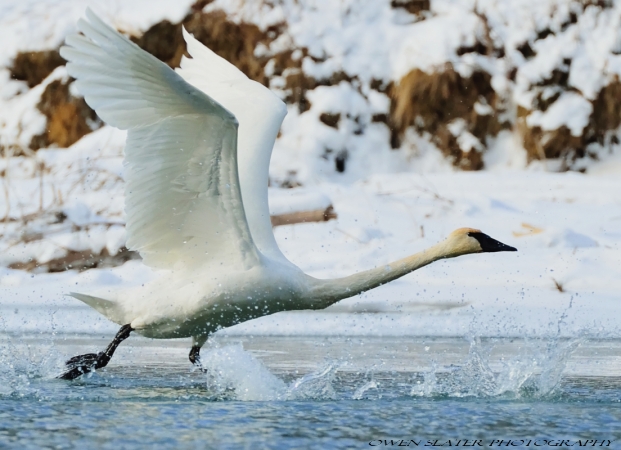
Back in Alberta last weekend, a trumpeter swan propels itself up and out of a narrow section of the Bow river that hadn’t frozen over yet.