Tag Archive: Wildlife


Red Wolf Pup WM

Would you like to directly impact the future of a critically endangered species?

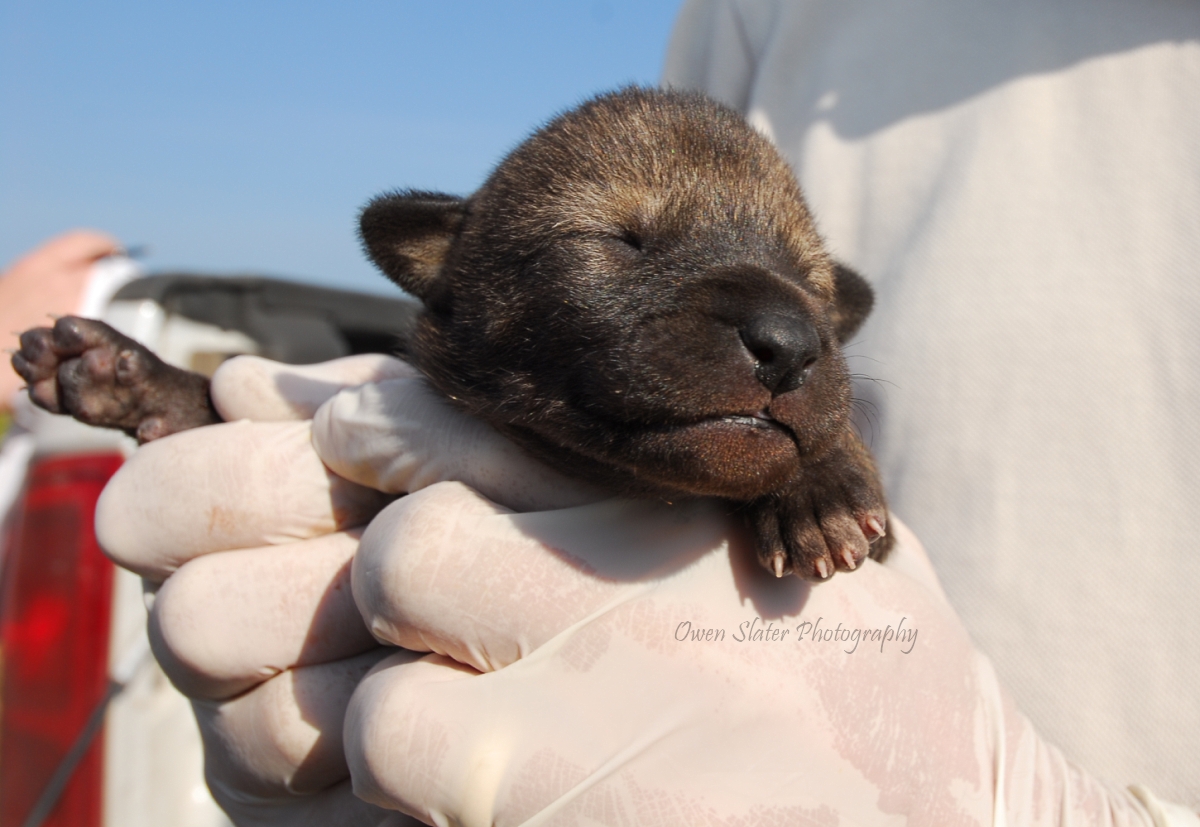
Currently, the US Fish and Wildlife Service is in the process of determining if the Red Wolf Recovery Program will continue.  This project has great personal significance to me, given that I was directly involved in efforts to save this species. In 2009,  while working at Lincoln Park Zoo I flew from Chicago with four, 1 week old red wolf pups in a carry-on suitcase!  We were head to Alligator River National Wildlife Refuge in North Carolina to link up with biologists to cross-foster the captive born pups into wild red wolf dens to bolster the wild red wolf population.

Click here for my 2009 travel blog featured on Lincoln Park Zoo’s website with lots of photos.

This species is one of the most endangered carnivores in the world (only about 80-110 in the wild) and drastic measures were and are needed to save it. With the intensive conservation measures mentioned above the population is slowly increasing but more work is required.

If you feel that red wolves are worth saving, please send your comments, concerns, or information to the following e-mail: redwolfreview@fws.gov.  Input needs to be provided by September 26th (next Friday)

Additional information on the Red Wolf Recovery Program can be found by clicking here.

Thanks for your support!

Owen
 

Fire Chicken

Sharp tailed grouse profile WM

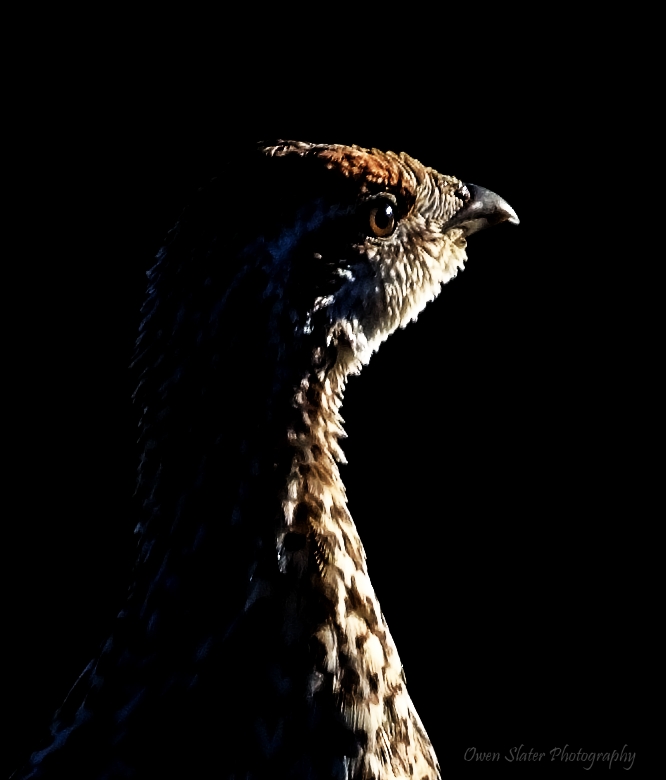
Rarely do wildlife and great lighting come together, but we got lucky over several days in Grasslands National Park. On one of our early morning drives in the park we were rewarded when this female sharp-tailed grouse or fire grouse walked out into the gorgeous morning light and seemed to pose for her photo. If only wildlife photography was always this easy!

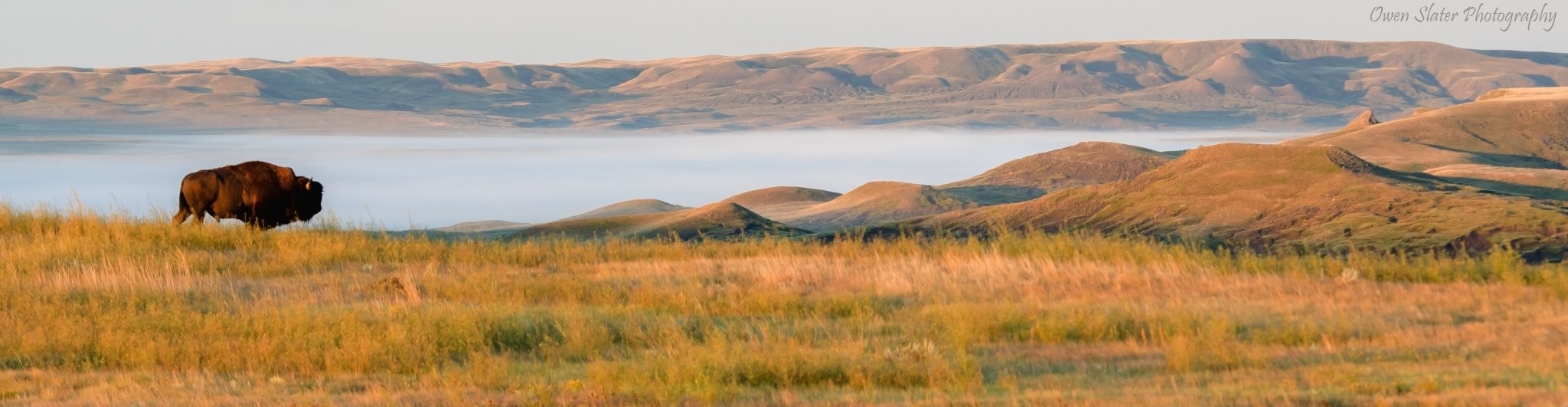
Bison Grasslands Fog Panoramic WM

Few places in Canada offer the peaceful solitude, natural beauty and diversity of species as Grasslands National Park. I tried to capture the magic of this place during our visit last week. With the help of a  lone bull bison gazing down into the Frenchman River Valley on a foggy August morning, I got the photo I was looking for. (click on the image for the full size)

If you are ever in Saskatchewan this park is one of the gems of the province and certainly well worth the detour.

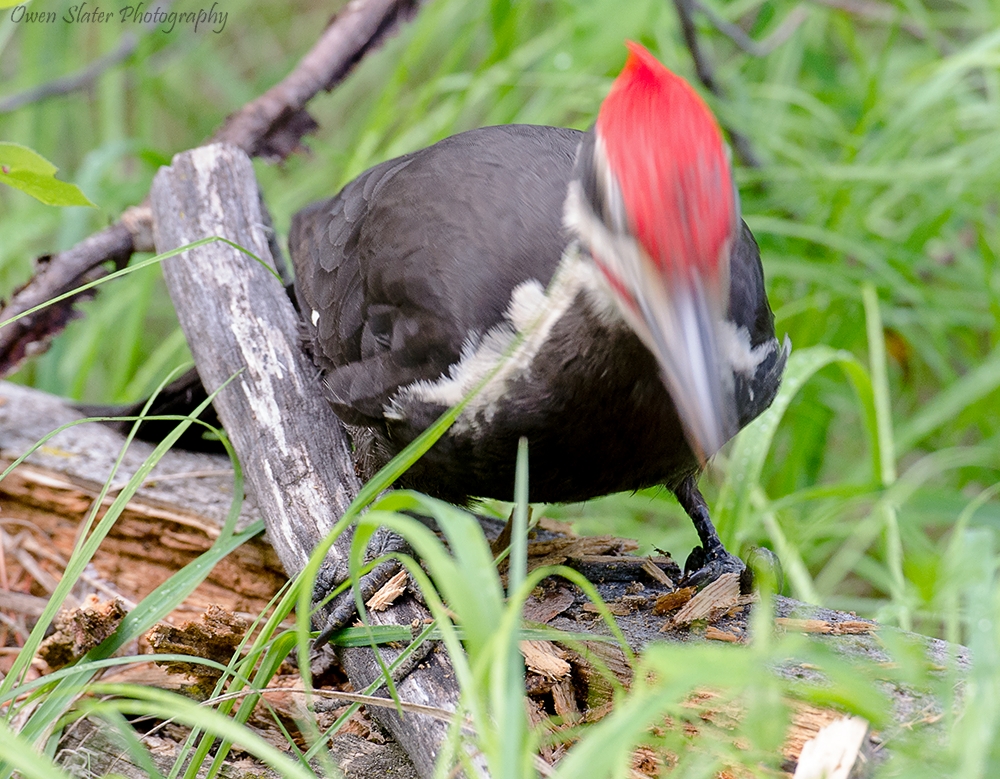
Pileated woodpecker 2 WM


Have you ever wondered how a woodpecker can repeatedly bash its beak against a tree and never become concussed or even just a little bit disorientated?

New research shows that woodpeckers like this pileated woodpecker I photographed in Banff National Park earlier this summer experience forces of 1500 g’s while pecking bark off trees to get to the tasty insects.  To put that in perspective, the highest g force roller coasters are rated at only 5 g’s. Fighter jet pilots experience a maximum of 12 g’s and the highest short-term g force a person has every survived was just over 200 g’s. Nowhere near what a woodpecker experiences repeatedly throughout the day and never seems to suffer any harmful effects.

Pileated woodpecker motion WM

So what makes this possible? A few of the adaptations woodpeckers have include an elongated upper beak and beak internal structure that diverts the impact energy away from the brain or absorbs any excess in the spongy bone sitting in front of the skull. The energy diverted by the beak travels to the hyoid bone that wraps around the entire skull of woodpeckers and serves as a seat belt for the brain.  Lastly, to prevent the brain from sloshing around, woodpecker brains are tightly packed against the skull with reduced cerebrospinal fluid (CSF) to prevent any movement.

To figure out how these adaptations help the woodpecker keep pecking at upwards of 20 pecks/second, researchers used CT scans to determine that they are able to deflect almost all (99.7%) of the impact to their heads through the rest of the body. What little remains is dissipated as heat in the beak and skull so that it never reaches the brain. This also explains why woodpeckers take frequent breaks from pecking on trees to let their heads cool down before their brains overheat! Pretty remarkable stuff with potential applications for helmet design to prevent concussions in people!

Certainly a group of birds with impressive adaptations. One day these birds might help save a lot of people from suffering brain damage and while we shouldn’t just care about nature for its benefits to us, it does provide one more reason to appreciate, preserve and learn more about the natural world.


Wild Pup

Wolf pup black 2014

Wild wolf sightings are always thrilling, but seeing and photographing wolf pups takes it to a whole new level. Finding them is the first challenge. Getting any decent photos is the next. I positioned myself next to a small clearing and silently waited, hoping one of them would come out into the clearing. Luck was on my side that day and I managed to get a few decent photos of this little black pup, no more than 3 months old before it trotted off to join its siblings as they explored their surroundings.

Curious Lynx

Lynx slink WM ss

One more photo from the amazing, wild lynx encounter! Which lynx photo do you prefer?

Here, Kitty Kitty

Lynx frontal cropped WM ss

Traveling the Alberta back roads has its perks! This beautiful lynx calmly strolled along the shoulder as I tried to contain my excitement long enough to get a few photos!

It came within 10-15 feet of us and not once did I hear its footsteps. The only sounds were of the very concerned red squirrels high up in the trees.

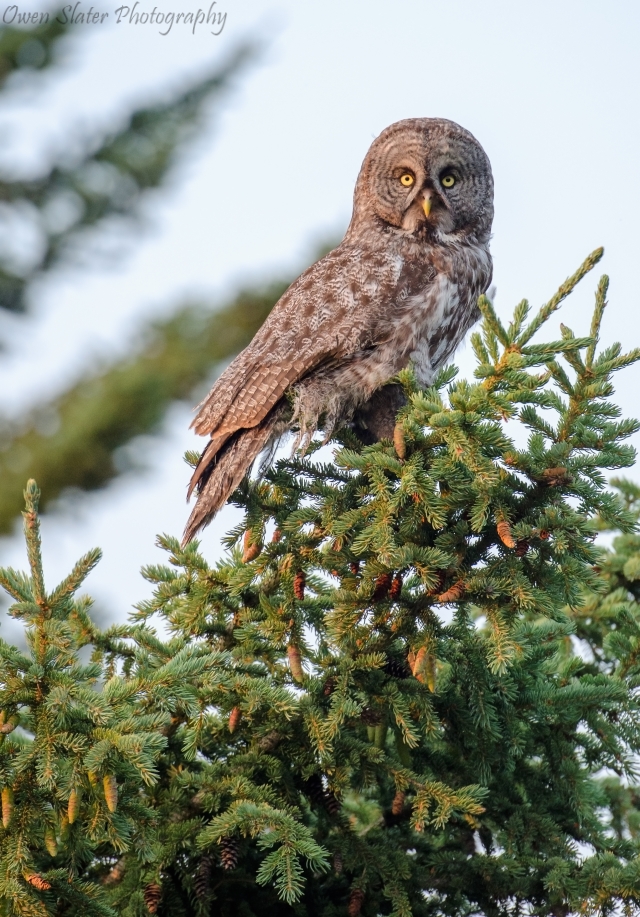
GGO release WM WP 640

For some time now I have been meaning to posts stories and photos of a few of the wildlife patients I get the privileged of helping.  What better way to start than with a beautiful great grey owl?

This owl was hit by a car near Bragg Creek, Alberta and was found dazed and unable to fly by a concerned member of the public.  They were able to safely catch and bring it into us at the wildlife hospital.  A physical examination, blood work and x-rays confirmed that it did not have any fractured bones, so treatments were geared towards treating for the muscle trauma, dehydration and thin body condition.  The owl soon recovered from the trauma, but needed to regain some weight and its flight muscles so it was transferred to a larger, outdoor flight pen where it spent the next several weeks gaining its strength back. Last week it was strong enough for release.

On the release day, as with all raptors at the center, we placed a metal band on the left leg so that if the owl ever gets handled or spotted in the wild we can get an idea of how successful our efforts at rehabilitation are.

Red fox carrying hare WM

The morning after photographing Fire Fox the same fox, now several miles from where I first found it, was feasting on a snowshoe hare. After burying a few mouthfuls to lighten the load, it neatly folded the rest into a bundle and made the long journey back to the den to serve breakfast to its family.

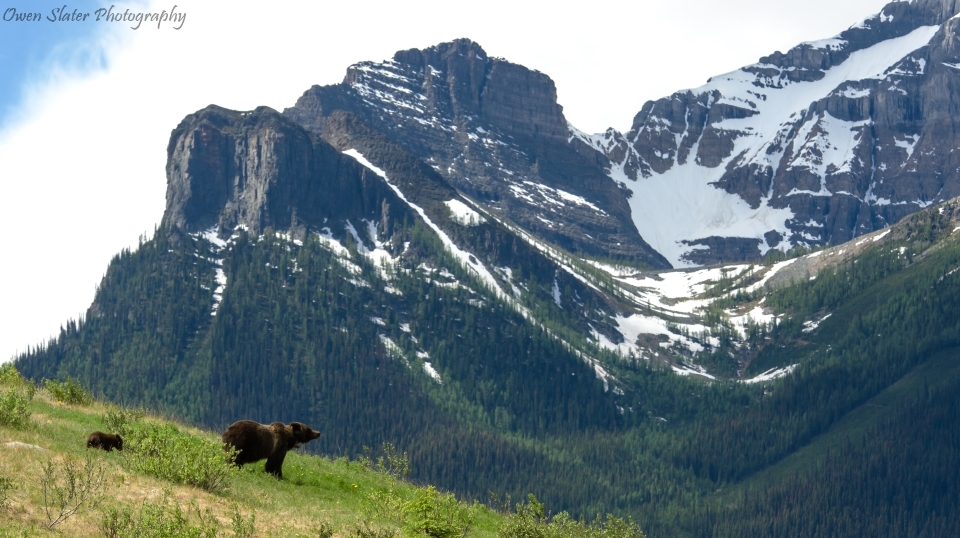
Grizzly mom and cub mountain landscape wm 960

One could be forgiven for thinking that even the grizzly bears in Banff take a break from their daily routines to appreciate the mountain scenery. While I will never discount the fact that other animals can appreciate their surroundings, what’s more likely is that this bear is smelling the air for any potential threats or food options.

I took this photo last month near one of the most popular places in Canada; Lake Louise.  Bear 138 as she is known to park biologists, was feasting on one of the only spring food sources available to the bears; dandelions. Imagine how many dandelions a 150-200kg lactating grizzly bear would need to eat to produce enough milk to feed her two cubs?  Needless to say, it’s a staggering amount. When they enter their hyperphagic state later this month, they eat about 35,000 calories a day.  To put that in perspective, the average person eats about 2000 calories daily!  Almost all of these calories are from berries, with a single bear eating between 200-300,000 berries per day to put on enough fat to survive the winter. That’s the equivalent of you or I eating 63 hamburgers daily! Yet these bears suffer no heart disease or complications association with high cholesterol.

This only touches the tip of the iceberg of all the interesting adaptations of bears, but I hope you agree that these are amazing animals and deserving of our respect and protection.


Gray Wolf

Wolf head profile wm fb

I came across this gray wolf in Muncho Lake Provincial Park in Northern British Columbia.

If you spend any time photographing wild wolves, they make it clear from their body language if they are relaxed with you around. This 2-3 year old wolf (based on body size and teeth condition) could have cared less that I was just a short distance away. It kept its ears forward, jaw relaxed and pace at a slow trot, paying no attention to me while scanning the clearings for any caribou or stone sheep.

The entire sighting was over within a few minutes as it disappeared into the trees, but like with any wolf encounter, it left me with an adrenalin rush that kept me going for the rest of the day.

Out On A Limb

Chipmunk eating tree buds wm fb

A determined chipmunk precariously balanced on the branches of a willow before it plucked the buds and scurried down the tree to safety. I took this photo earlier this spring near Toad River, in northern British Columbia.

Fox scratching right there fb wm

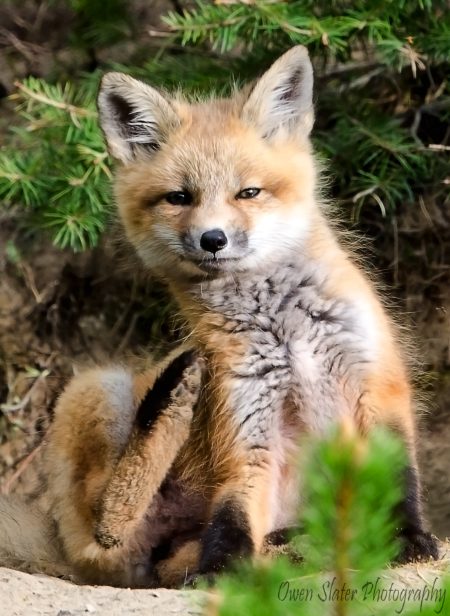
An adorable fox kit leans in to get a hard to reach spot. This was one of five kits being raised by their hard working parents in Waterton Lakes National Park earlier this spring

Play Time

Grizzly cub and mom playing WM

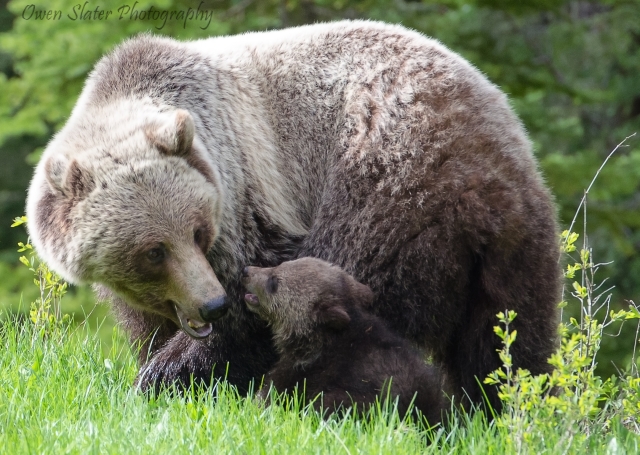
A grizzly bear mom takes a break from eating dandelions to play with one of her tiny cubs born earlier this year.  With the grizzly bear population threatened in Alberta, it’s been great to see at least three grizzly sows in the Rockies with new cubs this year.

Happy Independence Day

Bald eagle flight side black and white WM

Keeping with the national animal theme, Happy Independence Day to our neighbours and friends to the south (or north if you live in Alaska)!