 As you can probably guess from these photos, I managed to get back to East Africa last month, specifically Kenya. The first part of the trip was for work as I was attending and instructing at the 2009 PASA (Pan African Sanctuary Alliance) Healthcare Workshop. Afterwards, I spent a week visiting Amboseli and Maasai Mara National Parks and went on numerous game drives. Over the next several weeks I will be posting the photos from my trip and brief stories about each one.
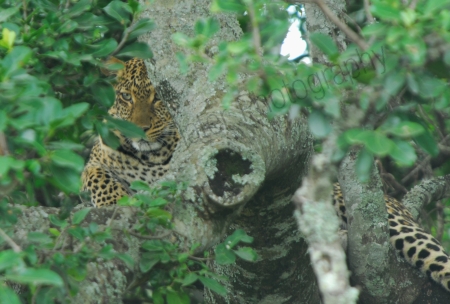
Although leopards are believed to be the most numerous of the big cats in Africa, they are very elusive and therefore, you have to be incredibly lucky to see one. Samburu National Park in Kenya is the best place to see leopard, but I wasn’t able to get a safari to Samburu this time. However, luck was still on my side, as this one was resting in a tree close to the road in the Maasai Mara. The foliage was very dense and initially all that I could see was a foot and a part of the tail, but after several minutes the leopard changed position and I was able to get this picture. After several minutes it climbed down the trunk and got a drink of water from the small stream below before returning to it’s vantage point in the tree. With it being the rainy season, the undergrowth was very dense and so all that we were able to see during this time were flashes of his spots moving amongst the vegetation. It was amazing to be able to see the leopard move without a sound and blend so well into it’s surroundings.

 I just managed to stop laughing long enough to take this picture. We were stopped at a gas station filling up on fuel, food and water when this truck pulled in. I didn’t even think it was going to fit under the overhang but they managed to drive it into the gas station and filled up. I believe the container was likely to be used to store water, but as you can see there is not much holding it on to the truck, just a few thin pieces of string! And yes, no yield, oversized vehicle signs or flagging tape. Thankfully I think the truck was so old that is wasn’t capable of accelerating very quickly or being driven very fast. I just hope they got their container home safe and sound without having it roll away and crush anyone!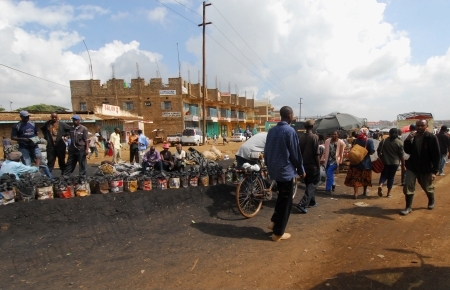
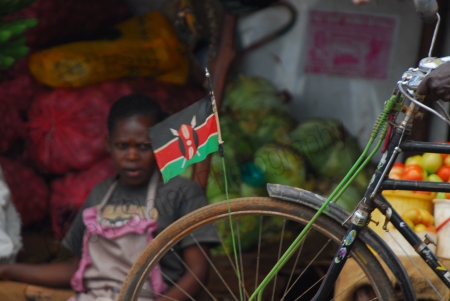
 On this trip I wanted to make sure that I took pictures of some of the daily life and activities of Kenyans and not just focus on the wildlife photography. I took this photo while parked along the Uhuru highway that connects Nairobi to Mombasa at the intersection of the road that heads south to Amboseli National Park. Bicycles are a very common form of transport for everything from water to livestock to furniture to people. This woman flagged down the bicyclist for a ride. Once she was seated and they had started making their way down the highway the man must have told a joke as both burst out into laughter as he pedaled past. As you can see, the tires and frame of the bicycle are coated in red dirt (due to high levels of iron oxide in the soil). All of my clothes, shoes and camera gear got covered in this red soil but amazingly Kenyans wearing white clothes or shoes never seemed to have this problem. They must have some secret for keeping the dust off. Anyway, I will be posting many more photos of various roadside scenes in Kenya over the next few weeks…



 Owen Slater Photography