

Another new species for me on this trip. These lapwings are usually found in more arid areas, so it was a bit of a surprise to find it along the shores of Lake Albert in Murchison Falls National Park.
Another new species for me on this trip. These lapwings are usually found in more arid areas, so it was a bit of a surprise to find it along the shores of Lake Albert in Murchison Falls National Park.

A recently born elephant calf gets some help from it’s mother, who pushed the baby along with her trunk while the calf held it’s trunk above the water.

Moments before I spotted this bird, I was looking through my bird book and thinking it would be neat to see this kingfisher species. Almost on cue, this male obliged. Giant kingfishers are, as you might have guessed, are the largest kingfisher species in Africa. They get to be about 40cm in length.

Appropriately named, this huge heron species takes off for a new fishing location along the Nile. Many of the wading birds were in lower numbers than usual this year due to the much higher water levels that had flooded many of the surrounding marshes.
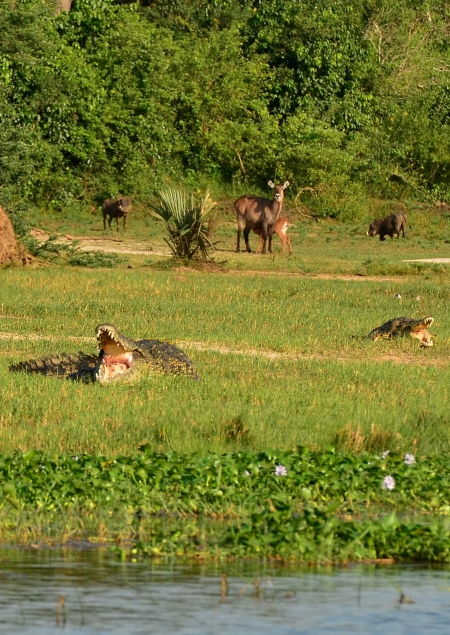
Among the many species along the shores of the Nile, two crocodiles take in some Vitamin D, while a waterbuck calf nurses and warthogs feed along the banks.
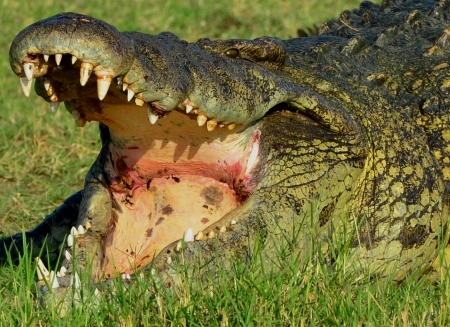
Our boat slowly floated in to the edge of the shore to get a closer look at this huge crocodile. It was atleast 15 feet long and it’s mouth was big enough to swallow me whole. The red area in the mouth is where the gular valve is located, which prevents water from going down the trachea when the animal is under water. On land they hold their mouths open to dissipate heat and to get their teeth cleaned by brave birds and insects.
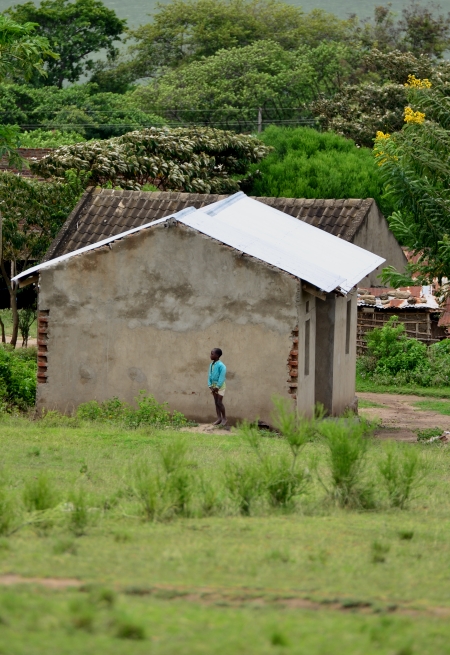
A child waits for company to arrive home near the banks of Lake Edward

The surface of this overturned metal container was extremely hot in the late afternoon sun. As a result this little agama lizard lifted up it’s feet as the heat waves rolled up and off the container.

A colony of red throated bee eaters creates numerous nest cavities in clay cliffs along the Nile.

With so many beautiful birds in Uganda, its impossible to pick a favourite but these red throated bee eaters are high up on my list. So colourful, with remarkable flying abilities, they snatch fast flying insects (including but not limited to bees) out of mid air in a blink of an eye. Trying to capture these birds in flight was extremely difficult.

By coating himself in mud, this old bull buffalo is able to cool off and more importantly, limit the amount of exposed skin to biting insects.
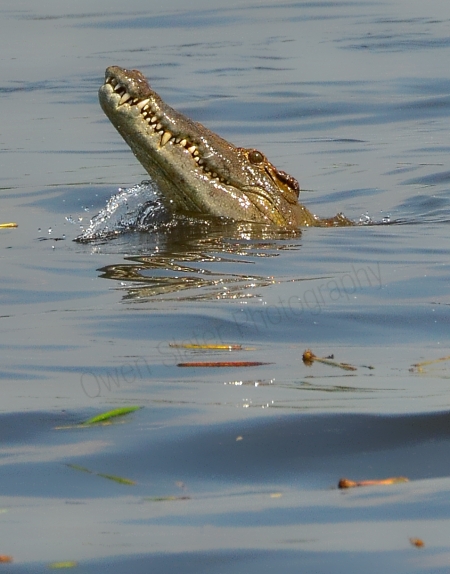
A Nile crocodile splashes water as it gulps down a piece of hippo meat.
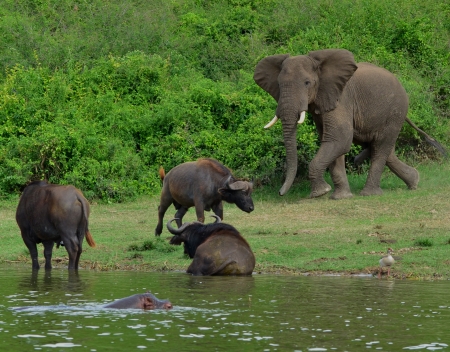
A young bull elephant charges a buffalo which quickly got out of the way.
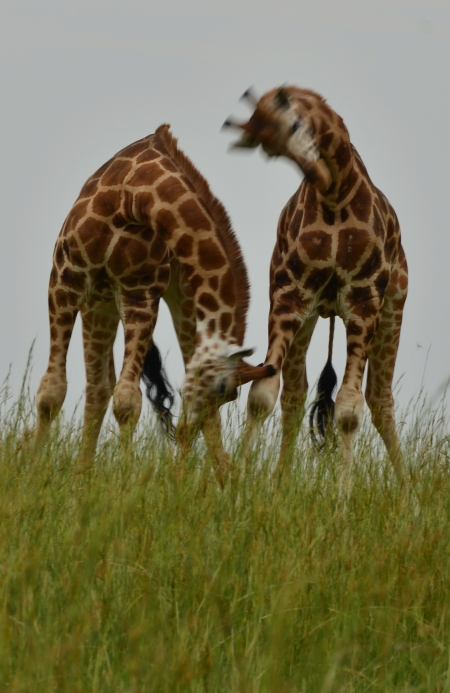
Two young male giraffe lines up and smash their heads against each other in Murchison Falls National Park.
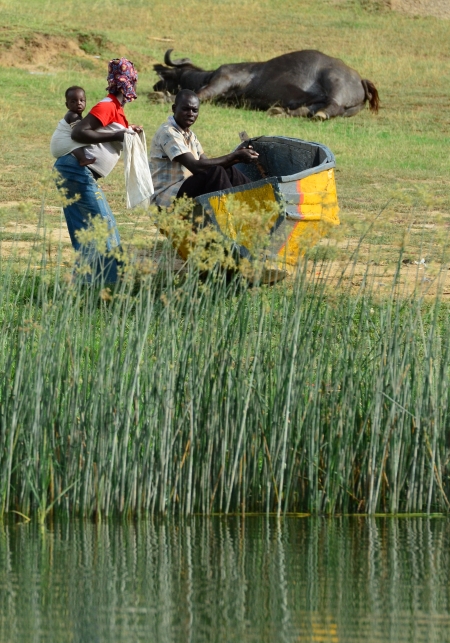
First, this scene is one uniquely African. A man rests in his brightly coloured fishing boat while his wife takes care of their baby while keeping an eye on a buffalo. Buffalo are one of the fiercest animals in Africa and they will actively defend themselves and members of the herd. However, this old bull didn’t seem to care about anything other than sleeping. Once a bull gets dethroned, he leaves the herd and lives out the rest of his days on his own or with other displaced males. This one seemed to have set up his territory in a small village in Queen Elizabeth National Park.
However, the more interesting fact, which seems to be unique to many countries in Africa, is that in general African babies cry substantially less than babies in North America. Repeatedly, this has been one of the only saving graces on my long, overcrowded bus rides throughout East Africa, where everyone is packed like sardines into the buses. I often wondered if this was just my own observation or if it had been studied. Indeed, it has been studied by a man named Ron Barr out of the University of Montreal. He and other researchers concluded that it is due to the fact infants are carried around in direct contact with their mothers for at least the first three months, fed much more often and provided immediate attention whenever they are in distress (as compared to North American infants that are often placed in a crib or only held for limited periods of time). Hopefully this catches on in other parts of the world as the last thing anyone wants is to listen to a crying baby!


 Owen Slater Photography