Category: North American Wildlife


Seeing and photographing wild wolves is always a thrill,  even more so this year since finding any has been a lot more challenging. On the few occasions when I have been lucky the glimpses were always fleeting or with lots of trees and bushes obstructing my view.

On one day late in August I got my best glimpse this year. Some of the pack was resting deep in the forest near a kill site and the only way I knew they were there was from the periodic howling. After awhile I noticed some movement between the trees and it soon became clear they were on the move. I had a pretty good idea of the path they would take and where they would come out of the forest for a few seconds so I drove ahead a few minutes, parked my car and set up my camera. With the settings dialed in, I didn’t have long to wait. The two year old female emerged from the trees and came trotting along the clearing. She stopped not too far from where I was parked, turned and looked behind her as if waiting for something.

Wolf 2y old WM

It didn’t take long to see who it was. One grey and one black pup soon appeared and followed in her footsteps through the clearing.

Wolf pups 2013 WMWith the pups close behind I only had a few seconds to get some photos before the adult lead the pups back into the forest and out of sight.

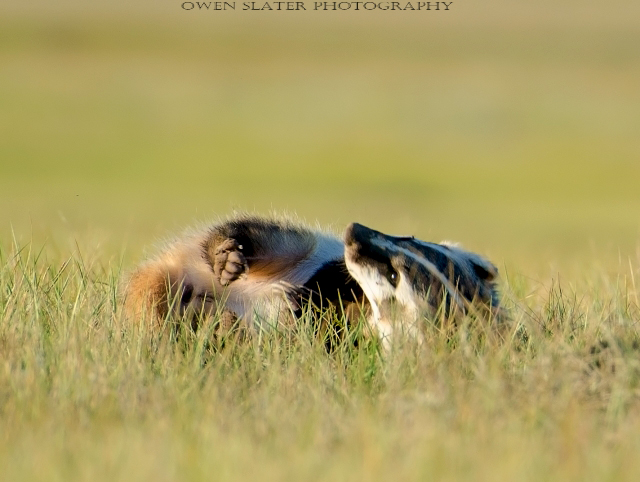
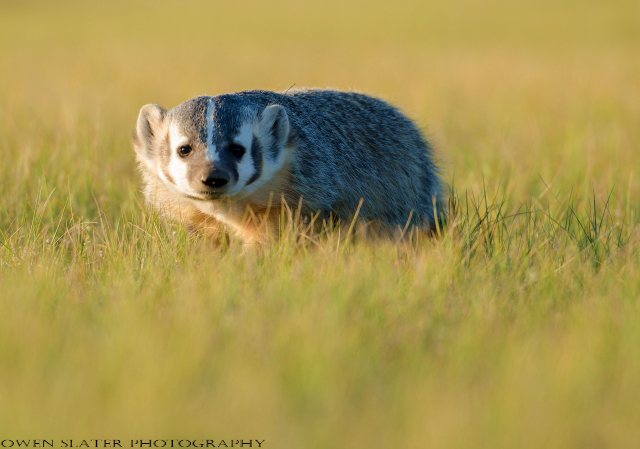
Rowling badger baby WMFeeling completely at ease, this young female badger played around in the grass right in front of me on another spectacular evening in Grasslands National Park. Hard not to like badgers when they are this cute!

With that, my trip to Grasslands has come to an end. It was an amazing week with memories to last a lifetime. No doubt I’m sure to be back soon!

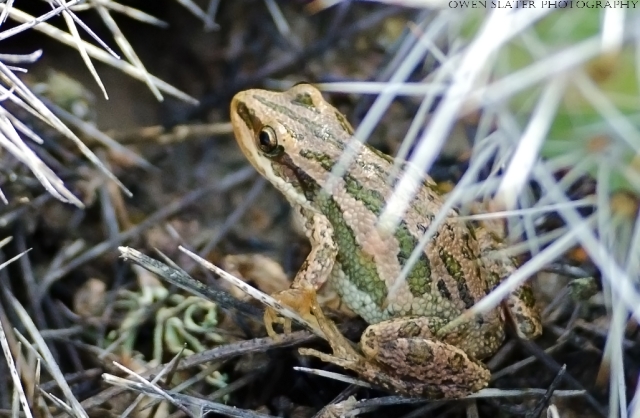
Chorus frog and prickly pear cactus wmSomeone loses an eye!

This little chorus frog (no bigger than a few centimeters) saw me coming while on my search for short-horned lizards and fearing that I might be a predator, headed straight for cover by hopping into a cluster of prickly pear cactus plants. Flirting with disaster, it easily maneuvered itself between the spikes in a perfect defense strategy for most would be predators. I quickly snapped off this photo and then left it be so that it could carefully extract itself from the precarious situation.

Short horned lizard looking back WMBelieve it or not, there are! A  grand total of 7 native species of lizard live in Canada so while we won’t win any lizard biodiversity awards we at least have a few hardy species that deserve respect for being able to survive here.  Not only that, but the one I was searching for, the greater short-horned lizard, has the unique ability to shoot blood from its eye!

Finding any of these lizards can be challenging at the best of times but compounding things is that this species is a master of camouflage, only a few inches in length and unfortunately, critically endangered due to habitat loss.

Never one to be deterred by long odds, I set out to find one. The searching process involved slowly walking along south-facing, rocky hills in a slow and meticulous manner while keeping my eyes fixed on the ground immediately in front of my feet. Only when the lizard is about to be inadvertently stepped on will it bolt from cover.  Thankfully, my good luck that week continued and this one scurried from cover shortly after starting the search.

They don’t view humans as predators so I didn’t have to worry about getting a squirt of blood in my face while I photographed it! They save that secret weapon for foxes, coyotes and other would be predators. By rapidly increasing the blood pressure around their eyes, it’s believed they rupture a small blood vessel causing blood to shoot as far as 2 meters. The would be predator understandably becomes startled and distracted long enough for the lizard to run for cover,  or if it was already picked up, the blood is known to be mildly noxious causing the predator to drop it!  If that wasn’t enough they also have the ability to inflate their bodies with air to become a sharp, spiky balloon. With these remarkable and effective survival strategies, all they need from us is to curtail the destruction of their habitat and they should be able to survive for generations to come.

The evening before we headed into Grasslands National Park I quickly flipped through a prairie dog book written by one of the leading experts in the field (Dr. John Hoogland), who has been studying them for over 30 years. In it he describes that while prairie dogs are known to routinely get eaten by a whole host of different predators it is extremely rare to witness a predation event. In fact, his team has only seen about a dozen in the 30 year period!

Having seen neither of these species before, would it be too much to ask to see something like this on my first day?  I didn’t think so!

Badger on the hunt WM

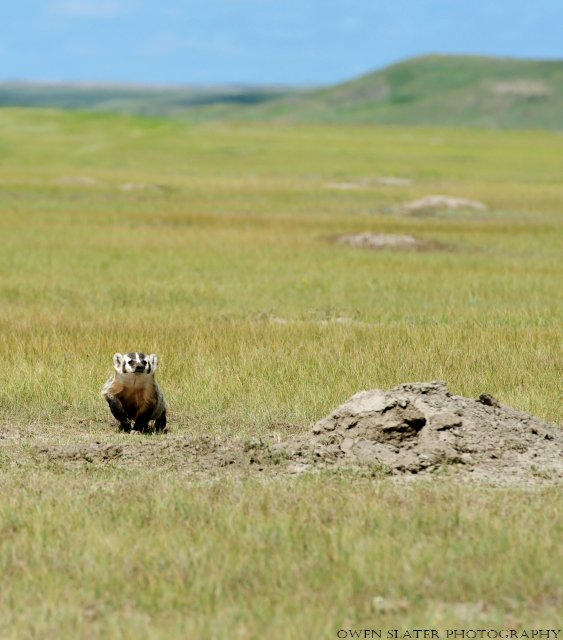
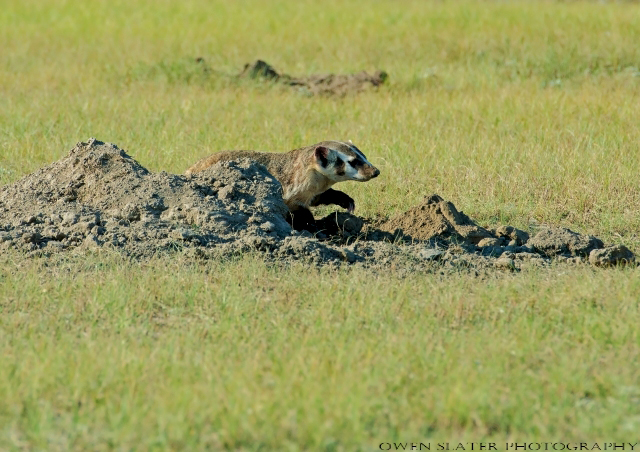
So with this little tidbit of information in my head I didn’t get too excited when I saw this badger eying up a prairie dog burrow.  I was happy enough to just see her and her daughter pop their heads out above ground from time to time. But as time went on and they continued to work in tandem to isolate a series of prairie dog burrows my thoughts started to shift. Maybe today I was going to get a chance to see something pretty rare?  The badgers certainly seemed determined.  They continued to dig under the hot, mid-day sun. One stayed down in a prairie dog burrow they were excavating while the other worked to prevent any backdoor escapes by plugging the adjoining burrows with dirt.
Badger filling burrow in WM

Taking turns they alternated between underground digging and above ground burrow patrol making sure that all the other burrows remained packed down and listening for any sounds of the prairie dogs beneath them.  When the mom was out doing her patrols she suddenly changed from relaxed to on high alert. She must have heard the muffled sounds of a prairie dog barking out alarm calls because she focused all of her attention on the ground next to one of the plugged burrows.
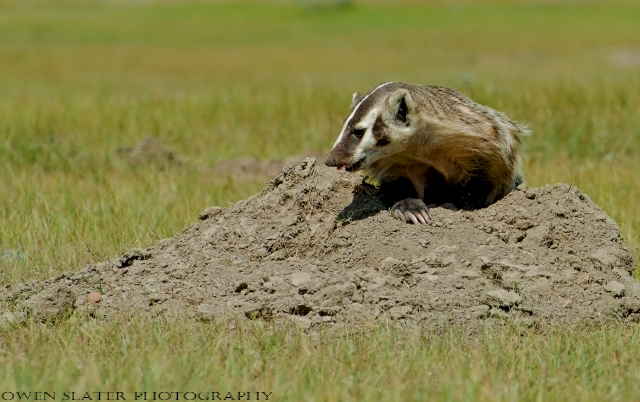
Badger licking lips WM

She carefully moved around the mound and stood motionless for several seconds before gently scratching at the ground with her back foot. She did this for a few seconds and then cocked her head and listened for a response. This was repeated several times and I suspect it was used to pinpoint the location of the prairie dog. Once she determined it was within range she launched herself at the entrance, flinging dirt into the air at an almost unbelievable rate as she quickly closed the gap on her prey.
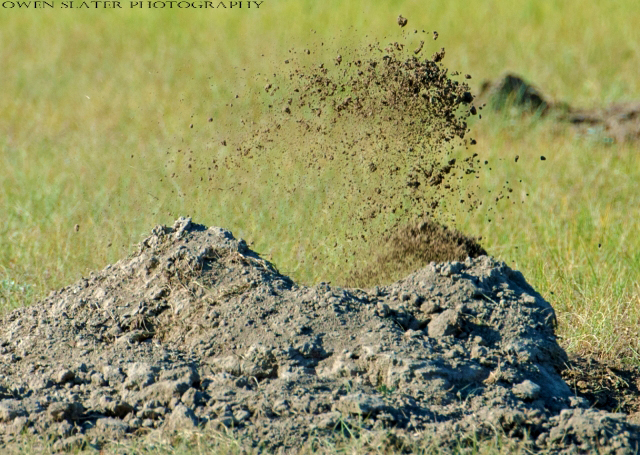
Dirt flying badger dig WM

After about 30 seconds the dirt stopped flying and there was a pause in the action. In my mind I figured she had caught a prairie dog and was likely eating it within the burrow. After all, I knew that the odds of actually seeing a predation event were slim to none! With these thoughts going through my head I started to relax my grip on the shutter release and I started readjusting the settings on my camera. I should have been more patient because as soon as I lost my focus she came bolting out of the burrow with a prairie dog clenched in her jaws! I fumbled with my camera as she started running towards the open burrow 15 feet away! I knew I had less than a few seconds to get a photo and I madly tracked her with my camera, firing off frame after frame before she disappeared out of sight.  Thankfully she gave me just enough time to get the photo below!
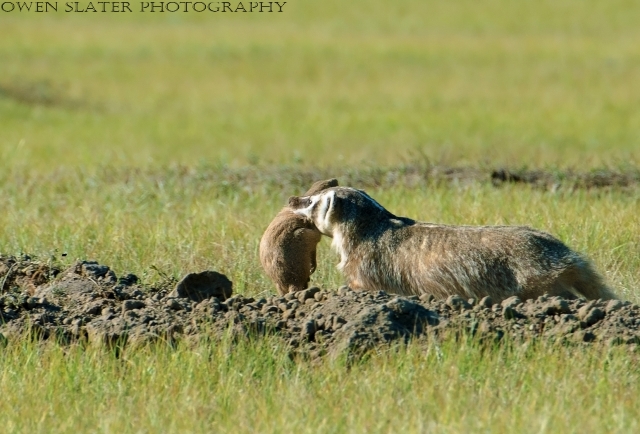
Badger with PD in mouth crop WM

I sat in the car dumbfounded with what I had just witnessed. I scrolled through the images checking  to make sure I had captured a bit of the action but I didn’t have much time to rest. Within a few minutes the mom was back out and heading towards the burrow she had just pulled the prairie dog from. She briefly stopped to look in my direction, which was when I noticed the blood tinged right ear. She also had a cut on one of her toes so the prairie dog must have put up a bit of a fight. In the end it was no match for the badger duo.

Badger mom bloody ear WM

She repacked the burrow with dirt to prevent any remaining prairie dogs from escaping and rejoined her daughter for dinner. Over the next few hours the badgers ate their hard fought meal in the confines of the burrow. It wasn’t until they had finished that they both emerged and relaxed at the entrance.

Badger mom and daughter WM

Luck continued to be on my side and for the next three days they made this burrow their temporary home. Each night they would emerge to play with one another and go on hunting expeditions but I never saw another successful hunt.  I guess I shouldn’t have expected to but it was hard not to have increased expectations after a first encounter like this one!

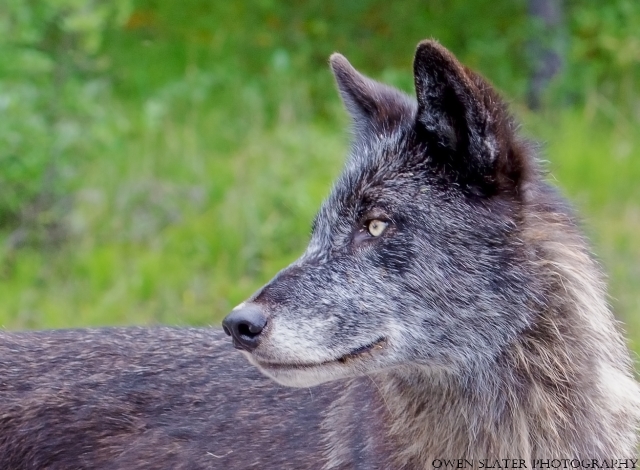
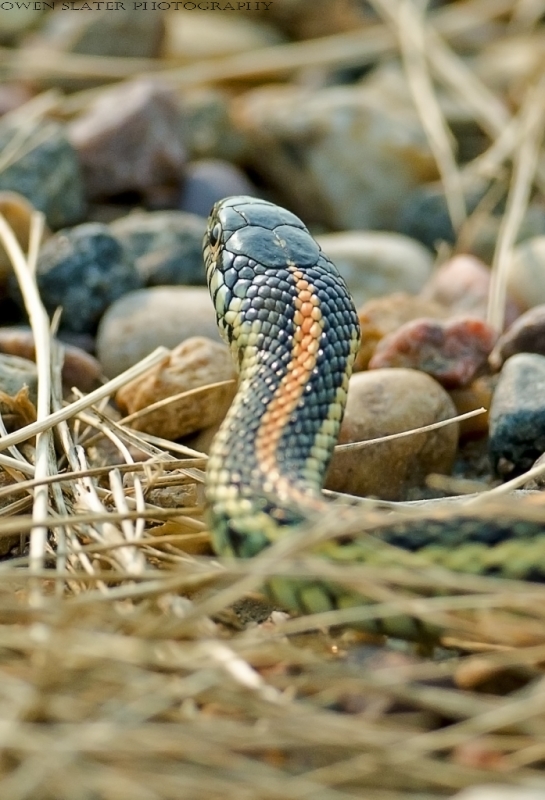
Garter snake head grass WMThere aren’t many places in Canada that you can find snakes easily so it was nice to see at least a few every day we were in the park.  They have to be very hardy to tolerate the long, cold winters here and camouflage is equally important to surprise their prey and avoid predators.  Unless they bolt from cover or are out moving around it can be incredibly difficult to find them.

This garter snake crossed in front of me while I was driving and I had to slam on the breaks and swerve to avoid hitting it. I got out to make sure I hadn’t hit it and found it happily slithering along the grass on its way to a marsh.

Garter snake moving away WM

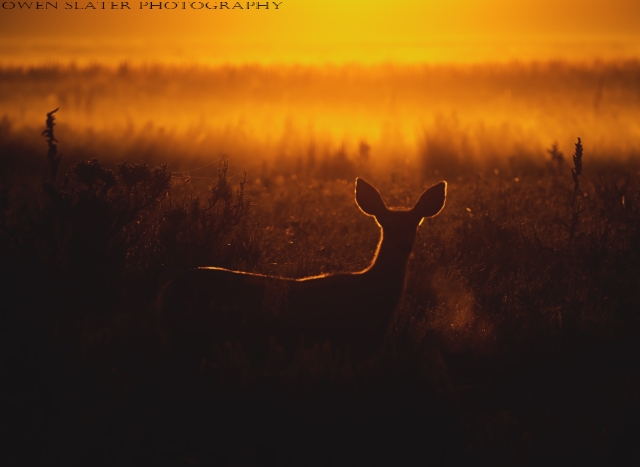
Backlit mule deer WMA mule deer exhales as the sun’s rays highlight its frame in beautiful golden light on another spectacular morning in Grasslands National Park.


I went to prairies with the goal of seeing and photographing animals I had never seen in the wild before. The list was longer than I care to admit but included burrowing owls, prairie dogs and badgers. While I knew the first two would be very easy to find, badgers were suppose to be a bit harder.  Little did I know in grand fashion I would check all three off the list in one morning!

The first part of the morning we were treated to a beautiful sunrise while photographing a great horned owl, burrowing owls and later on prairie dogs as they woke up and left their burrows to eat. By about 11am we decided to drive down the road to see some other sights but we didn’t get far. Within about 15 minutes we pulled into a parking area next to a prairie dog colony and lo and behold a badger was resting at the entrance of a burrow!! Over the next several hours we were treated to amazing scenes of a badger mom and her daughter that included them hunting prairie dogs in broad daylight!  But that story and the accompanying photos are for a different post! This is merely an introduction!

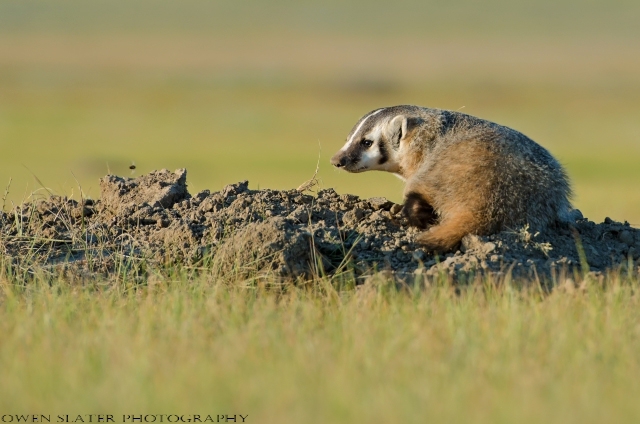
Here the daughter looks around her surroundings after helping to excavate a prairie dog burrow.

Badger looking back WM

A true sign that she was not the least bit concerned about me and my clicking camera was when she started to play right in front of me! She rolled around in the grass, jumped up in the air and snapped at invisible objects!

Badger baby mouth open WM

At one point she circled around the burrow and came within 10 feet of me before getting distracted by a leopard frog that leaped out in front of her. She briefly chased after it before the next distraction happened; a prairie dog not too far away. With her tail raised up in the air she sprinted off towards it as it squeaked an alarm call and vanished down the burrow.

Badger side lighting WM

This is just the tip of the iceberg of the badger extravaganza that day, so stay tuned for more including the story and rarely seen photos of them hunting prairie dogs!

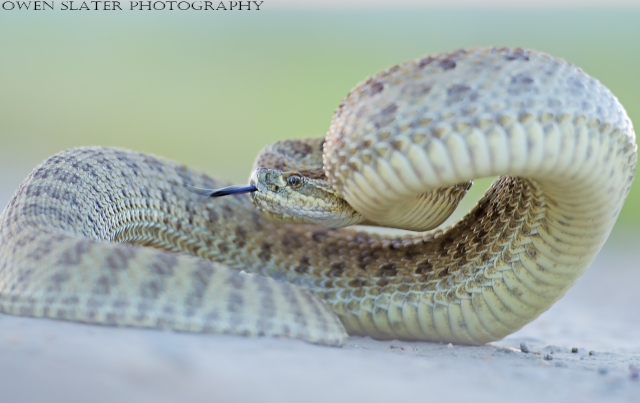
Prairie rattlesnake raised up WMIn the grand scheme of things not many people like or tolerate snakes, especially venomous ones like this prairie rattlesnake. Even in national parks they have a hard time since anyone with a car and a dislike for them can easily make quick work of them. This one was out doing what snakes do and basking on the road. Fearing that it would either get intentionally or unintentionally run over, we used a long pole to safely move it off the road. At the time it wasn’t too happy about the helping hand but if it knew the possible alternative it might not have been so defensive or made such a rattle!

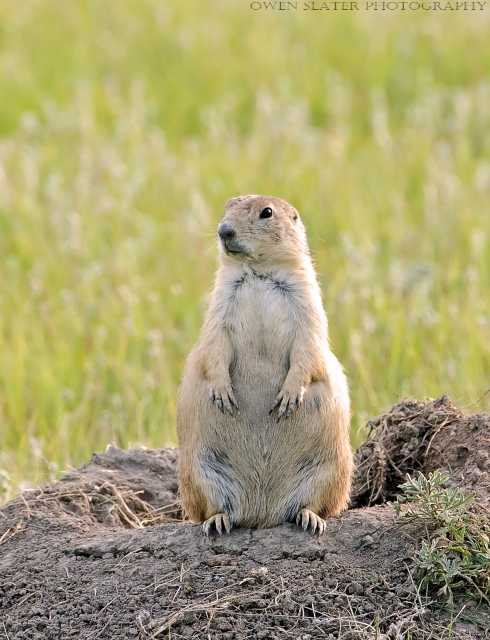
I think it’s almost impossible to have a bad day if you spend any time watching prairie dogs! To me they are the comics of the prairies.

They can just be sitting around their burrows looking out on the world and they still make me laugh.

PD Budda 2 WM

It looks like this one is creating a new fashion trend by combining a corset with oversized and saggy pants!

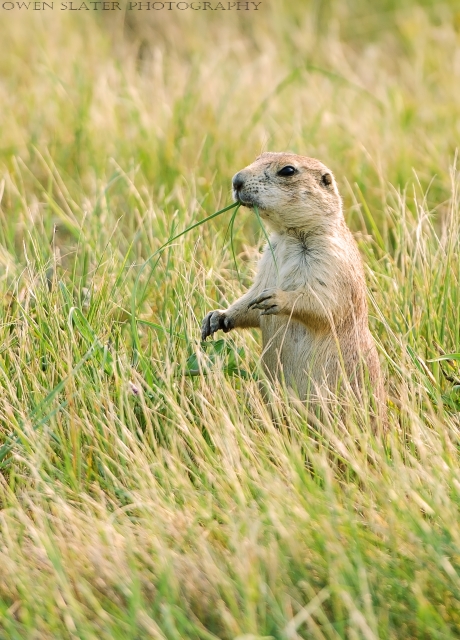
You would think something as mundane as eating grass wouldn’t be very entertaining but somehow they manage!

PD grass mouth WM

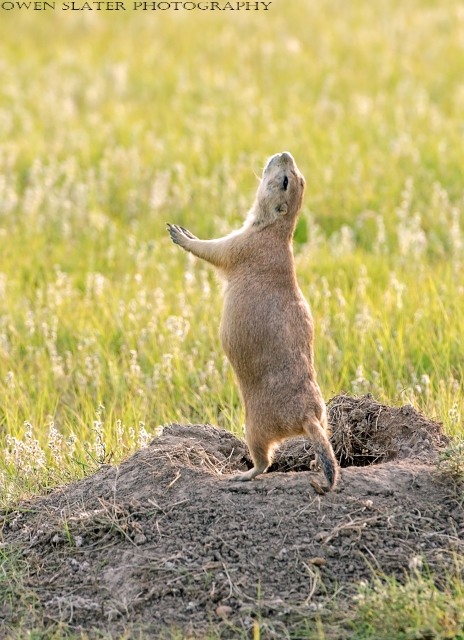
If that doesn’t get you smiling they become a little less subtle by doing what is called a jump-yip!

PD jump yip 2 WM

A jump-yip is a very creative term scientists use to describe when they jump up on their back legs (sometimes falling over in the process) and make a yipping noise at the same time!

If one didn’t know better they might think they are praying to a higher being and given all that they go through on a daily basis they really do have a lot to worry about. You see prairie dogs just aren’t cute little comedians, they are also a keystone species of the prairie ecosystem. They are the exclusive food of the endangered  black-footed ferret and on the menu of coyotes, red and swift foxes, badgers, owls, hawks, and snakes. That’s not to mention the occasional human that shoots them or runs them over! While trying to avoid all of these predators they are constantly clipping and eating the grass, flowers and bushes to get fat enough to survive the winter. In the process they create a fertile, biodiverse, natural garden that other species like deer and pronghorn thrive off of.  The burrows they build are converted into homes and hiding places for burrowing owls, ferrets, badgers, leopard frogs, prairie rattlesnakes and black widow spiders. Without them several species would die out and over a hundred more would be affected by their absence from the landscape.

Sometimes the pressure of being so important to so many gets too much and they collapse into a heap called the prairie dog pancake!

PD pancake WM

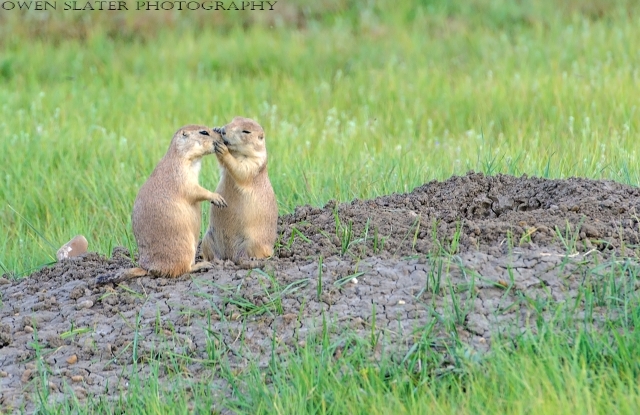
Through it all they still make sure to show their loved ones how much they care about them, even if  it’s not always appreciated!

PD kisses 1 WM

So the next time you see one, spend a few minutes watching them. I’m willing to bet that at the very least you will come away with a smile on your face and hopefully like me, an increased appreciation for all they do for the prairie landscape.

Bug-eyed bighorn WMI have grown accustom to big horn sheep hanging out roadside licking up minerals and eating grass to the point that I have developed the bad habit of not paying them much attention. However, with company in town the sheep were low hanging fruit and they became an instant hit. We stopped for several minutes so they could watch and photograph them. Initially I didn’t lift my camera up but soon some of them were making pretty entertaining faces that I could not longer ignore! They put on a great show for us and left me with the parting shot below. I guess I need to pay them a bit more attention the next time!

BHS tongue out WM

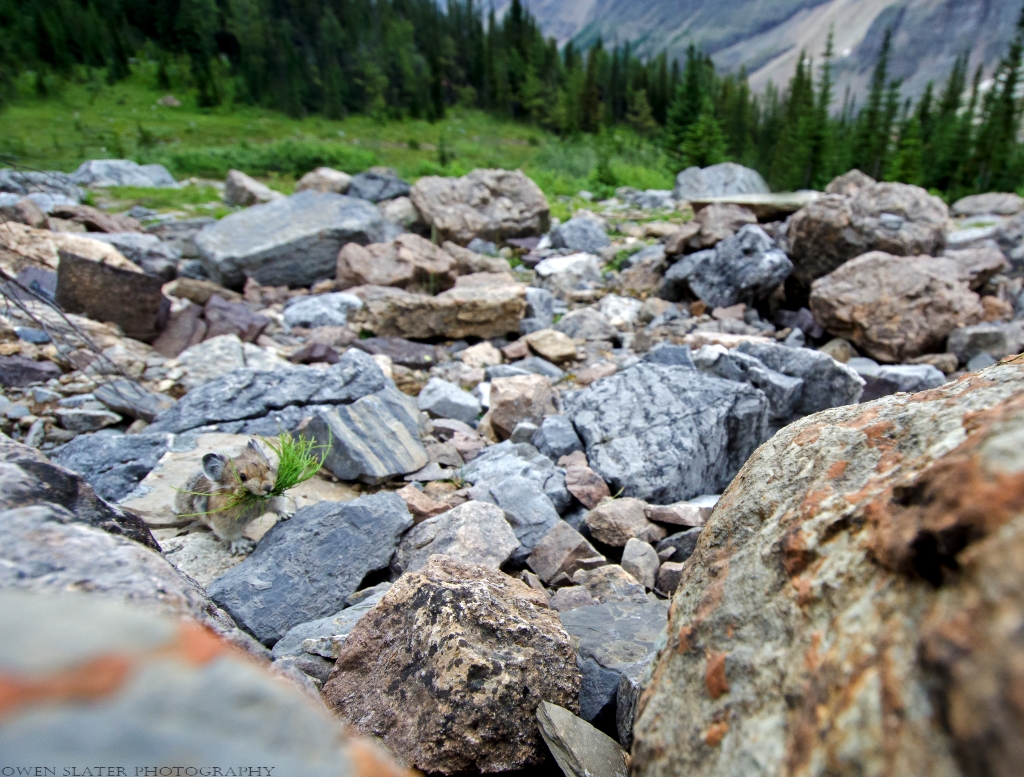
Pika mouthfull landscape WMOn a 3-4 hour round trip hike into a backcountry area of the Rockies my girlfriend was struggling to stay motivated and it was clear she wasn’t enjoying the steady uphill climb. While she can carry a heavy pack and hike like a machine in the prairies on scorching hot days while I whither under the sun, she detests any uphill hikes in the mountains. Finding a hike that would be enjoyable was out of the question, it was just a matter of finding one that had a big enough reward at the end to make it worth it!  I tried picking one that was not very steep and that had a tea house at the end where we could treat ourselves to drinks and treats in a beautiful wilderness setting. While that helped get her to the trail head, it didn’t guarantee that she would want to do anything like it again. Thankfully, her love of small mammals seems to trump almost anything else and as luck would have it there were lots where we were heading, including pika, a species she had never laid eyes on before!

After visiting the tea house and trying some of homemade treats and teas we went over to a huge rock avalanche area with a nearby meadow full of lush vegetation; about as ideal a spot for pika as you can find. We sat quietly on the rocks and within a few minutes we were rewarded with our first pika, then another and another! We watched as they sun bathed on the rocks, learned their favourite feeding spots and travel routes and saw them unsuccessfully trying to defend their stashes from the raiding chipmunks. It was a rodent biologists dream come true and needless to say the torture of the uphill hike quickly melted away and was replaced by her excitement at seeing and watching these little farmers go about their daily lives.

With the pika and chipmunks providing the entertainment, I focused on photography. I set up my wide angle lens on a rock next to an area that it routinely passed by on the way back to its hay stash. I pre-focused on the spot I guess it would pass through, moved back and waited with my remote in hand. It didn’t take long before it jumped along the rocks with a mouth full of green grass completely unconcerned by the addition a clicking camera.

That little pika really did save the day and plans are in the works for the next mountain wildlife hike!

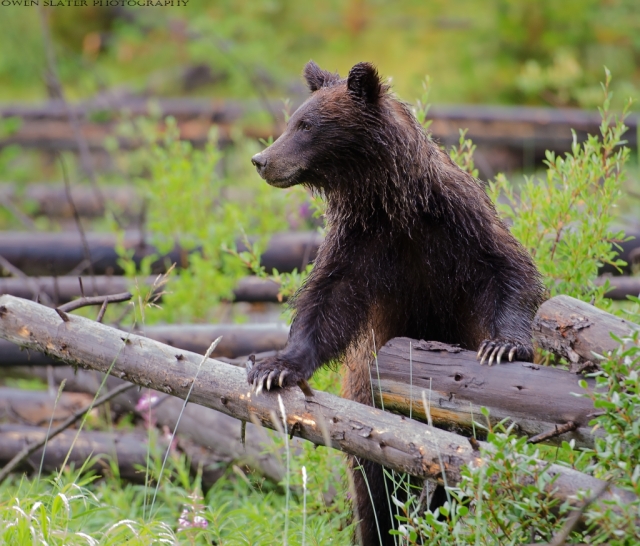
Grizz dark cub 64 3yold WMWhile her two brothers flight with each other over buffalo berries and appear oblivious to their surroundings, this dark phase grizzly bear stands up to search for her mom.

Many people in Banff National Park know these bears, as their mother is bear 64 who is one of the most commonly seen grizzly bears in Banff. She prefers to make her living in the wilderness areas surrounding the Banff townsite and has successfully navigated this busy landscape for over two decades.

Even now, with her cubs at 3.5 years of age, they are still very reliant on her to keep them safe and to show them all the seasonal food sources in the Rockies. Grizzly bears here have the longest interval between births of any grizzly bears in the world at upwards of 5-6 years. This is thought to be do to the harsh landscape and reduced food supplies compared to other regions where grizzly bears can be found.

This almost adult sized youngster has always stayed very close to her mother and is never far from her side. In a sign of her growing independence she has started to go off and forage on her own but she always tries to keep tabs on where her mom is. On this day, 64 was off doing her own thing and out of her cubs sight, so this youngest stood up on her hind legs and search the area for her. When that didn’t work she started calling out. Within seconds 64 appeared from the bush and came running over to see what she was being called about. Content that her Mom was back in close proximity, this ‘cub’ relaxed and went back to ravenously feeding on berries.  In the next few months their independence from 64 will grow and they will likely head off on their own or be sent packing by Mom soon.

Coat Change

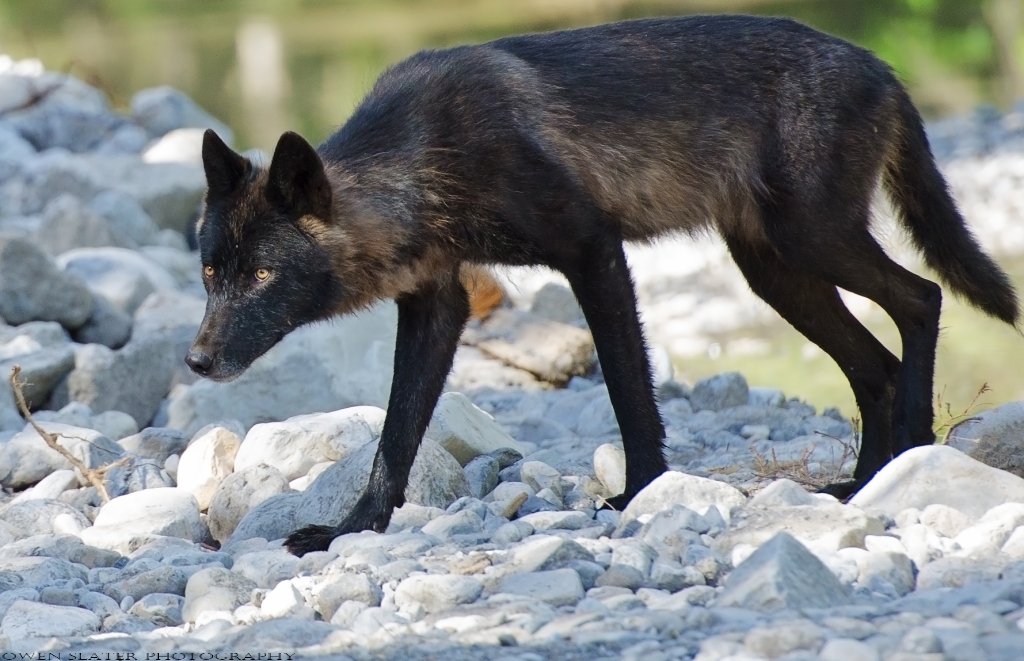
Wolf yearling creek crossing WMThe last remnants of a winter coat cling to the neck and sides of this wolf as he makes his way along the rocky banks of a river.

With only small amounts of snow remaining on the mountain peaks, wolves become even more like ghosts of the forest during the summer. Coming across them is always, to some extent based on luck and usually the glimpses are very fleeting.

With the sunlight trickling through the trees I only had a few seconds to steady my camera and get this photograph before it disappeared back into the dense understory of the bush. Such remarkable and elusive creatures!

Khutzeymateen river grizzly WMI was recently a naturalist with Classic Canadian Tours to the Khutzeymateen Grizzly Bear Sanctuary on the North coast of B.C. The park is the largest remaining intact coastal temperate rainforest in the world, can only be accessed by boat or float plane and was specifically set aside to protect grizzly bears and their habitat. About 50 grizzly bears call this park home, which is the about the same number that live in all of Banff National Park. That may not sound impressive at first, but the Khutzeymateen is 16 times smaller in area than Banff!  As such it has one of the highest concentrations of grizzly bears in North America and if you time it just right the bears are on almost every beach that you come across.

They come down to the huge estuary almost everyday at low tide from late-spring to mid-summer to feast on crabs, clams, sedgegrass and whatever else they stumble upon. In the 2 hours we were in the park we came across 7 grizzly including a mom and cub that play fought along the shore as we watched from the boat! On the way to and from the park we also saw breaching humpback whales that had just started to return from the north to feed on the abundant herring, lounging harbor seals, stellar sea lions, bald eagles fishing for the salmon and countless other coastal bird life. It was an incredible day of wildlife viewing!

To give you an idea of the habitat I chose this photo of the rainforest and one of the many rivers feeding into the estuary. A grizzly bear appeared at the edge of the river and seemed to be checking it out for any returning salmon.  In a few weeks the bears will be farther inland feasting on all the spawning, dead and decaying salmon trying to put on as much fat as possible for their long winter sleep.  A truly very unique place.

If you are interested in seeing the Khutzeymateen but can’t afford to be away for very long or the expense of a multi-day trip, Classic Canadian Tours has day tours from both Calgary and Edmonton that are sure to sell out again in 2014. Dates will be announced soon so stay tuned!