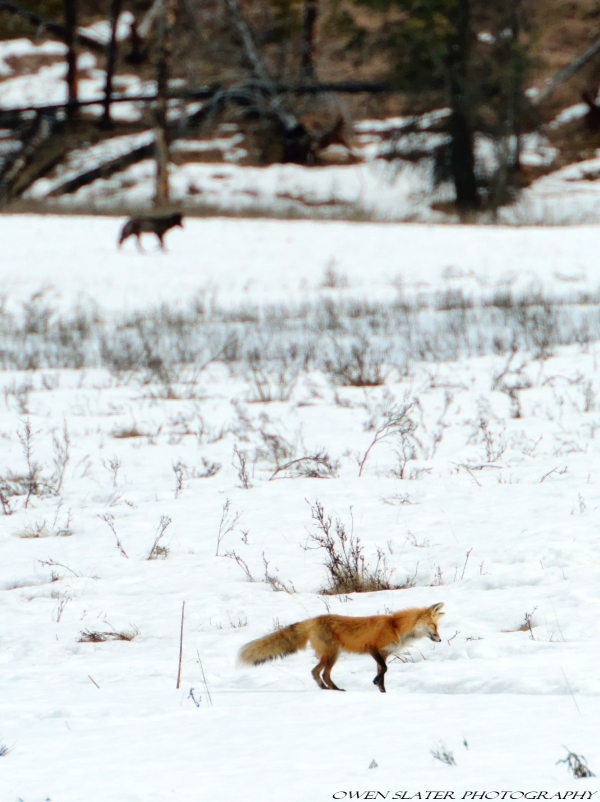
A wolf was hunting for rodents in the back of this meadow when a red fox nonchalantly trotted into the middle of the meadow right in front of the wolf. Since wolves are known to kill other carnivores if they come across them, I expected to see either the fox quickly run and hide or the wolf chase after and try to kill it. Instead they both just glanced at each other and then almost in unison, they resumed hunting. For several minutes they mimicked each others hunting stance, before the fox decided to move on and look for prey elsewhere.
Category: North American Wildlife
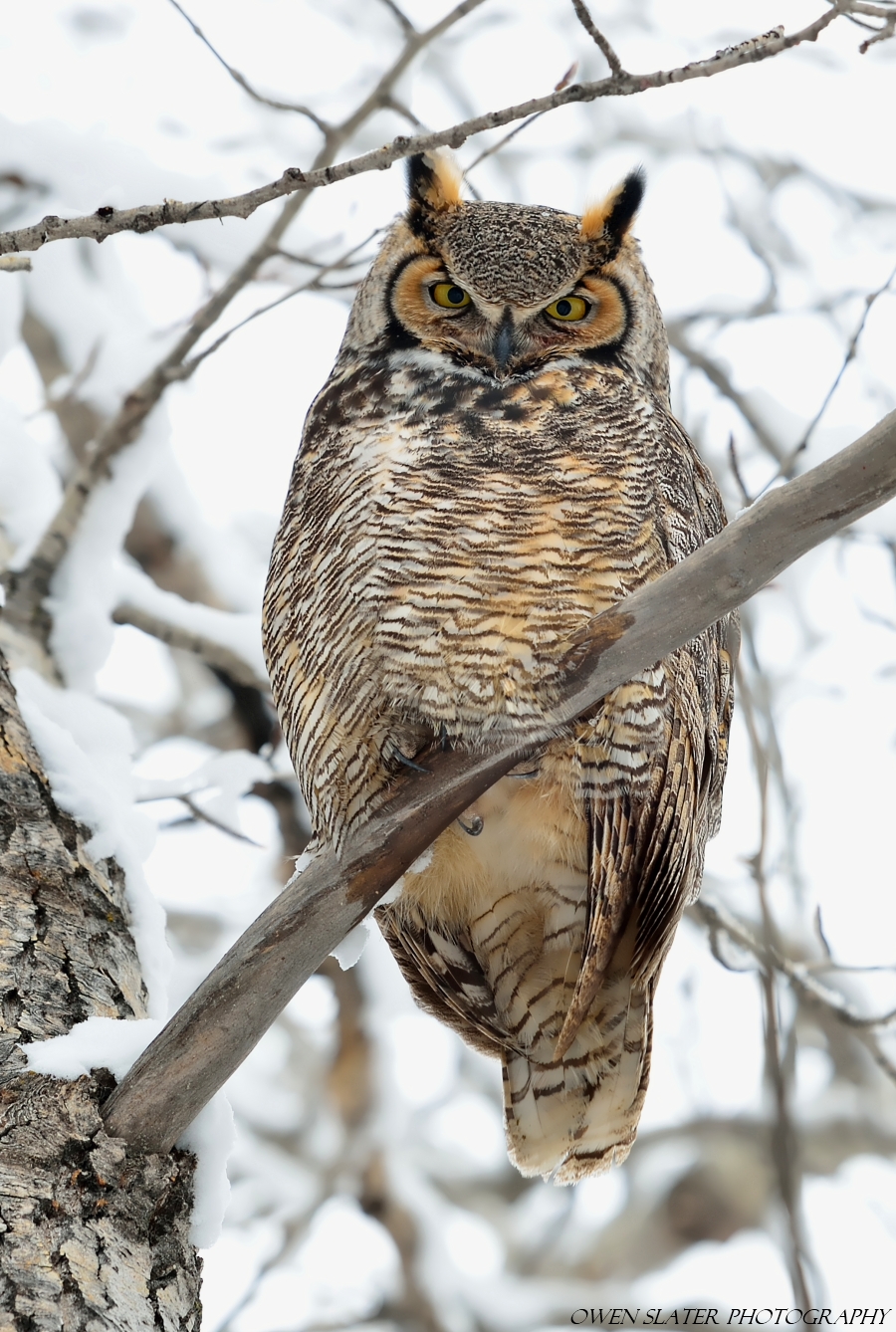
I often drive several hundred kilometers and spend countless hours outside trying to find wildlife to photograph. However, sometimes it’s much easier. This past week I just had to look out my office window! Sitting in a stand of aspen trees was this great horned owl. Not surprisingly the usual four squirrels that frequent the backyard were nowhere to be seen. I quickly grabbed my camera, took a few photographs and returned to the warmth of my office to watch the owl from a distance.
Please click on the image to view a much larger version.
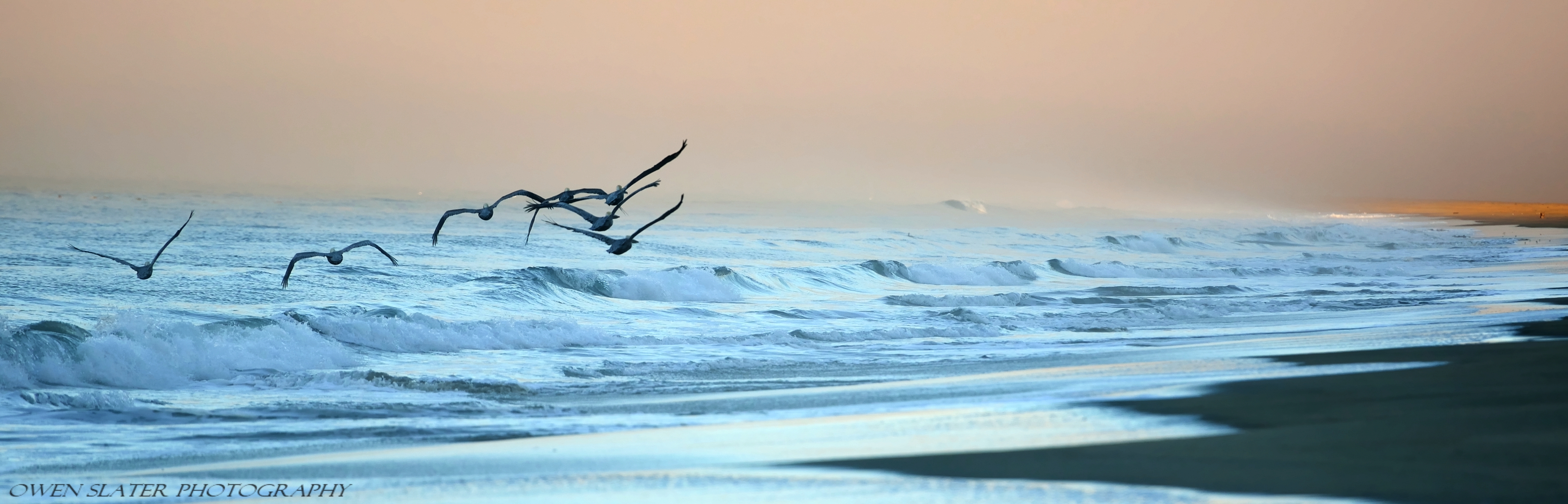
Similar to surfers, pelicans have figured out how to harness energy from waves. However, it is actually more closely related to what a pilot does during take off and landing than to surfing. Interestingly, it appears pelicans are one of only a few coastal birds to have figure this out. By flying so close to the rolling wave, they are able to gain lift, speed and decreased wind resistance created by the air that gets trapped between the water surface and the underside of the wing. This air cushion essentially supports the bird’s weight just above the water’s surface. As the wave increases in height the pelican rises up parallel to the wave to maintain lift. Just prior to the wave breaking, the bird will then descend along the leading edge of the wave, gaining speed along the way much like a surfer does. By doing this they can greatly increase their flight speed without ever having to flap their wings. The key for the pelican is to build up as much speed as possible before the wave breaks. Just as the wave starts to crash over itself the pelican resumes flying to get above the resulting air turbulence. As the next incoming wave moves into shore they reposition themselves along its leading edge and repeat the maneuver. In this way they can travel much longer distances much more quickly and with less effort than other birds. While pelicans and albatross were showing us how to use this effect well before we recognized its existence, it wasn’t until the Wright brothers came along that anyone used it. Even then, no one knew what it really was. Now the phenomenon is well described and in the aviation world it’s known as ground effect. Anyone that has flown in an airplane has felt this either at take off or landing. In large planes it is most noticeable just before landing, when the plane seems to hover just above the ground and actually gain speed just prior to touchdown. In small planes it is more noticeable at take-off, when the pilot maintains the airplane just off the ground to help increase the ground speed before ascent. Next time you fly watch for this effect and you will surely notice it if you haven’t already.

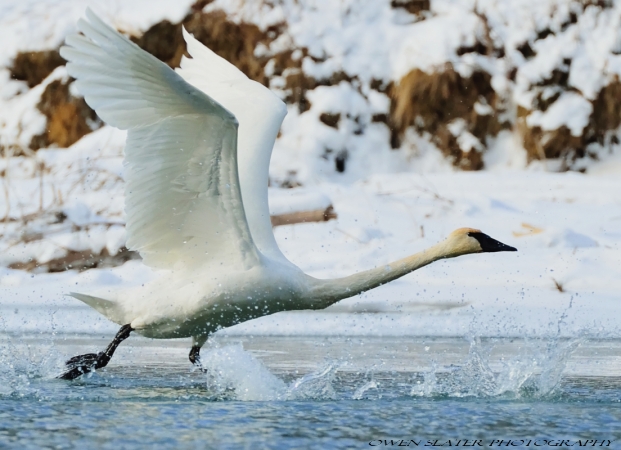
Back in Alberta last weekend, a trumpeter swan propels itself up and out of a narrow section of the Bow river that hadn’t frozen over yet.
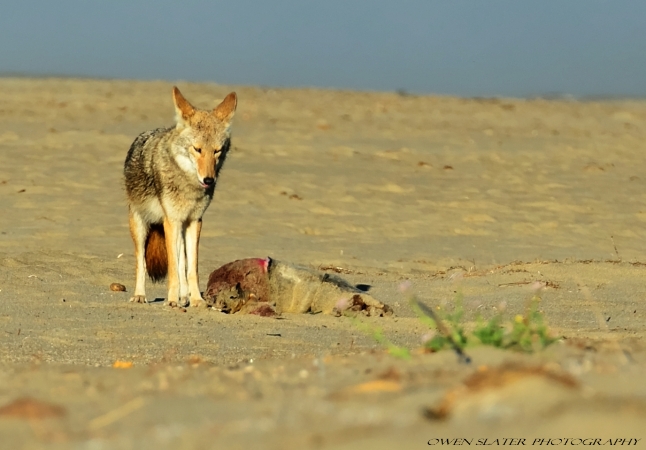
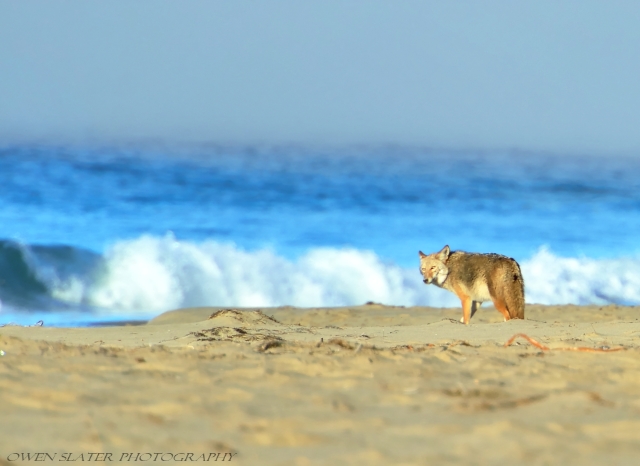
The beach combing coyote used its strong sense of smell to locate breakfast along the shores of Point Reyes. It paused briefly over the body of the deceased harbor seal pup before feasting on the left overs. Once full, it wandered off leaving the what remained for the turkey vultures, ravens and crows.
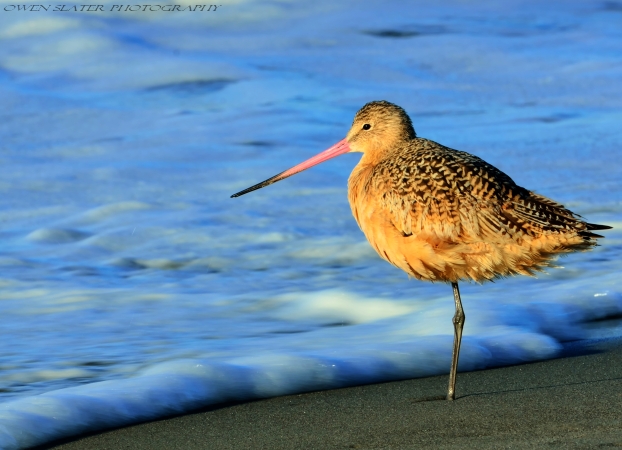
Marbled godwits are common along the coast of California. This one rested on one leg on the shores of Stinson beach as the sun rose above the hills. Many areas along the coast have implemented strict laws regarding where dogs can be walked or let off leash in an effort to give the native wildlife a chance to rest, nest and feed without being disturbed by the curious canines.
With over 25 centimeters of snow to fall within the next day in Calgary, I find myself thinking back to about a week ago when I was on a warm beach in California! On this particular morning, I watched a beautiful sunrise before coming across a lone coyote feeding on the carcass of a harbor seal pup. After eating its fill it walked about 100 feet away from me combing the beach for other washed up delicacies.
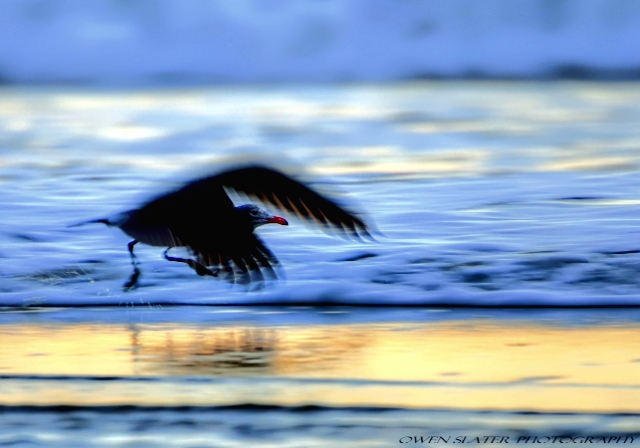
On a recent trip to California I went on a short road trip up to Point Reyes. Along the way I stopped at Stinson beach. Just as the sun was setting I found some Heermann’s gulls to photograph. I have been trying for quitesome time to get a good photo of a bird in flight with the wings in motion and the head in focus. Add in the droplets of water being kicked off the bird’s feet as it springs into the air, the sunset reflecting off of the water and the motion of the incoming wave and I’m thrilled with the result!

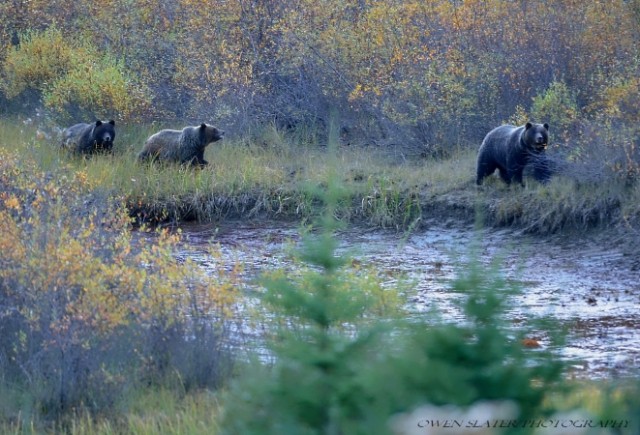
I drove out to Banff last Friday in the hopes of seeing some wildlife. Almost immediately I knew it was going to be a good day for wildlife spotting. Within a few hours I had spotted 12 mountain goats and seven different grizzlies. It was capped off by seeing and photographing the very shy grizzly mom known as bear 130. I had seen her a few times this year and I couldn’t believe how healthy and big her cubs had gotten. Bear 130 was given that name this spring when she was anesthetized to place a GPS collar on her as part of the CP rail and Parks Canada initiative to study grizzly bear mortalities in Banff National Park. Train strikes are the leading cause of death to grizzly bears in the park and every year a few are lost. Up until this weekend, for this year there had not been any known grizzly bear deaths associated with the trains. However, moose, deer, black bears and just last weekend a wolf pup had all been killed by the train, so it seemed like it was only a matter of time before a grizzly would meet the same fate.
Unfortunately, Friday night around 8:45pm was that time. Less than a two hours after taking this photo, these two cubs were hit by a train and instantly killed. Initially it wasn’t know if bear 130 had survived as she wasn’t seen for at least a day afterwards. However, on Sunday morning I was relieved to spot her walking along the tracks and quickly reported the sighting to Parks Canada staff who were thrilled to hear she was alive and well. That morning, she did not stop to feed on grain spilled between the tracks. Instead, she walked back and forth sniffing the rails, likely picking up the lingering scent of her now deceased cubs. She stayed in the area for days on end, and while we can’t know for sure why, I don’t think it is a stretch to assume it was likely because she was searching for her cubs. While the loss of two cubs is horrible, the loss of a reproductively active female would have been devastating, especially seeing as bear 130 is such a good mother that does an excellent job of staying away from high human use areas until people are not present. A testament to her skills were that both cubs were in excellent condition, and seemed to be thriving until they made a mistake.
It’s hard to know why they didn’t get off the tracks when the train approached. At night, the high powered lights of the train can be blinding. That is all they would have seen. They would not have recognized that it was a train and may have actually charged at it in self defense. Hopefully, with the data obtained from her collar, CP and Parks Canada can formulate solutions to this ongoing problem that has plagued all the wildlife in the Bow Valley. Otherwise, it will only be a matter days before the next body is collected. The only question will be, which species will be next…

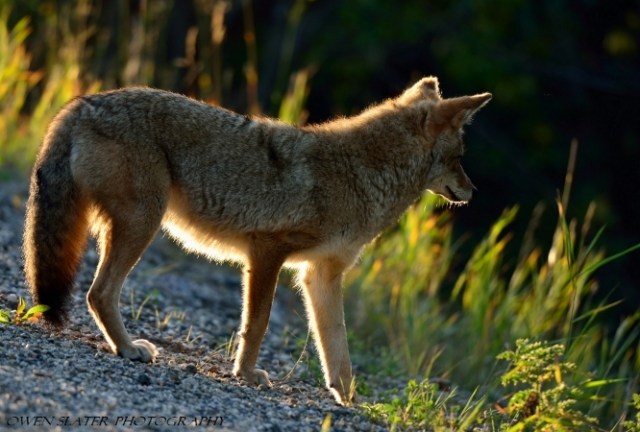
A couple of weekends ago I took some friends out to Banff to try to spot some wildlife. They were hoping to see bears and maybe even wolves, but as luck would have it we had an even rarer carnivore sighting. As I came into Banff I decided to drive up the road to a ski hill as I had seen bears, sheep and coyotes up there throughout the summer. After rounding a corner I spotted a coyote on the road headed in our direction. I quickly pulled over and stopped the car, but surprisingly it paid no attention to us. Instead it ran to the side of the road, raised its hackles and started barking at something down below. For about 10 minutes it continued barking at whatever it was. While my friends excitedly took photos of the coyote, I scanned the ravine as I knew from the coyote’s reaction that it was alarmed at whatever was below and therefore, it had to be a large carnivore! The coyote slowly walked in our direction and stopped every few minutes to bark down into the ravine. After passing my car and paying little attention to us, I turned the car around to face down the road. At this point the coyote must have lost sight of whatever it was, so like us, it sat down and waited. A few minutes later a large light brown object appeared by the side of the road. Before I had time to react it bounded across the road with the characteristic movement and shape of a cougar! A few strides later and it was on the other side of the road, leaping up the bank and disappearing into the forest. Not wanting to disturb it but also not wanting my first wild cougar sighting be so fleeting, I waited until it was in the trees before driving down to where it had entered the forest. I spotted it again as it disappeared behind some trees. Based on its direction of travel I realized it was heading in the direction of a clearing just west of where it was so I quickly drove down to the spot and waited. Sure enough, a few minutes later it appeared at the top of the clearing and walked right out into the open. It stopped and stared at us before slowly walking through the clearing and disappearing out of sight! It was such an impressive animal; a healthy adult male with massive muscles over the limbs and a powerful gait. No wonder the coyote was terrified of it! In fact, the coyote wouldn’t go into the forest for some time afterwards. Instead it patrolled the road and searched the ravines for the cougar to make sure it was gone. An adult cougar can easily catch and kill a coyote and so coyotes always have to be on the lookout for them. Thankfully for us, the coyote not only spotted it but also let me know it was around as otherwise I’m sure we would never have seen it. For those wondering where the cougar photos are, I wish they were good enough to post here, but with such low light at the time of the sighting, even at 2500 ISO the images are blurred. That’s OK for me, as I will never forget experience!

A pika takes a quick break from collecting food for the long winter to scan for predators.

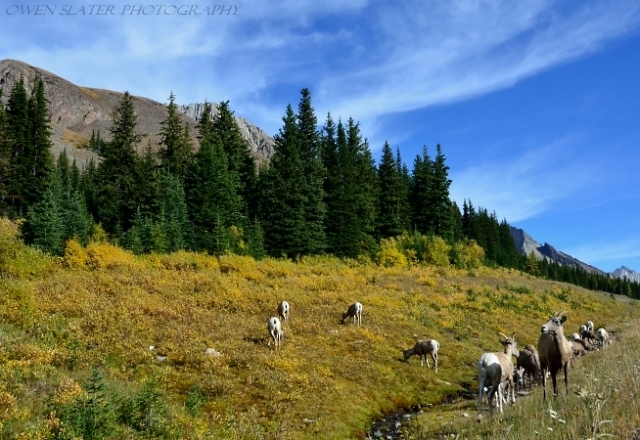
A beautiful day in K-country. Big blue skies, amazing mountains and a herd of big horn sheep near the Highwood Pass.

The Bow Valley is dominated by human presence and infrastructure that the wolf pack must navigate on a daily basis. Of the 7 pups born into the pack last year, 6 died due to either train or motor vehicle accidents. As the summer has progressed, this years litter of wolf pups are now spending all their time on the go with their parents and the yearling sibling, learning the ropes of the Bow Valley ecosystem. It won’t be easy for them to survive in this environment but so far four have managed to make it past the first few months and are quickly learning the lessons required to survive.

Shortly after the 4 month old pup howled I heard rustling in the bushes just ahead of me. Peering up the avalanche chute, through all the bent aspen saplings I spotted the movements of another wolf. As it entered a clearing it was clear that it was the mother. She was making her way through the trees carrying the back end of a lamb in her mouth! She made her way to the pup hiding in the forest and shortly afterwards I heard the excited cries of the reunion and then growls over the meat. If you look closely you can see the hooves of the lamb near the base of the radio-collar. Survival of the fittest in its purest form.

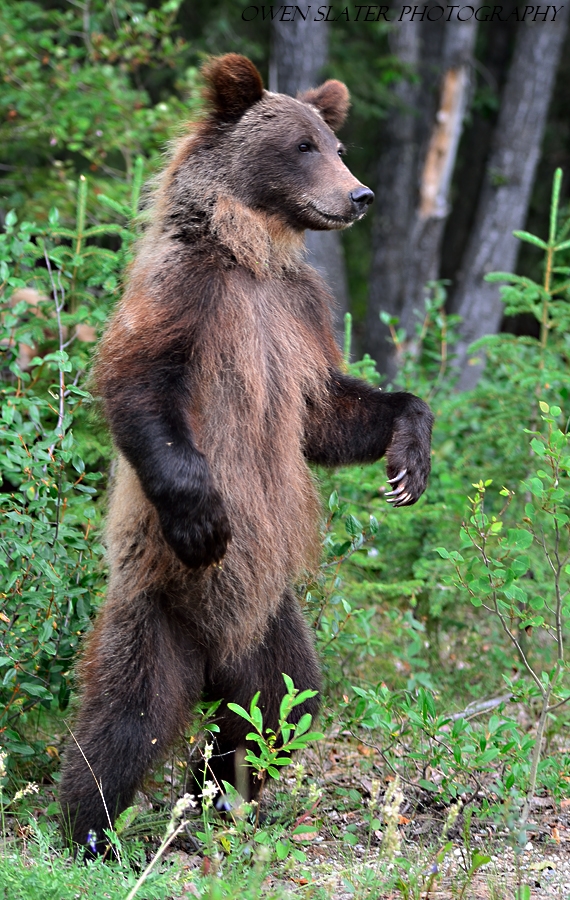
A one and half year old grizzly cub stands up to get a better vantage point of his surroundings. This year has produced a bumper crop of buffalo berries which when coupled with the high snow fall at higher elevations has resulted in the bears staying in the valleys for longer than normal. Having such long and powerful claws is of no use when feeding on the small berries. Instead, they use their very dexterous lips to grasp the berries off the stems. In an average day, an adult grizzly can consume about 200,000 berries!