
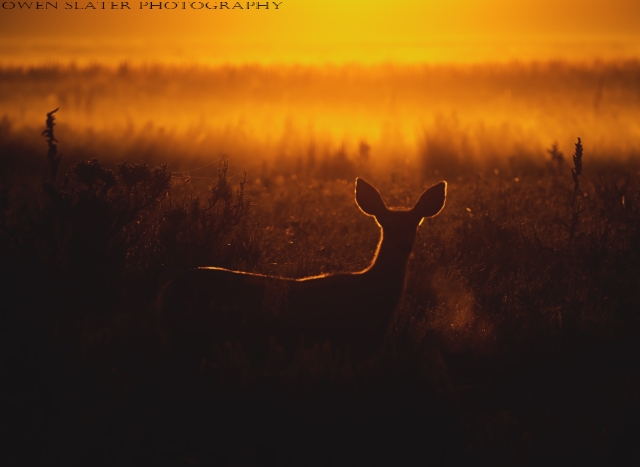
 A mule deer exhales as the sun’s rays highlight its frame in beautiful golden light on another spectacular morning in Grasslands National Park.
A mule deer exhales as the sun’s rays highlight its frame in beautiful golden light on another spectacular morning in Grasslands National Park.
 Saskatchewan has never been on my list of top places to go for wildlife photography. Having driven through the province several times before, it seemed all there was were farmers fields, a few rolling hills, grain silos and a scattering of trees. While these can be nice in the right light it’s not something that grabs me and makes me want to pull over for anything more than a pit stop (sorry to all those from Saskatchewan!). So it was with a bit of hesitation that I went there for a week to see what many consider the gem of the province; Grasslands National Park. With over 70% of native prairie grasslands gone due to extensive farming and oil and gas exploration in the province, GNP is an oasis for prairie species, many of which are threatened or endangered including the black-tailed prairie dog, prairie rattlesnake, short-horned lizard, loggerhead shrike, sage grouse and black-footed ferret to name a few! My visit completely changed my mind about the prairies and in the coming weeks I will post some of the moments that made my trip so incredible. The beauty in the province is much more subtle than in the Rockies and requires a bit more effort, but when you find it it’s well worth the extra effort!
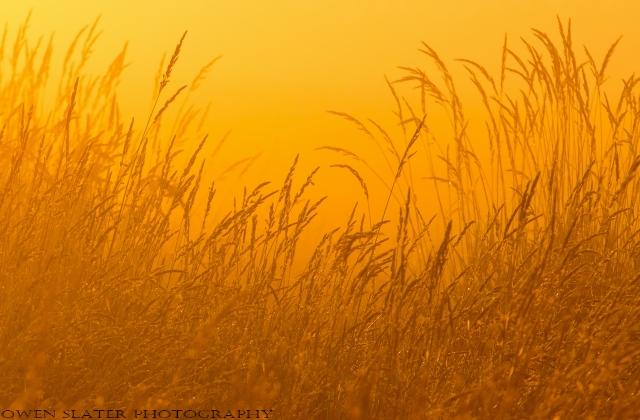
This photo was taken during a beautiful sunrise along the Frenchman River. The fog was just lifting and created a golden mist in the surrounding prairie meadows.
 A large chunk of ice cracked off of Victoria glacier causing a mini avalanche. The noise of the ice cracking travelled down the mountain giving me just enough time to fire off some photos as the slab crumbled against the rocks.
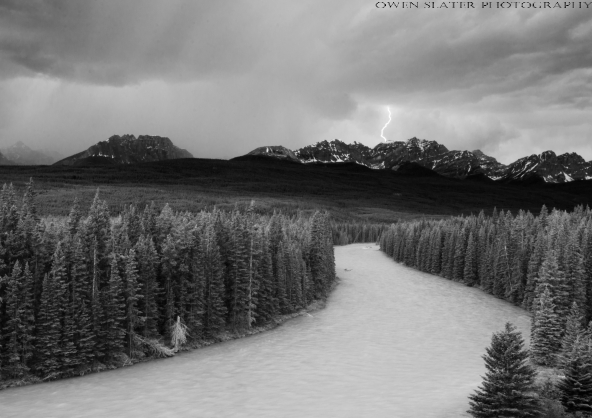
With the Bow river discoloured brown and already bursting at the seams from all the runoff, a new storm built up and rumble over the Rocky Mountains. I had about 10 minutes before I was engulfed in the thunderstorm, which gave me just enough time to set up my gear and safely get a few photos of the clouds and lightning strikes off in the distance. As luck would have it this strike happened in the perfect spot for my composition. Not wanting to push my luck, I packed up my gear and ran for my car as the clouds opened up above me.
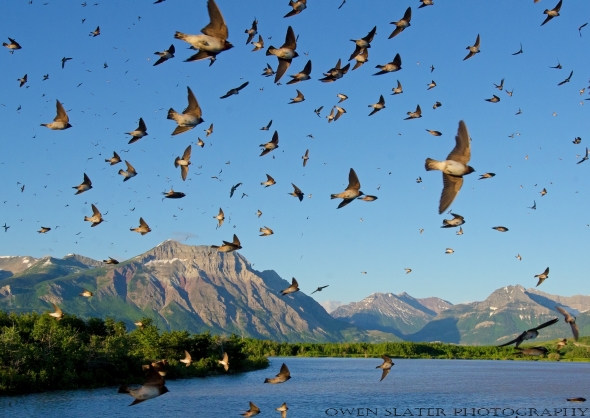
I don’t get down to Waterton as much as I would like these days but when I do make the trip it is always special. Having spent lots of time there in the past, I have certain spots I like to revisit to see if the wildlife is still following the same rhythms. Even though much of the park was closed due to the recent flooding I wasn’t disappointed when we came across the huge flock of cliff swallows I have been watching for a few years now. I took this photo with a 12-24mm wide angle lens so that gives you an idea of how close the birds get. It felt like I was in the middle of their flock and they didn’t seem concerned in the least by our presence, often times hovering only a few feet away as the strong winds blew through the mountain passes.

The strong winds were perfect for the swallows to use to hover above the water in search of insects. I used the opportunity to try to get a few close-ups of them in flight. Not an easy feat even when they are close-by and cooperative.

This one is my favourite of the close-ups. It clearly shows the aerodynamic profile of the wings and how the birds use their tail feathers to help stabilize and steer themselves through the air.

I’m in the danger zone taking this picture but thankfully none of the swallows took issue with me and I made it out no worse for wear!
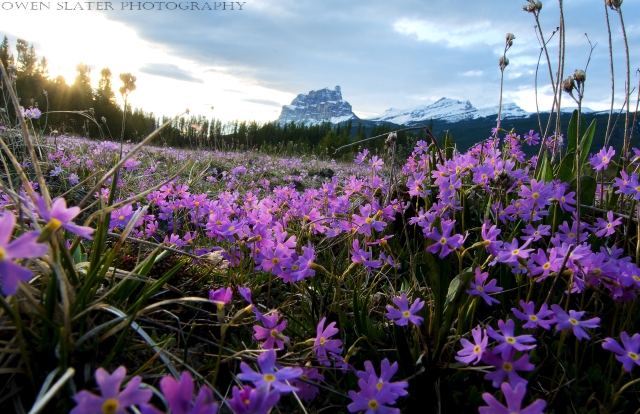 Spring seems to take a long time in the mountains, but when it does arrive it’s always spectacular. This spring I timed it just right to be in this meadow when the forget me not flowers were in full bloom. It was well worth the year-long wait!
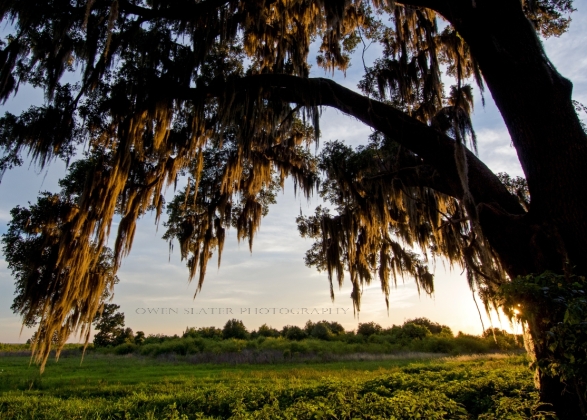 Spanish moss catch the last of the evening rays on this massive Live Oak tree at Paynes Prairie, Gainesville, Florida.
 Willow bushes zig-zag through the valley floor before reaching the mountains that seem to erupt from the ground in Denali National Park.
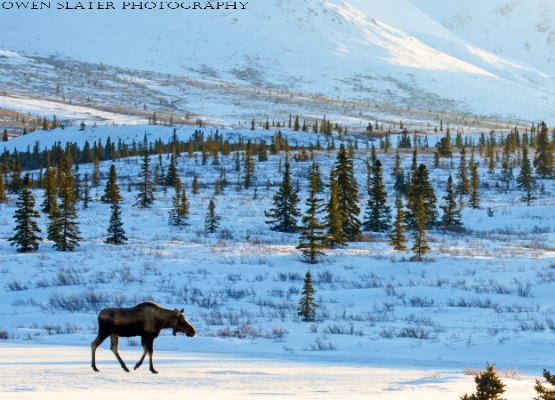
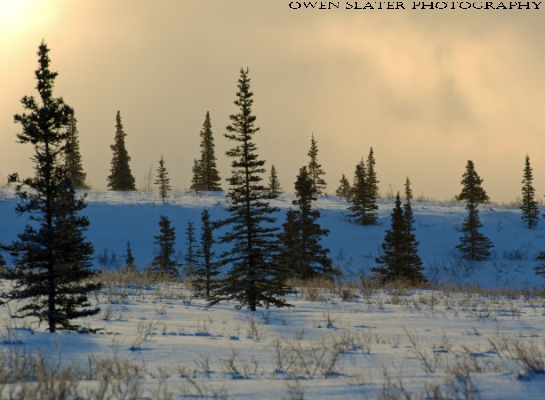
On a recent trip up to Alaska for some work with caribou, I took a quick detour down to Denali National Park to get in a few days of photography before the real work started. It was mid April and the road into the park was still barely even open. Night time temperatures were around -20 Celsius and a balmy -5 during the day! Early on the first morning I came across this cow moose as she made her way across a still frozen pond. Golden eagles had returned. but other than that there were few signs of spring. However, the wonderful sound of silence, the few hardy animals I came across and the amazing surrounding scenery was still well worth the detour.
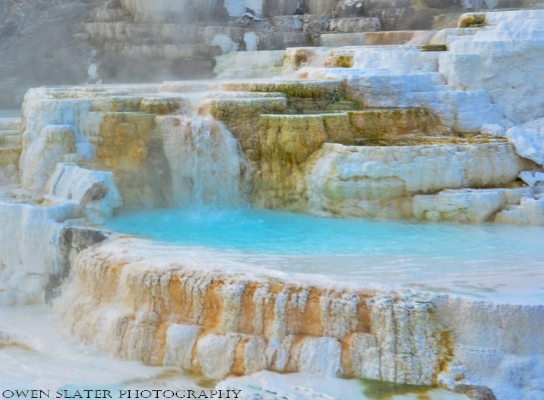
Scalding hot water cascades down a self-made rock feature. The water carries dissolved silica from underground streams. When the water evaporates, the silica is deposited on surfaces, hardens and forms sinter (aka geyserite) that creates these rock formations. Naive animals (including people) will sometimes be tempted to get too close to or actually into these hot pools to escape the extreme cold weather, often resulting in dire consequences.
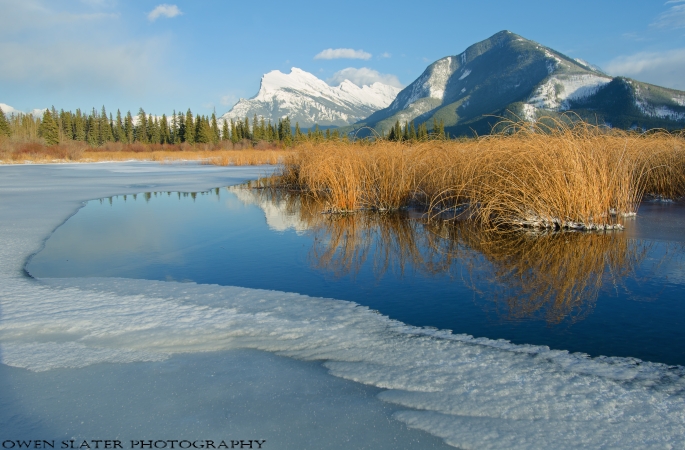
These reeds have been encased in ice and snow for much of the winter but over the past several weeks it has slowly started to melt away. The robins, starlings and male red winged blackbirds have returned, the bears are coming out of their dens and we have daylight past 8pm. A great time to be in the Rockies!
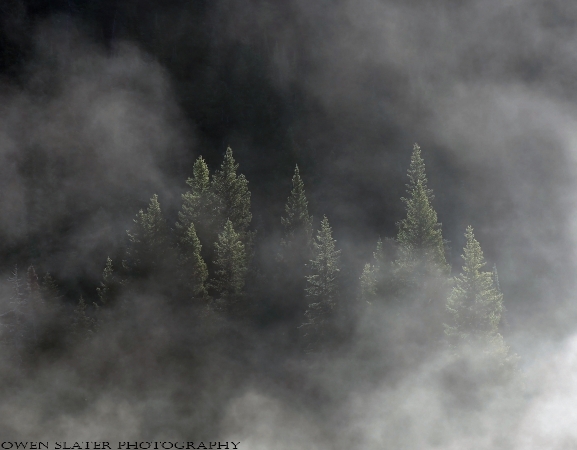
A thick blanket of fog encircles a stand of trees on a cool morning in Waterton Lakes National Park.


 Owen Slater Photography