Category: Favourites


I think it’s almost impossible to have a bad day if you spend any time watching prairie dogs! To me they are the comics of the prairies.

They can just be sitting around their burrows looking out on the world and they still make me laugh.
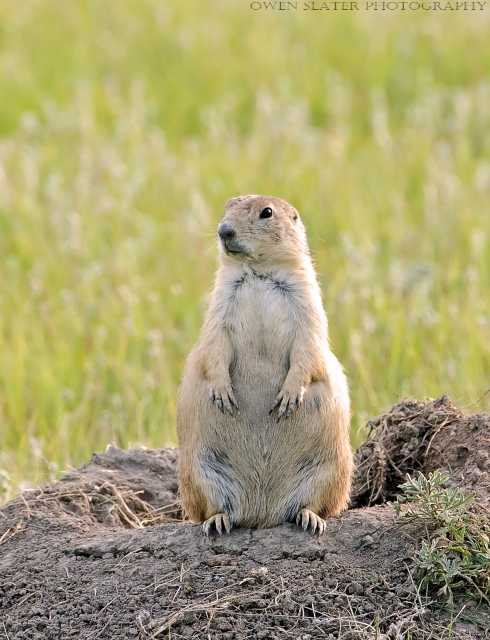
PD Budda 2 WM

It looks like this one is creating a new fashion trend by combining a corset with oversized and saggy pants!

You would think something as mundane as eating grass wouldn’t be very entertaining but somehow they manage!
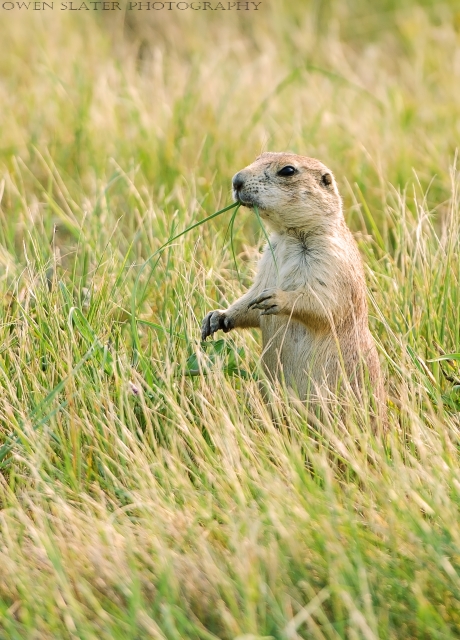
PD grass mouth WM

If that doesn’t get you smiling they become a little less subtle by doing what is called a jump-yip!
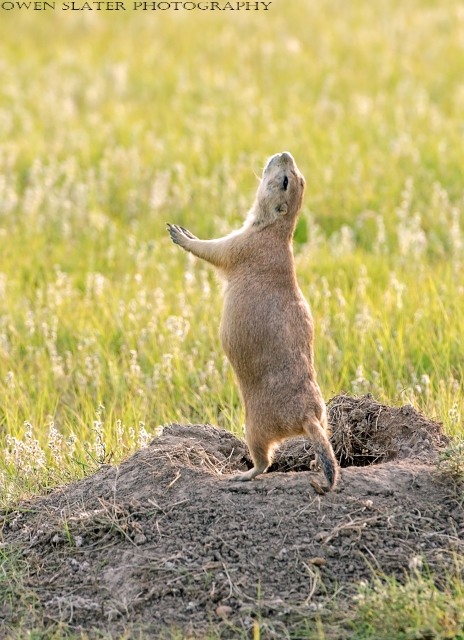
PD jump yip 2 WM

A jump-yip is a very creative term scientists use to describe when they jump up on their back legs (sometimes falling over in the process) and make a yipping noise at the same time!

If one didn’t know better they might think they are praying to a higher being and given all that they go through on a daily basis they really do have a lot to worry about. You see prairie dogs just aren’t cute little comedians, they are also a keystone species of the prairie ecosystem. They are the exclusive food of the endangered  black-footed ferret and on the menu of coyotes, red and swift foxes, badgers, owls, hawks, and snakes. That’s not to mention the occasional human that shoots them or runs them over! While trying to avoid all of these predators they are constantly clipping and eating the grass, flowers and bushes to get fat enough to survive the winter. In the process they create a fertile, biodiverse, natural garden that other species like deer and pronghorn thrive off of.  The burrows they build are converted into homes and hiding places for burrowing owls, ferrets, badgers, leopard frogs, prairie rattlesnakes and black widow spiders. Without them several species would die out and over a hundred more would be affected by their absence from the landscape.

Sometimes the pressure of being so important to so many gets too much and they collapse into a heap called the prairie dog pancake!

PD pancake WM

Through it all they still make sure to show their loved ones how much they care about them, even if  it’s not always appreciated!
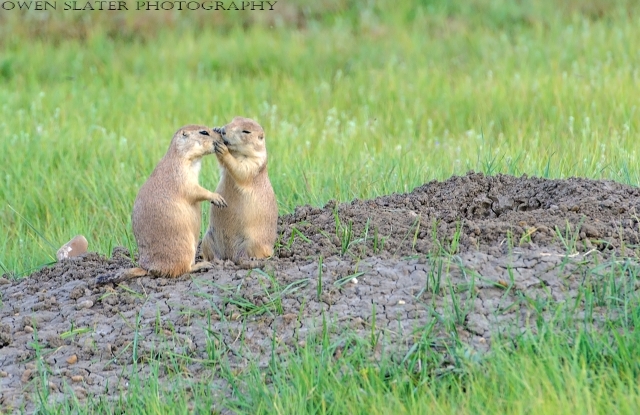
PD kisses 1 WM

So the next time you see one, spend a few minutes watching them. I’m willing to bet that at the very least you will come away with a smile on your face and hopefully like me, an increased appreciation for all they do for the prairie landscape.
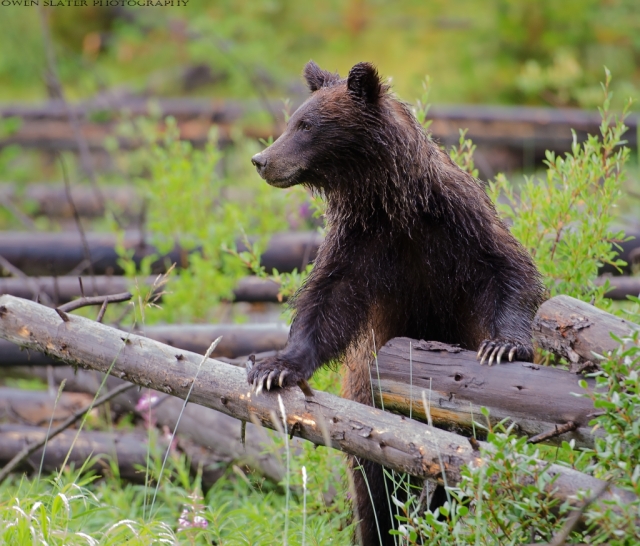
Grizz dark cub 64 3yold WMWhile her two brothers flight with each other over buffalo berries and appear oblivious to their surroundings, this dark phase grizzly bear stands up to search for her mom.

Many people in Banff National Park know these bears, as their mother is bear 64 who is one of the most commonly seen grizzly bears in Banff. She prefers to make her living in the wilderness areas surrounding the Banff townsite and has successfully navigated this busy landscape for over two decades.

Even now, with her cubs at 3.5 years of age, they are still very reliant on her to keep them safe and to show them all the seasonal food sources in the Rockies. Grizzly bears here have the longest interval between births of any grizzly bears in the world at upwards of 5-6 years. This is thought to be do to the harsh landscape and reduced food supplies compared to other regions where grizzly bears can be found.

This almost adult sized youngster has always stayed very close to her mother and is never far from her side. In a sign of her growing independence she has started to go off and forage on her own but she always tries to keep tabs on where her mom is. On this day, 64 was off doing her own thing and out of her cubs sight, so this youngest stood up on her hind legs and search the area for her. When that didn’t work she started calling out. Within seconds 64 appeared from the bush and came running over to see what she was being called about. Content that her Mom was back in close proximity, this ‘cub’ relaxed and went back to ravenously feeding on berries.  In the next few months their independence from 64 will grow and they will likely head off on their own or be sent packing by Mom soon.

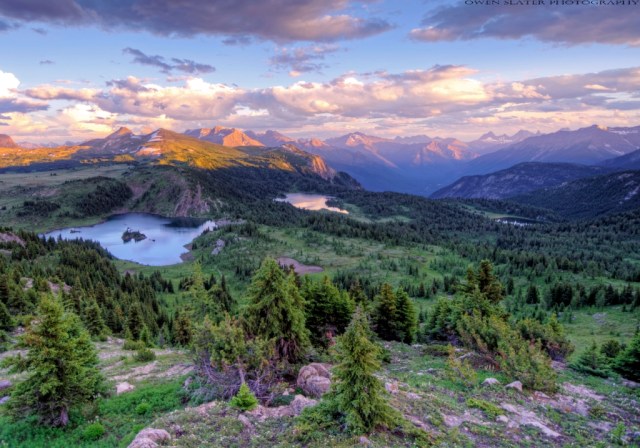
Sunshine meadow 2 WM

GGO spruce top horizontal best WM

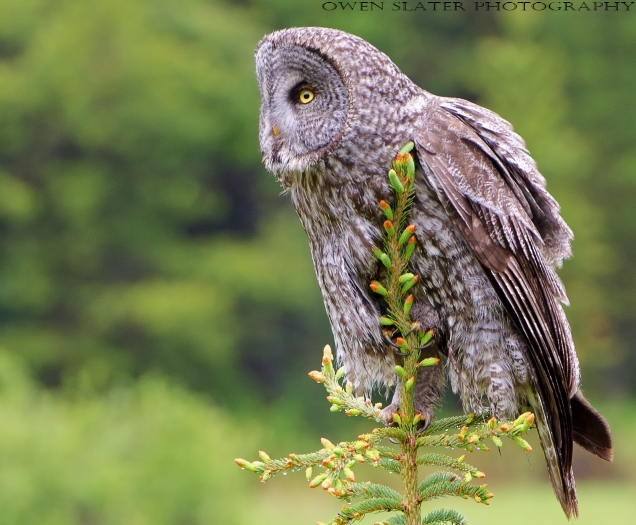
With its razor sharp talons firmly grasped around the flimsy top of a sapling, a great grey owl intensely scans and listens for any unsuspecting prey.

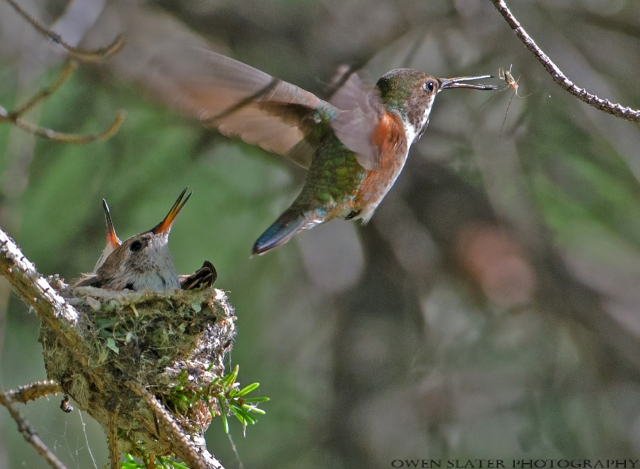
Rufous hummingbird flight spider fledglings final WM

A round trip migration of over 12000 km, a heart rate of 1200 beats/minute, a wing beat rate of 3000-3700 beats/minute, having to go into torpor every evening to survive the long cold nights. Hummingbirds are about as close to mythical that exists in the bird world. I have held them in my hands, felt the vibrations of their little hearts beating and marveled at how something so small  and fragile can survive, but it’s still hard to believe they can eek out a living  in the harsh environment of the Canadian Rockies. Until this year I had never seen an active nest in the wild. So to say I was ecstatic when, with a bit of help, I came across this one would be a bit of an understatement!

Hummingbird nests, which in themselves are works of art, are constructed with the soft silk of spider webs! Imagine how many spider webs are needed to make a nest like this?  It was placed on a thin drooping branch that wouldn’t support the weight of any potential predators (crows, squirrels, martens, etc.). It was woven around the branches and then lichen and moss were attached to the outside to provide camouflage.  As is typical, 2 eggs the size of small jellybeans were laid and incubated for just over 2 weeks. The chicks grow at an exponential rate and within 19 days they fledge, fly off with mom and never return to the nest again.

When I came across this one, the chicks were already about 1.5 weeks old and had tiny pin feathers. Contrary to what many believe, hummingbirds don’t rely on nectar to feed their young. The rapidly growing chicks need a high protein diet so they are almost exclusively fed insects. This is why in early summer if you have a hummingbird feeder you won’t see females at it. They return to the feeders later in the summer with their fully grown offspring to teach the young about the best feeding spots. This lasts all but a few days at which point the offspring are self-sufficient.

Watching a hummingbird can be dizzying, not to mention painful from all of the mosquito bites, and while I wish I could say I planned to get this photo, simply put, I didn’t nor could I have imagined it possible given the conditions! The light was low, the nest was well hidden, multiple small branches were getting in the way and as you know these birds do everything at warp speed. I knew the only way I was ever going to have a chance at being successful was if the sun’s rays found a break in the trees to penetrate into the forest and if I set my camera up on a tripod and manually focused on the nest. With the settings locked in I stepped back from the camera with my remote in hand to take in the action from a distance so I didn’t disturb them. After a few minutes the sun was low enough to get through the dense canopy and light up the area around the nest. Now all I needed was for the mom to come back and feed her babies.

Luck was on my side. She flew in and started plunging food down the throats of her chicks. After feeding them she would usually zoom off into the surrounding meadows to catch more food, but this time she did something different. She flew up from the nest but remained hovering right next to it in the beautiful soft light of the sun!  I was too far away to see what she was looking at so instead I clicked the remote as fast as possible hoping I would get one good photo of her in flight. The whole sequence lasted less than two seconds but I managed to snap off a few frames that were in focus. It wasn’t until afterwards when I zoomed in on the images that I saw what she was so intent on. Under the watchful eyes of her chicks she had spotted and caught a spider!  If you look at this photo closely you can see one of the legs of the unsuspecting spider in her beak just before she clamped down on it! The spider tried to get away by hiding behind the branch but it was no match for the hummingbird and was quickly snapped up and eaten!

While I have other images of the mom and her chicks, none tells the story of the life of this hummingbird family as well as this one! The background and shadows are a bit distracting but this photo is still to date my favourite photo of the year. I hope you like it as much as I do!

Rufous hummingbird perched WM

Imagine having to eating 2-3 times your body weight in food every day just to survive!  That if you have a bad day of not finding enough food you are going to starve to death! Hummingbirds push the limits and live their lives on the edge. No wonder people rarely see them doing anything but eating.

Their incredibly high metabolic rate means that the only way they can survive the long nights without eating is to go into a form of hibernation, called torpor. Every night they lower their body temperature to prevent wasting energy trying to keep their internal temperature at around 38 degrees Celsius. Their heart rate slows to as low as 50 beats per minute (from over 800-1200) and respiratory rates are not detectable. Simply put they appear to be dead. A few hours before dawn they have an internal alarm clock that goes off that awakens them from this suspended animation. At this point they fluff themselves up, start to shiver and beat their wings. This generates enough heat to increase their body temperature a few degrees a minute. Total time to awaken from torpor takes about 20-60 minutes.  If they have budgeted their energy reserves well, once awake they have just enough energy to fly off and find their first meal of the day. Now try to imagine how much they need to eat to raise 2-3 chicks!

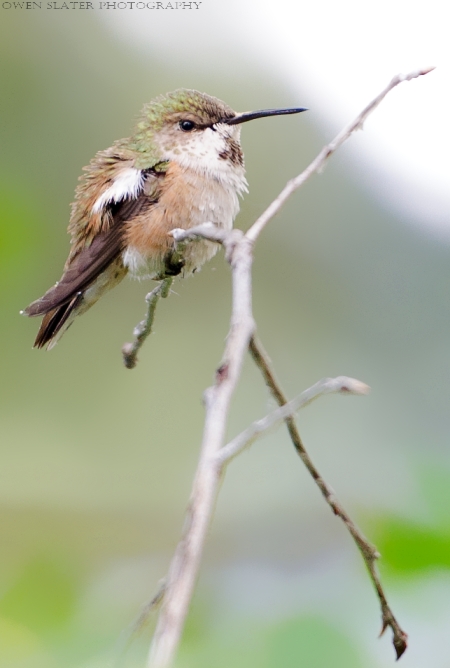
This photo is of a female rufous hummingbird after coming back from a successful feeding trip to feed her two rapidly growing chicks (photos to come down the road). She took a quick break to rest during a chilly morning in the Rockies.

Coast is clear black bear family WM

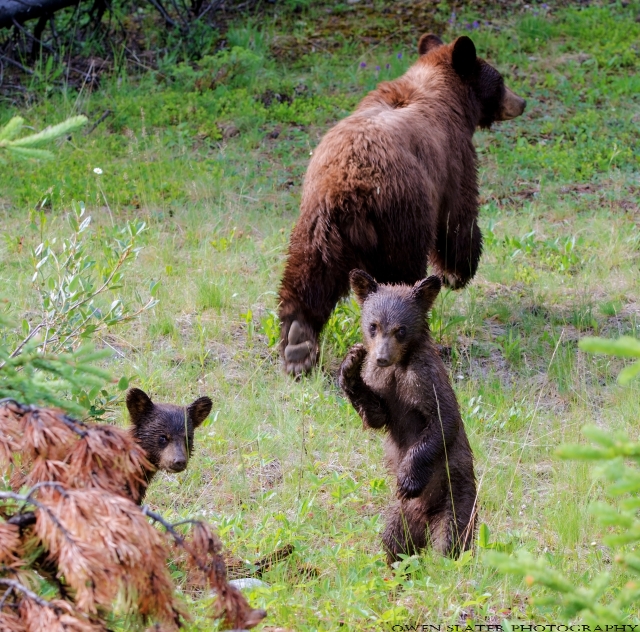
Two young of year black bears check to make sure the coast is clear before running off to catch up with mom.

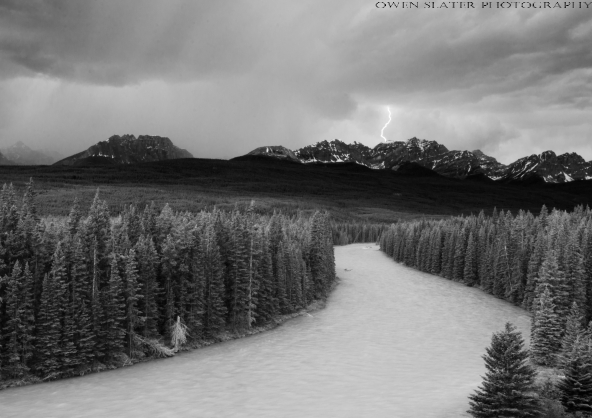
Lightning strike from Storm mountain lookout best WM

With the Bow river discoloured brown and already bursting at the seams  from all the runoff, a new storm built up and rumble over the Rocky Mountains. I had about 10 minutes before I was engulfed in the  thunderstorm, which gave me just enough time to set up my gear and safely get a few photos of the clouds and lightning strikes off in the distance. As luck would have it this strike happened in the perfect spot for my composition. Not wanting to push my luck, I packed up my gear and ran for my car as the clouds opened up above me.

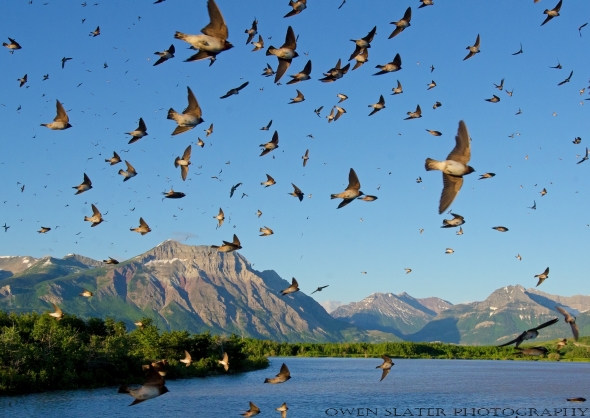
Barn swallow flock flight Waterton landscape WM

I don’t get down to Waterton as much as I would like these days but when I do make the trip it is always special. Having spent lots of time there in the past, I have certain spots I like to revisit to see if the wildlife is still following the same rhythms. Even though much of the park was closed due to the recent flooding I wasn’t disappointed when we came across the huge flock of cliff swallows I have been watching for a few years now. I took this photo with a 12-24mm wide angle lens so that gives you an idea of how close the birds get. It felt like I was in the middle of their flock and they didn’t seem concerned in the least by our presence, often times hovering only a few feet away as the strong winds blew through the mountain passes.

Barn swallow in flight 2 WM

The strong winds were perfect for the swallows to use to hover above the water in search of insects. I used the opportunity to try to get a few close-ups of them in flight. Not an easy feat even when they are close-by and cooperative.

Barn swallow in flight 1 WM

This one is my favourite of the close-ups. It clearly shows the aerodynamic profile of the wings and how the birds use their tail feathers to help stabilize and steer themselves through the air.

Barn swallow in flight 3 WM

I’m in the danger zone taking this picture but thankfully none of the swallows took issue with me and I made it out no worse for wear!


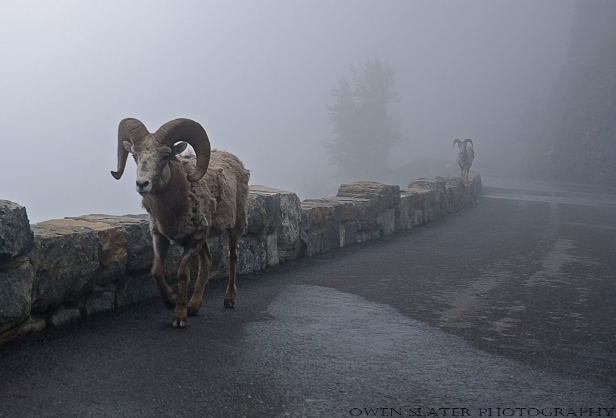
Ghost sheep 2 WMTwo big horn sheep emerge from the fog to make their way up the aptly named Going to the Sun Road in Glacier National Park, Montana.


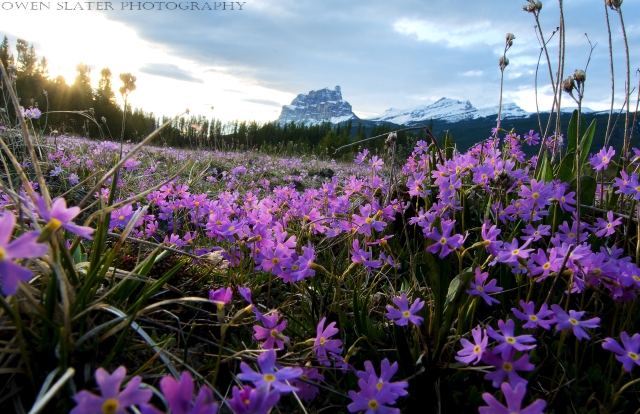
Forget me nots castle mountain WMSpring seems to take a long time in the mountains, but when it does arrive it’s always spectacular. This spring I timed it just right to be in this meadow when the forget me not flowers were in full bloom. It was well worth the year-long wait!

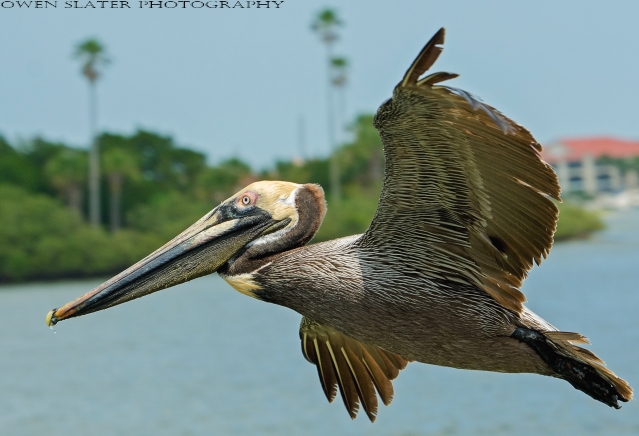
Pelican in flight WM

Hard to beat eating the best locally caught, grilled Mahi Mahi steak I have ever tasted, while sipping on a gin and tonic and watching brown pelicans and Atlantic bottlenose dolphins fishing in the inlet next to our table at the Dolphin View restaurant near New Smyrna, Florida.

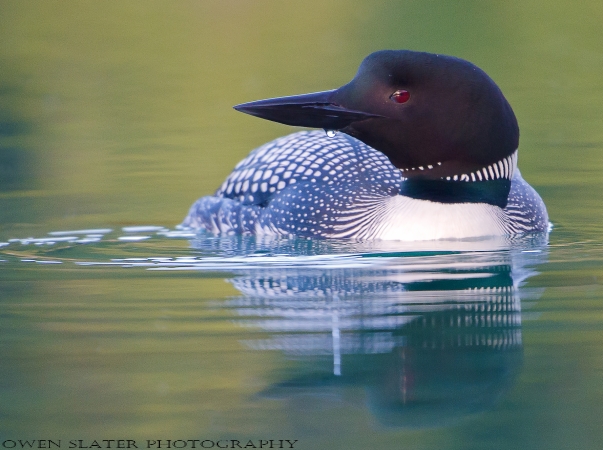
There are few sounds in nature that signify wilderness and pristine waters than that of the song of a loon.  They are one of my favourite signs of spring in the mountains and it’s always a thrill to see them! I lucked out with this one as it actually approached me when I noticed it along the river’s edge.

Loon PS WM

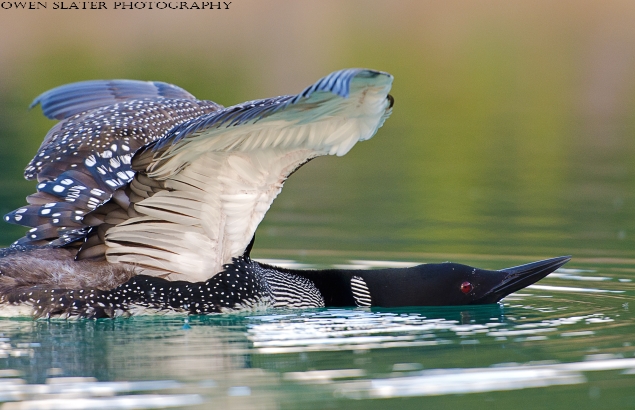
The loon swam closer and closer before it stopped a short distance away. I’m not sure if it saw its reflection in my lens or if he was displaying for some other reason, but whatever the cause he proceeded to give me a wonderful territorial display by stretching out his neck and legs and lifting his wings. After getting a few photos of this interesting behaviour I packed up my gear and left him be as he resumed his fishing nearby.

Loon territorial display PS WM


Red necked grebe PS WMI had hiked in to a spot beside a river to look for wildlife but nothing was around at the time. Instead of leaving, I decided to lay down and have a nap in a spot that if something did show up I would be a in a good spot to get photos. I quickly drifted off for a light sleep for about an hour. When I woke up I scanned the area before I sat up, but again I didn’t see anything. Figuring I should move on I sat up and almost immediately this grebe popped up in the water about 20 feet away. I waited until it dove back under the water before I moved back into position and waited. My wait wasn’t very long. It surfaced right in front of me and stayed there just long enough for me to get a few photos.


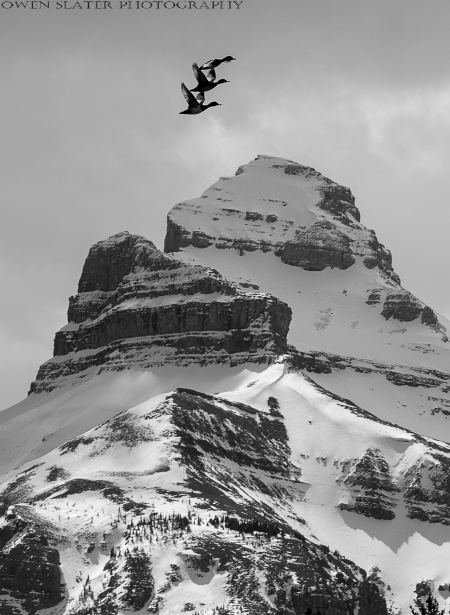
Stacked mountains and ducks BW PS WMThree green winged teal stack themselves like the three mountain peaks as they fly along the Rocky Mountain migratory route to their summer retreat.