Category: Alberta


Pileated woodpecker 2 WM


Have you ever wondered how a woodpecker can repeatedly bash its beak against a tree and never become concussed or even just a little bit disorientated?

New research shows that woodpeckers like this pileated woodpecker I photographed in Banff National Park earlier this summer experience forces of 1500 g’s while pecking bark off trees to get to the tasty insects.  To put that in perspective, the highest g force roller coasters are rated at only 5 g’s. Fighter jet pilots experience a maximum of 12 g’s and the highest short-term g force a person has every survived was just over 200 g’s. Nowhere near what a woodpecker experiences repeatedly throughout the day and never seems to suffer any harmful effects.
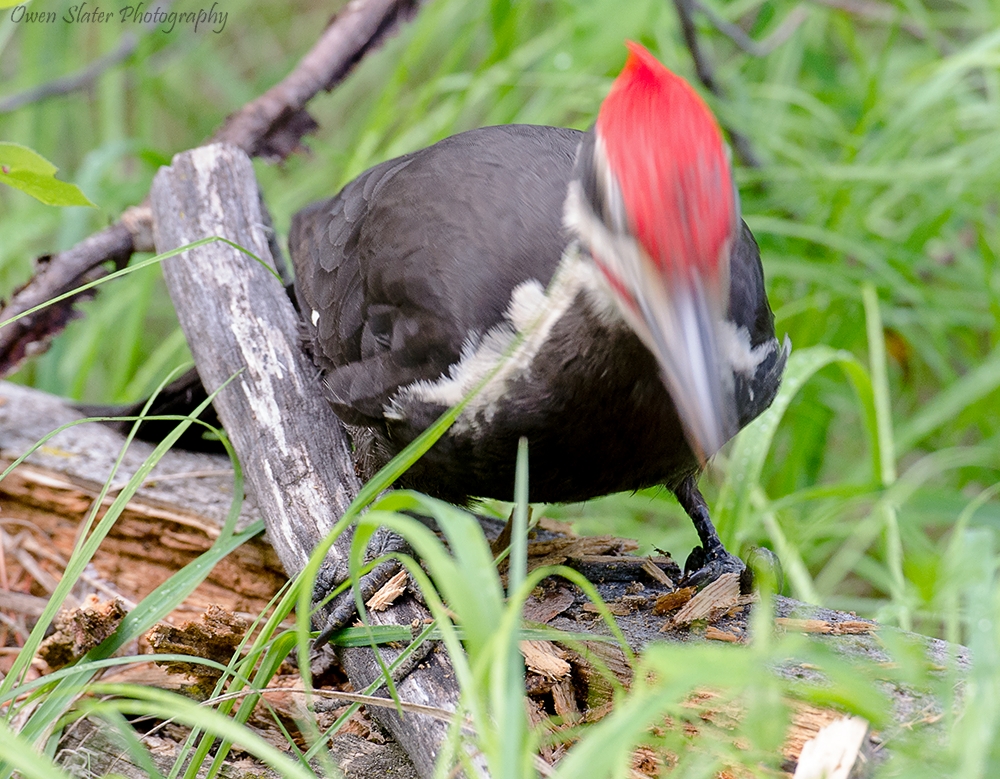
Pileated woodpecker motion WM

So what makes this possible? A few of the adaptations woodpeckers have include an elongated upper beak and beak internal structure that diverts the impact energy away from the brain or absorbs any excess in the spongy bone sitting in front of the skull. The energy diverted by the beak travels to the hyoid bone that wraps around the entire skull of woodpeckers and serves as a seat belt for the brain.  Lastly, to prevent the brain from sloshing around, woodpecker brains are tightly packed against the skull with reduced cerebrospinal fluid (CSF) to prevent any movement.

To figure out how these adaptations help the woodpecker keep pecking at upwards of 20 pecks/second, researchers used CT scans to determine that they are able to deflect almost all (99.7%) of the impact to their heads through the rest of the body. What little remains is dissipated as heat in the beak and skull so that it never reaches the brain. This also explains why woodpeckers take frequent breaks from pecking on trees to let their heads cool down before their brains overheat! Pretty remarkable stuff with potential applications for helmet design to prevent concussions in people!

Certainly a group of birds with impressive adaptations. One day these birds might help save a lot of people from suffering brain damage and while we shouldn’t just care about nature for its benefits to us, it does provide one more reason to appreciate, preserve and learn more about the natural world.


Wild Pup

Wolf pup black 2014

Wild wolf sightings are always thrilling, but seeing and photographing wolf pups takes it to a whole new level. Finding them is the first challenge. Getting any decent photos is the next. I positioned myself next to a small clearing and silently waited, hoping one of them would come out into the clearing. Luck was on my side that day and I managed to get a few decent photos of this little black pup, no more than 3 months old before it trotted off to join its siblings as they explored their surroundings.

Curious Lynx

Lynx slink WM ss

One more photo from the amazing, wild lynx encounter! Which lynx photo do you prefer?

Here, Kitty Kitty

Lynx frontal cropped WM ss

Traveling the Alberta back roads has its perks! This beautiful lynx calmly strolled along the shoulder as I tried to contain my excitement long enough to get a few photos!

It came within 10-15 feet of us and not once did I hear its footsteps. The only sounds were of the very concerned red squirrels high up in the trees.

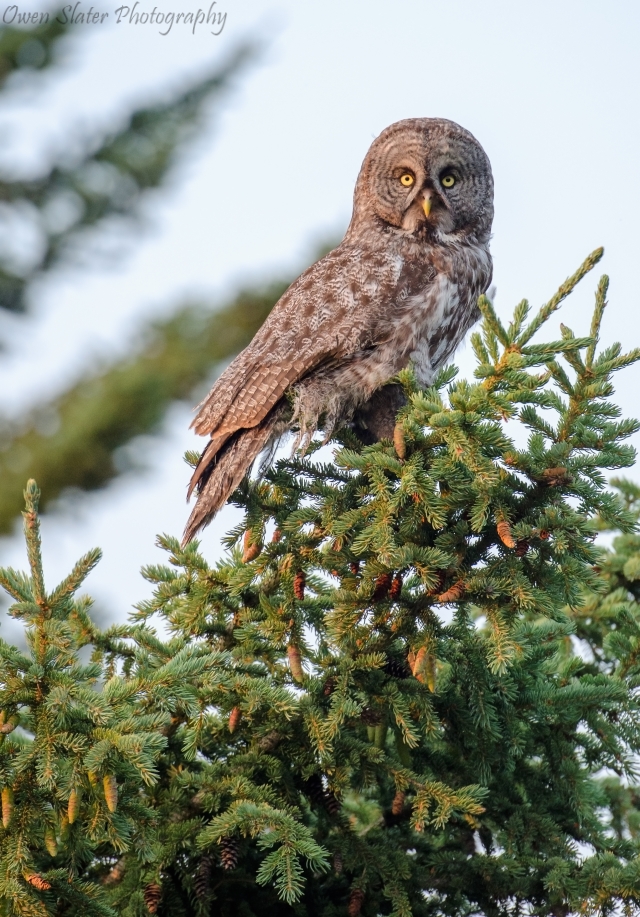
GGO release WM WP 640

For some time now I have been meaning to posts stories and photos of a few of the wildlife patients I get the privileged of helping.  What better way to start than with a beautiful great grey owl?

This owl was hit by a car near Bragg Creek, Alberta and was found dazed and unable to fly by a concerned member of the public.  They were able to safely catch and bring it into us at the wildlife hospital.  A physical examination, blood work and x-rays confirmed that it did not have any fractured bones, so treatments were geared towards treating for the muscle trauma, dehydration and thin body condition.  The owl soon recovered from the trauma, but needed to regain some weight and its flight muscles so it was transferred to a larger, outdoor flight pen where it spent the next several weeks gaining its strength back. Last week it was strong enough for release.

On the release day, as with all raptors at the center, we placed a metal band on the left leg so that if the owl ever gets handled or spotted in the wild we can get an idea of how successful our efforts at rehabilitation are.

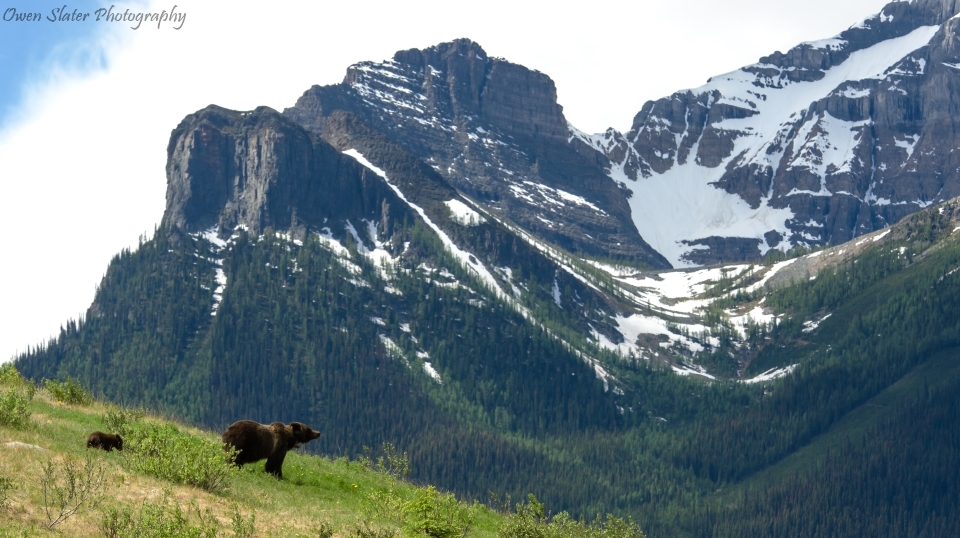
Grizzly mom and cub mountain landscape wm 960

One could be forgiven for thinking that even the grizzly bears in Banff take a break from their daily routines to appreciate the mountain scenery. While I will never discount the fact that other animals can appreciate their surroundings, what’s more likely is that this bear is smelling the air for any potential threats or food options.

I took this photo last month near one of the most popular places in Canada; Lake Louise.  Bear 138 as she is known to park biologists, was feasting on one of the only spring food sources available to the bears; dandelions. Imagine how many dandelions a 150-200kg lactating grizzly bear would need to eat to produce enough milk to feed her two cubs?  Needless to say, it’s a staggering amount. When they enter their hyperphagic state later this month, they eat about 35,000 calories a day.  To put that in perspective, the average person eats about 2000 calories daily!  Almost all of these calories are from berries, with a single bear eating between 200-300,000 berries per day to put on enough fat to survive the winter. That’s the equivalent of you or I eating 63 hamburgers daily! Yet these bears suffer no heart disease or complications association with high cholesterol.

This only touches the tip of the iceberg of all the interesting adaptations of bears, but I hope you agree that these are amazing animals and deserving of our respect and protection.


Super Moon

Supermoon July 2014 wm


Tonight is the first super moon of the summer. The moon’s orbit is closet to the Earth, making it appear larger than other full moons. As a result, tides will be larger and people will on average get about 50 minutes less sleep.

I took this photo last night on my drive back from the mountains. There were enough smoke particles in the atmosphere from a nearby wildfire to give the sunset a purplish hue.  Along the Trans-Canada Highway, many people pulled over to take pictures and appreciate the celestial event.

If you want to see the real full moon tonight, head outside just as the sun is setting, when the moon will be closest to the horizon and warmly lit by the sun’s rays. This is when it will appear the largest and when the light levels are balanced enough that you will get a great picture. If you happen to miss it, two other super moons in August and September will give you lots of chances to see it. Enjoy!

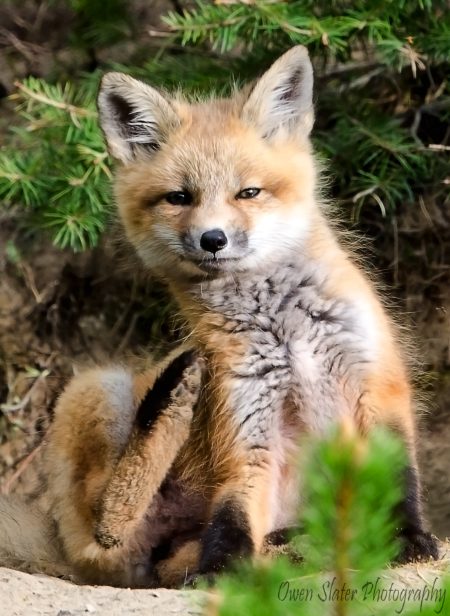
Fox scratching right there fb wm

An adorable fox kit leans in to get a hard to reach spot. This was one of five kits being raised by their hard working parents in Waterton Lakes National Park earlier this spring

Peyto lake horizontal panorama WMA few weeks ago, the turquoise waters of Lake Peyto still had not frozen over, creating a surreal look on another spectacular day in the Rocky Mountains. Click on the panorama to see the full size.

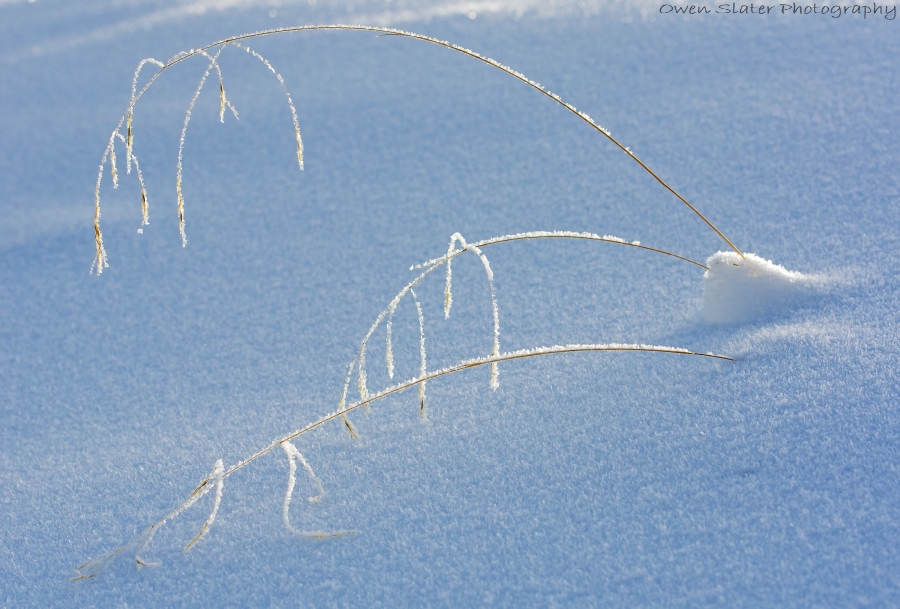
Hoar frost three grasses horizontal WMWith temperatures hovering around -25 degrees Celsius last week, getting out into the mountains was a bit more challenging, but the extra effort always pays off in one form or another.

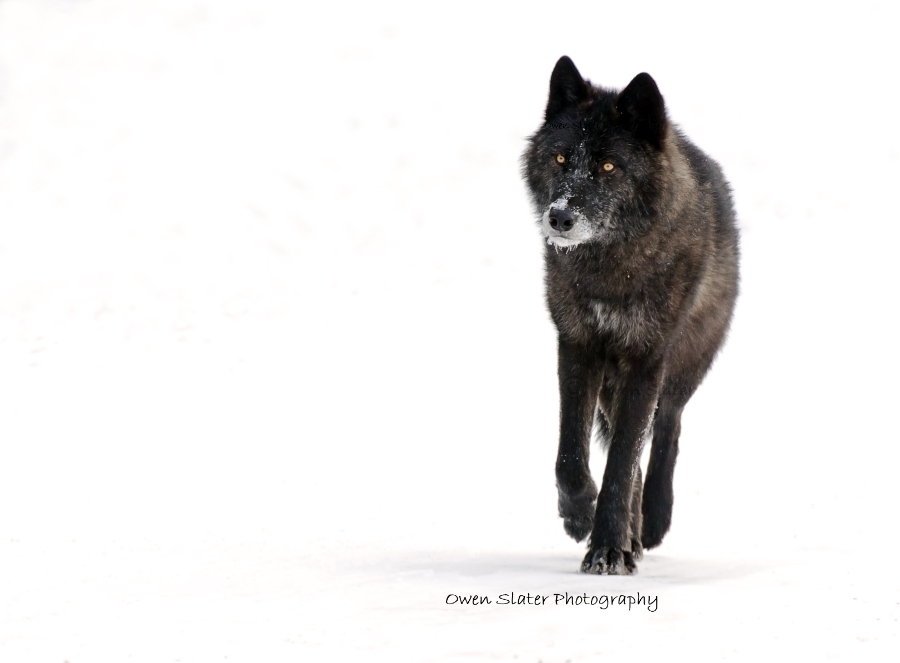
Wolf black, snow muzzle wm Powerful, intense, resilient and beautiful. To me the wolf symbolizes nature and wilderness as it’s meant to be.

I took this photo on one of my recent trips into the Canadian Rockies!

Feel free to share and/or comment  and as always, please click on the image for the full size!

Cheers,

Owen

Pine marten hunting grass WMI knew after I took this photo that it was going to be my favourite of him, but initially I wasn’t sure if I was going to get it. The marten was moving behind a small hill out of site and I thought he might just disappear into the bushes. But I got lucky and he came up from behind a snow bank, cocked his head back and forth and intently listened for rodents scurrying under the snow.  I quickly fired off a few frames and smiled to myself knowing that I had the photo I wanted.

Which of the two marten photos do you like best?

(Please click on the image for the full size)

Pine marten looking back WMWhile pine martens are relatively common in coniferous forests in western Canada, they aren’t often seen since they’re primarily arboreal and when they do come down to the ground, they rarely stay in one spot for long.  These weasels are out all year-long, but are generally not as active in winter. They hunt pretty much anything they can sink their teeth into including ground squirrels, snowshoe hare, fish and birds.

This little guy was out bounding through the deep snow looking for breakfast. He stopped a few times to watch and listen for any prey, which gave me just enough time to get a few photographs of him before he disappeared back into the forest.

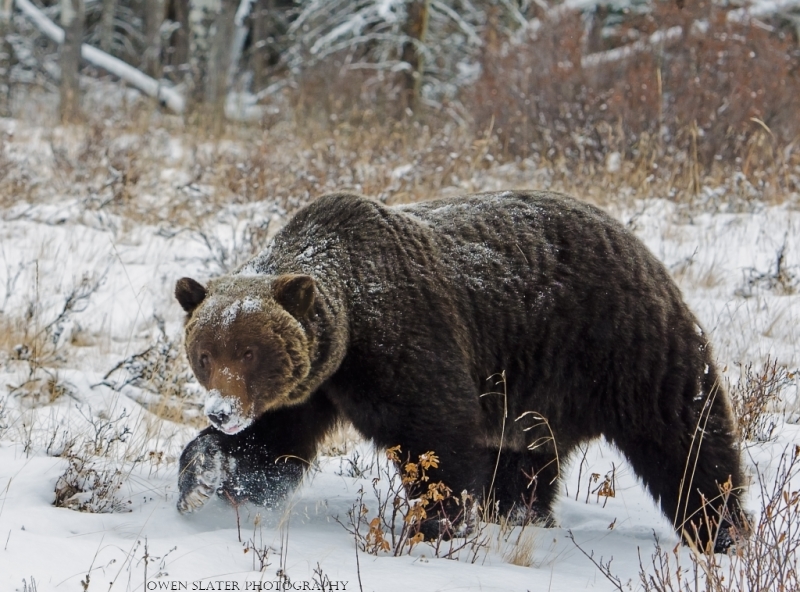
Grizzly snow WMAn adult male grizzly bear plows through 10 centimeters of snow in minus 10-15 degree Celsius temperatures. While the females and young cubs are already tucked away in their dens, these big males are still out looking for food to pack on the pounds so they can compete against the biggest males for breeding opportunities in the spring.

For the past several years I have tried in vain to get a good photo of a grizzly bear in snow. I have run into them as late as December, always either really early in the morning or late at night. All of that changed when this bear lumbered out of the forest in the middle of the day. He wander back and forth following the tracks of a pack of wolves that had been in the area earlier in the morning. Most likely he was trying to determine if the wolves had made a kill. Being the biggest predators in the Rockies, they will follow wolves and steal away their kills through brute force but on this day the bear came up empty handed. With his nose covered in snow, he plodded along weaving a route back and forth through the forest before giving up and moving on.

Angry Birds

Osprey aerial fighting WM

Well not really, more like hungry birds! These two osprey are siblings that successfully fledged this year. They took to the skies to practice their maneuvers and to compete with one another for the best waiting spot. It takes a few more weeks after fledgling before they are proficient at hunting on their own so the parents would return with fresh fish to give to them. It was always first come, first serve and once one had a fish there was no way they were going to share it!