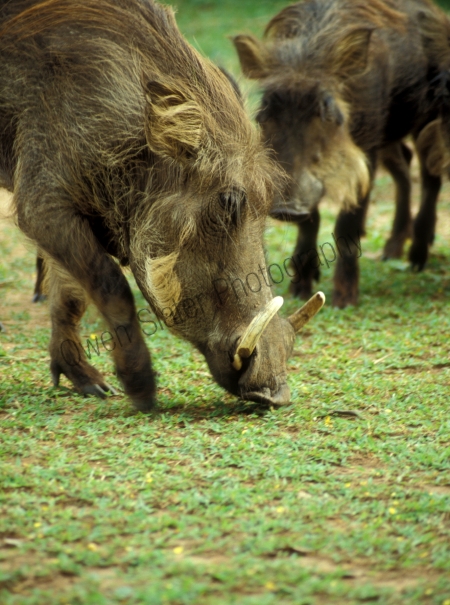
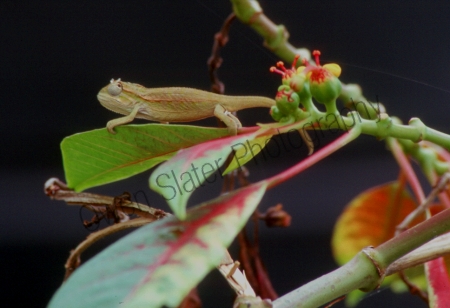
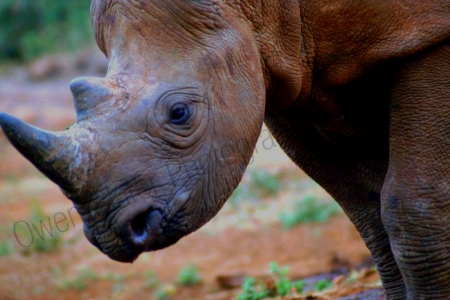
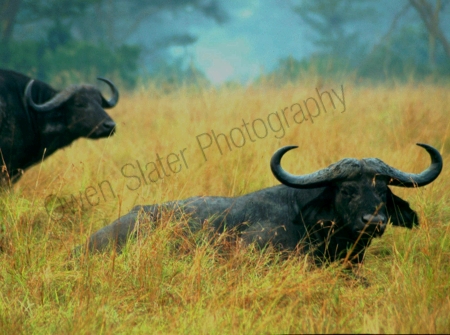
 As you can probably guess from these photos, I managed to get back to East Africa last month, specifically Kenya. The first part of the trip was for work as I was attending and instructing at the 2009 PASA (Pan African Sanctuary Alliance) Healthcare Workshop. Afterwards, I spent a week visiting Amboseli and Maasai Mara National Parks and went on numerous game drives. Over the next several weeks I will be posting the photos from my trip and brief stories about each one.
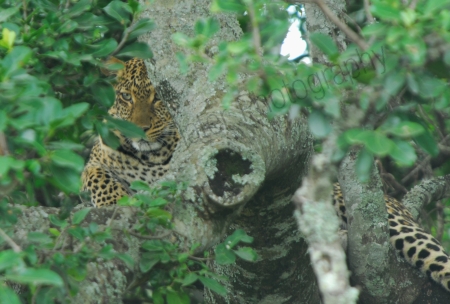
Although leopards are believed to be the most numerous of the big cats in Africa, they are very elusive and therefore, you have to be incredibly lucky to see one. Samburu National Park in Kenya is the best place to see leopard, but I wasn’t able to get a safari to Samburu this time. However, luck was still on my side, as this one was resting in a tree close to the road in the Maasai Mara. The foliage was very dense and initially all that I could see was a foot and a part of the tail, but after several minutes the leopard changed position and I was able to get this picture. After several minutes it climbed down the trunk and got a drink of water from the small stream below before returning to it’s vantage point in the tree. With it being the rainy season, the undergrowth was very dense and so all that we were able to see during this time were flashes of his spots moving amongst the vegetation. It was amazing to be able to see the leopard move without a sound and blend so well into it’s surroundings.


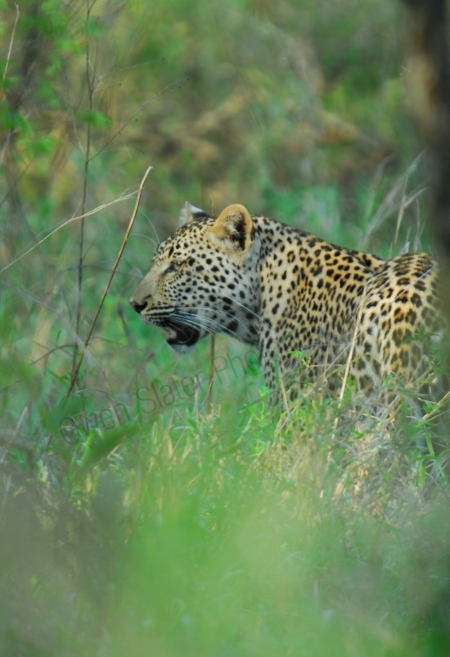 Shortly after both leopards crossed the road 20 feet in front of my car they slowly disappeared into the grass. This was one of the last photos I took before driving off to let them to find some breakfast. I think it was about this point that I finally took a breath and relaxed. Thankfully my malfunctioning camera managed to work properly for a few minutes to get a few great shots of these amazing cats but I was kicking myself for not getting the camera repaired prior to this trip. Regardless of all the shots I missed, this leopard encounter is something I will never forget.
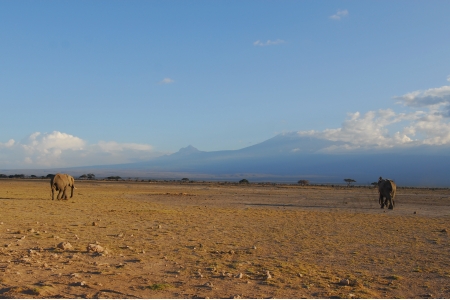 Amboseli is synonymous with elephants. And while the elephants my look the same to the casual observer, every elephant in Amboseli has a name and can be identified by the researchers studying them. The Jane Goodall of the African elephant world is Cynthia Moss. She has been studying the elephants of Amboseli since 1972 and formed the Amboseli Trust for Elephants (
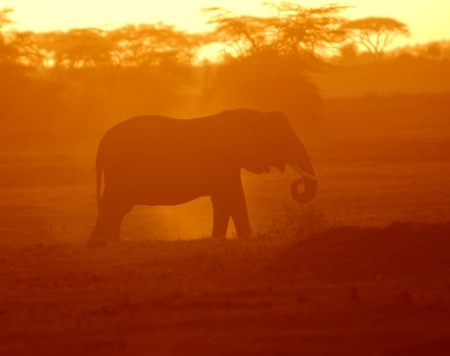 There isn’t much that is better than relaxing at the end of a long day and watching a beautiful sunset, unless of course you are in Africa, where the sunsets seem so much more intense. Add in a majestic elephant and this was the perfect ending to an awesome day of game viewing.


 Owen Slater Photography