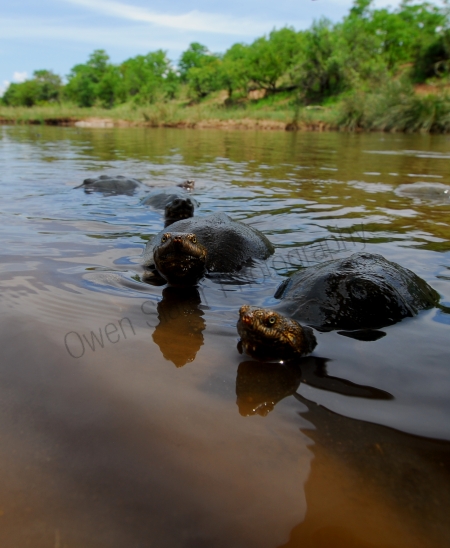
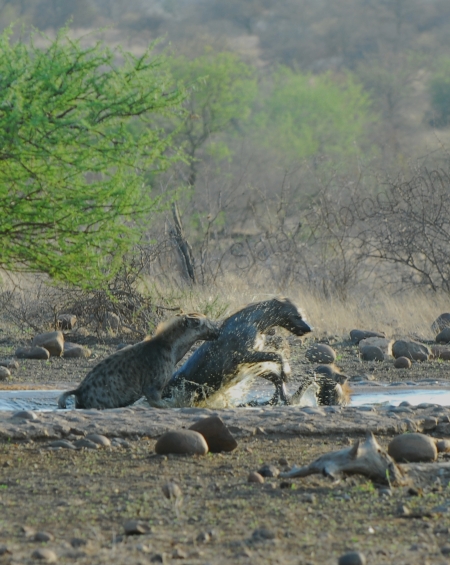
 After stopping at a camp to stock up on supplies we had a look at the wildlife sighting map. Each camp has a map of the surrounding area that people can mark down the various high profile wildlife sightings (elephant, buffalo, lion, leopard, cheetah and wild dog) for that day and the day before. We were both hoping to see wild dog, but we would really have to be lucky to spot them as they are very rare in the park. Someone had posted on the board that they had seen wild dog in the area and so we headed off to try our luck. While we didn’t see any wild dog we did come across a lot of other wildlife including a large herd of elephants playing in a waterhole (photos to come), zebra and of course impala. However, with most wildlife drives I usually see something unique and unexpected, which is what these three photos illustrate.
We came down a steep section of the gravel road and had to drive across a section of road that had been flooded by a small pond adjacent to the road. As we approached the flooded road I spotted a turtle, then another and another. They appeared to have spotted us and had no fear of our car. As our tires touched the water they started walking more quickly towards the car. Soon over 10 were ‘running’ towards the car. To get these photos I put my wide angle lens on, opened the door, held my camera just above the water and tried to center a turtle in the middle of the frame so that the camera would automatically focus on it. Thankfully it worked and I managed to get several photos from their perspective. It wasn’t until I got home that I figured out that these are Serrated Hinged Terrapin (Pelusios sinuatus), a relatively common terrapin found from East Africa down to South Africa. Apparently they are naturally quiet bold as a found several photos of them perched on top of hippos! I suspect these ones associate cars with free handouts as they were way too friendly.



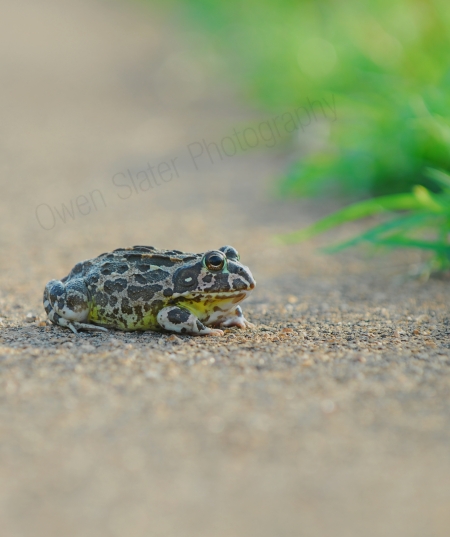 Another roadside spotting. The first day we arrived in the park it had just stopped raining and these guys were all out sitting on the side of the roads looking for insects and warming up on the asphalt. Farther down the road we came across a green snake trying to eat on of these frogs but the frog inflated itself so much that the snake could not get it’s jaws around it and gave up. Unfortunately my camera decided to malfunction at this precise moment and all the pictures I had taken were out of focus.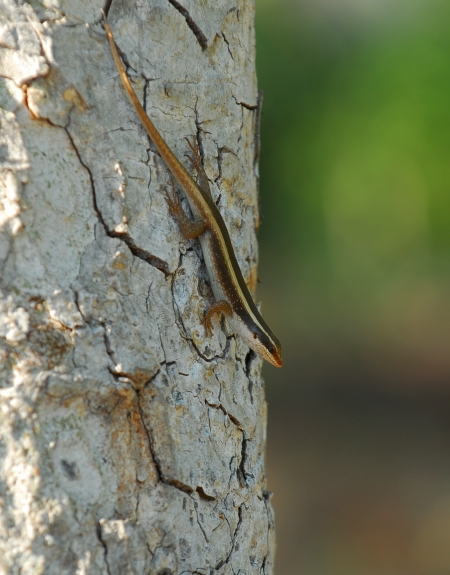
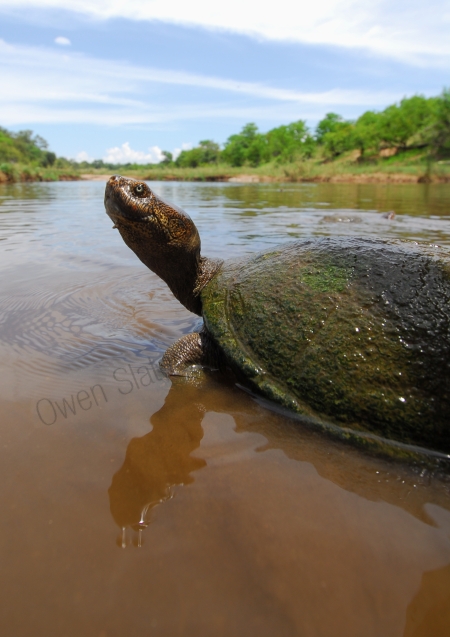 This terrapin seemed to pose for me but I suspect he was just annoyed that I was not giving him any food! Most of the other terrapin had moved back into the deeper water at this point but any time we moved the car forward they would all come racing back up.
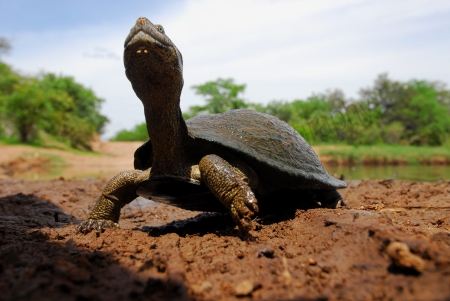 By this point we had managed to cross the water to the other side of the pond but not without being followed by one of the terrapins. The females in this species are generally larger than the males and so I think this was a curious female terrapin. She walked right up to my lens before deciding to return to the safety of the pond and we quickly left before anymore decided to come up for another visit.
 I’m back! I know it’s been quiet some time since I last posted photos on my blog so thank you for hanging around. Hopefully in the next few months I can start updating my blog on a more regular basis. I still have lots of photos from my trip last year to Kenya to add in addition to all the new photos I have of wildlife in Alberta, Canada. But I thought I would start off with a few photos from my most recent trip to South Africa. The reason for the trip was because I was teaching a course at the annual Pan African Sanctuary Alliance (PASA) Healthcare Workshop hosted by JGI Chimp Eden in Nelspruit, South Africa. The workshop is for veterinary personnel working in sanctuaries throughout Africa that care for great apes (gorillas, chimps, bonobos). I have been involved with PASA since 2003 and I am always amazed each time I come to these conferences to meet the vets working throughout Africa that do so much for the wildlife in their sanctuaries with so little in terms of supplies and basic things like reliable electricity. If you are interested in learning more about PASA please visit
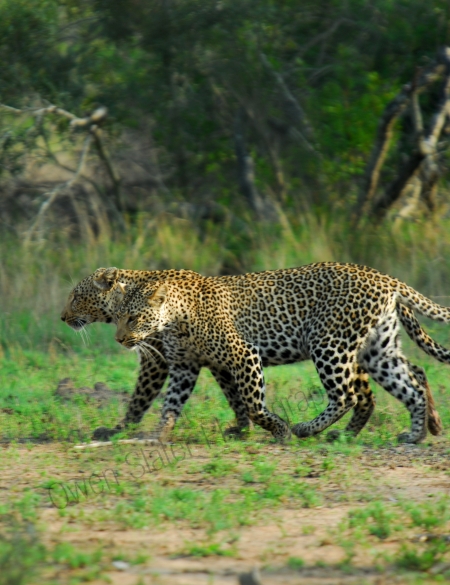
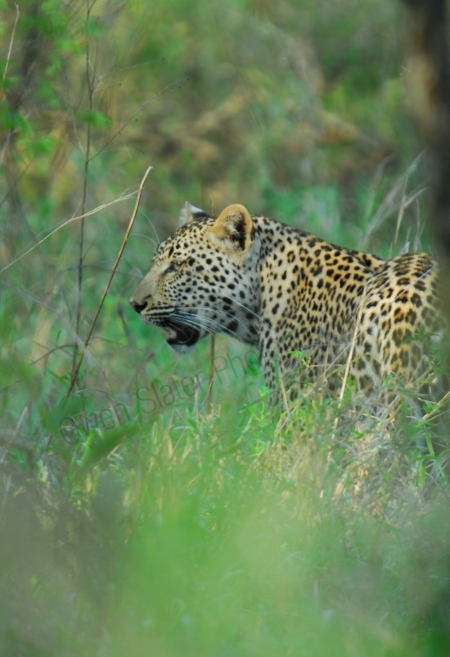 Shortly after both leopards crossed the road 20 feet in front of my car they slowly disappeared into the grass. This was one of the last photos I took before driving off to let them to find some breakfast. I think it was about this point that I finally took a breath and relaxed. Thankfully my malfunctioning camera managed to work properly for a few minutes to get a few great shots of these amazing cats but I was kicking myself for not getting the camera repaired prior to this trip. Regardless of all the shots I missed, this leopard encounter is something I will never forget.
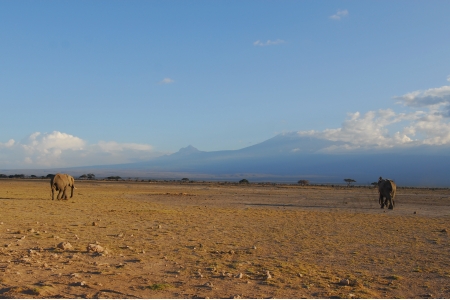 Amboseli is synonymous with elephants. And while the elephants my look the same to the casual observer, every elephant in Amboseli has a name and can be identified by the researchers studying them. The Jane Goodall of the African elephant world is Cynthia Moss. She has been studying the elephants of Amboseli since 1972 and formed the Amboseli Trust for Elephants (
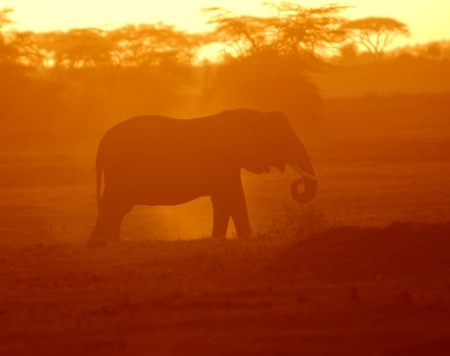 There isn’t much that is better than relaxing at the end of a long day and watching a beautiful sunset, unless of course you are in Africa, where the sunsets seem so much more intense. Add in a majestic elephant and this was the perfect ending to an awesome day of game viewing.


 Owen Slater Photography