Archive for November, 2012


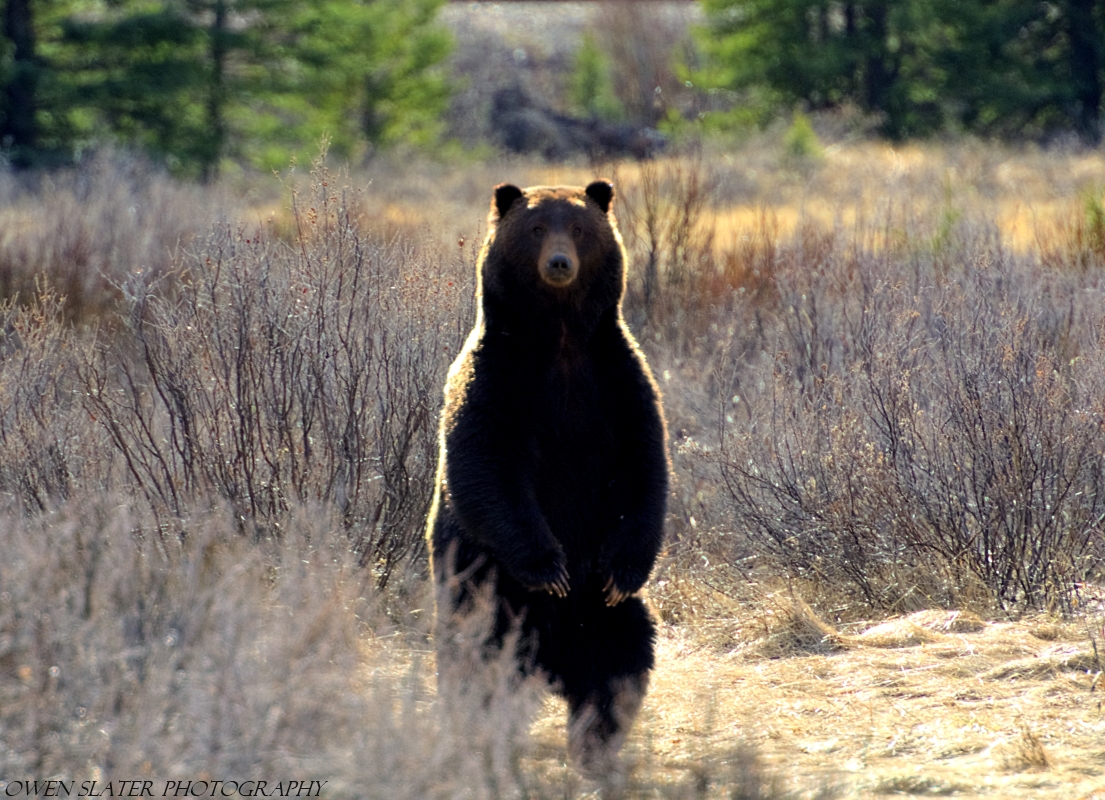
During dusk and dawn when wildlife are usually more active, I spend most of my time in the car since it serves as a natural blind that animals are less likely to react to. Obviously, this involves a lot of sitting so after several hours I need to stretch my legs. With some of the best scenery around, it is not hard to find somewhere to hike and take photographs.  On this particular day I loaded my gear into my backpack, made sure I had my bear spray and headed out with camera in hand. As I came around a clump of spruce trees I spotted some movement in the thickets about 200 feet away. I immediately retraced my steps back into the shadows of the trees to not be as visible and from there I was able to get a good enough look to figure out that it was a large grizzly coming in my general direction. It wasn’t until I had my bear spray in hand that I called out and stepped into the open to alert it to my presence. Only then did I notice an adult wolf was only a few feet behind the bear! Before I had time to take any photos, the wolf disappeared back into the thicket, while the bear stopped and went up on its hind legs to get a better look at me. Facing the bear, I slowly backed away. The bear went back down on all fours, turned to its right and ambled off while I retraced my steps back the way I came. I’m sure the wolf was watching everything from a distance making sure that both the bear and I continued out of the area.

In October, with the fall colours at their height,  I came across this seven month old wolf pup making its way along the banks of this river. Since I was on foot, I quickly hid behind a tree to not be spotted. Luckily the wind direction was in my favour as well.  Without knowing I was there, it stopped and appeared to look at its reflection in the turquoise waters, rooted around for some rodents and then I thought it would disappear into the thicket. However, it came around the corner and started trotting towards me. I crouched down on the ground and stopped taking photos to not give my position away, as the faint sound of the camera would have easily been picked up my the wolf. It proceeded to walk about 30 feet from me before it rounded another corner and went out of sight.

Herd of Moose

Continuing with the theme of unusual animal sightings, this one occurred earlier this year.  Unlike in Newfoundland, moose generally live very solitary lives in Alberta.  Prior to this day, the only time where I have seen more than two unrelated animals together was during the breeding season. So it was very surprising to be driving along a back country road and come across this scene! We immediately slammed on the brakes, grabbed our cameras and started taking photos. In total there were 11 moose in this one meadow, with 7 in this frame. There were two mothers with calves and several yearlings and two-year olds. With hunting season just over they were still a bit skittish, so we grabbed a few photos, got back into the car and continued on.

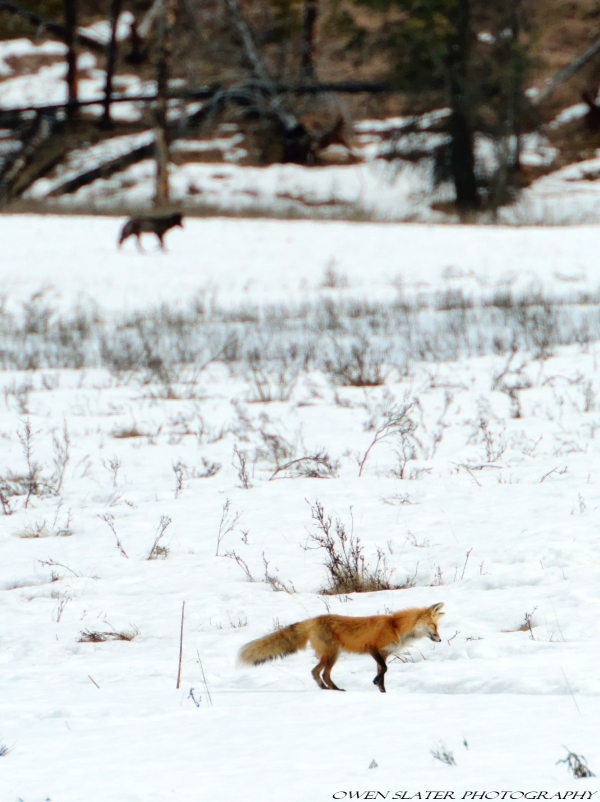
A wolf was hunting for rodents in the back of this meadow when a red fox nonchalantly trotted into the middle of the meadow right in front of the wolf. Since wolves are known to kill other carnivores if they come across them, I expected to see either the fox quickly run and hide or the wolf chase after and try to kill it. Instead they both just glanced at each other and then almost in unison, they resumed hunting. For several minutes they mimicked each others hunting stance, before the fox decided to move on and look for prey elsewhere.

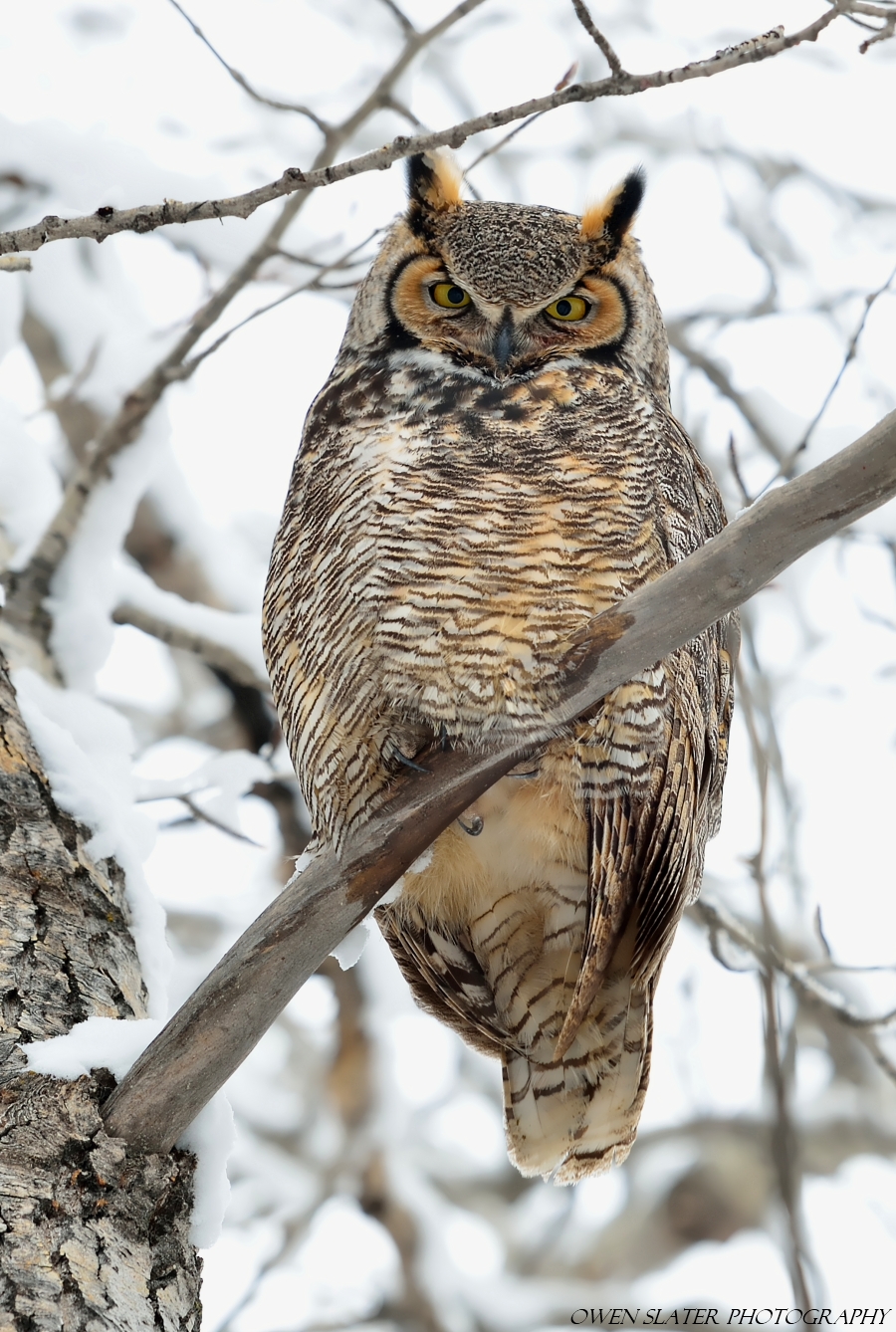
I often drive several hundred kilometers and spend countless hours outside trying to find wildlife to photograph. However, sometimes it’s much easier. This past week I  just had to look out my office window!  Sitting in a stand of aspen trees was this great horned owl. Not surprisingly the usual four squirrels that frequent the backyard were nowhere to be seen. I quickly grabbed my camera, took a few photographs and returned to the warmth of my office to watch the owl from a distance.

Please click on the image to view a much larger version.

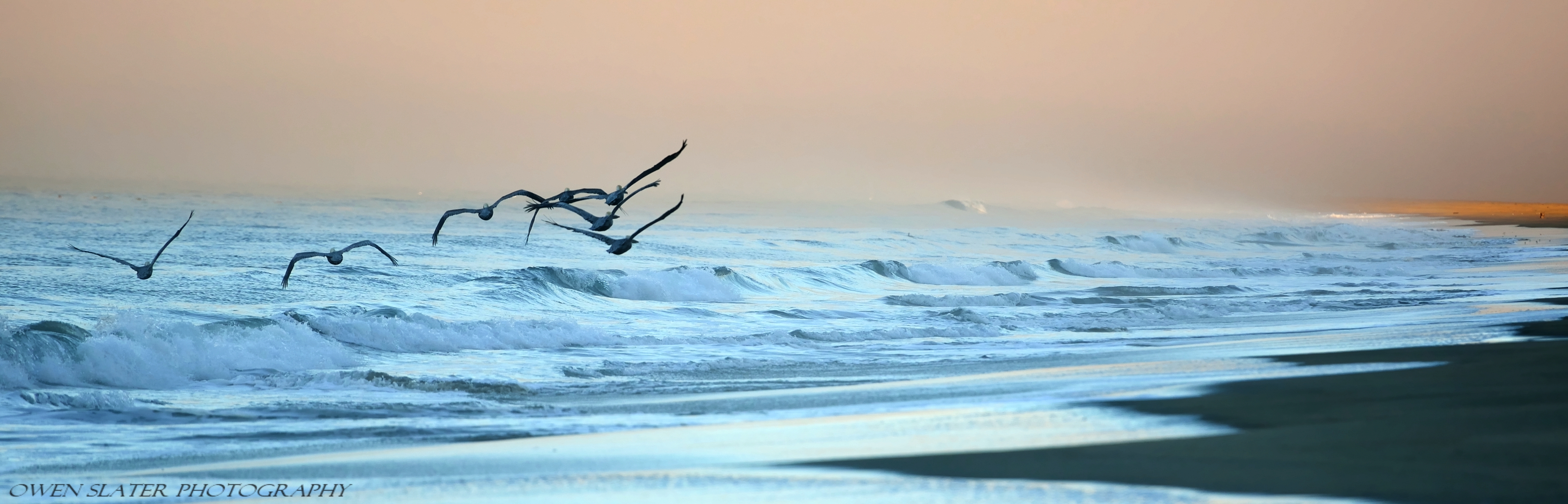
Similar to surfers, pelicans have figured out how to harness energy from waves. However, it is actually more closely related to what a pilot does during take off and landing than to surfing. Interestingly, it appears pelicans are one of only a few coastal birds to have figure this out.  By flying so close to the rolling wave, they are able to gain lift, speed and decreased wind resistance created by the air that gets trapped between the water surface and the underside of the wing. This air cushion essentially supports the bird’s weight just above the water’s surface. As the wave increases in height the pelican rises up parallel to the wave to maintain lift. Just prior to the wave breaking, the bird will then descend along the leading edge of the wave, gaining speed along the way much like a surfer does. By doing this they can greatly increase their flight speed without ever having to flap their wings.  The key for the pelican is to build up as much speed as possible before the wave breaks. Just as the wave starts to crash over itself the pelican resumes flying to get above the resulting air turbulence. As the next incoming wave moves into shore they reposition themselves along its leading edge and repeat the maneuver. In this way they can travel much longer distances much more quickly and with less effort than other birds. While pelicans and albatross were showing us how to use this effect well before we recognized its existence, it wasn’t until the Wright brothers came along that anyone used it. Even then, no one knew what it really was. Now the phenomenon is well described and in the aviation world it’s known as ground effect. Anyone that has flown in an airplane has felt this either at take off or landing. In large planes it is most noticeable just before landing, when the plane seems to hover just above the ground and actually gain speed just prior to touchdown. In small planes it is more noticeable at take-off, when the pilot maintains the airplane just off the ground to help increase the ground speed before ascent.  Next time you fly watch for this effect and you will surely notice it if you haven’t already.

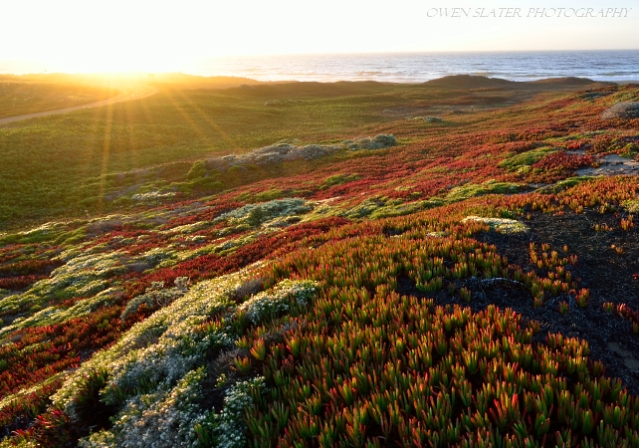
Enough of the winter photographs from Alberta for this week. Back in California I took this photo near the lighthouse at Point Reyes. The dominant plant in the landscape is known as ice plant (Carpobrotus edulis), which was originally introduced from South Africa to prevent soil and sand erosion. However, the plant has become invasive, strangling out other native species. Making matters worse, since the plant has a shallow root system when it rains the leaves engorge with water, get too heavy and actually cause entire slopes to collapse when the roots can no longer support the weight of the plant. Efforts are ongoing to remove it from much of the coastline to restore the landscape to its original form. Complicating efforts is its appeal with local gardeners for the bright red colour that the leaves turn in the fall.
PS. Too all the Boardwalk Empire fans out there…sorry that your favourite character was killed off in the TV series. However, thanks for checking out my site!

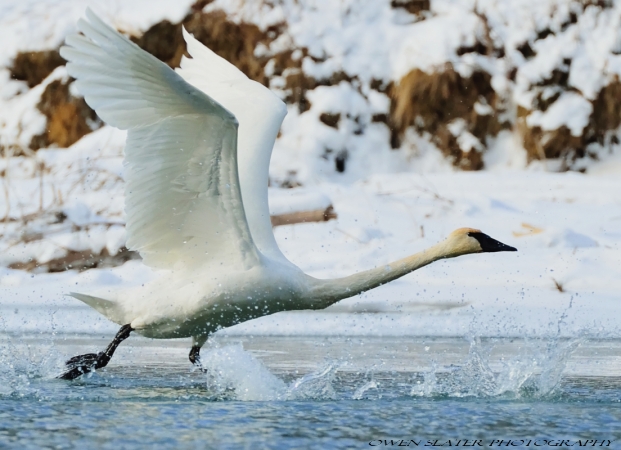
Back in Alberta last weekend, a trumpeter swan propels itself up and out of a narrow section of the Bow river that hadn’t frozen over yet.

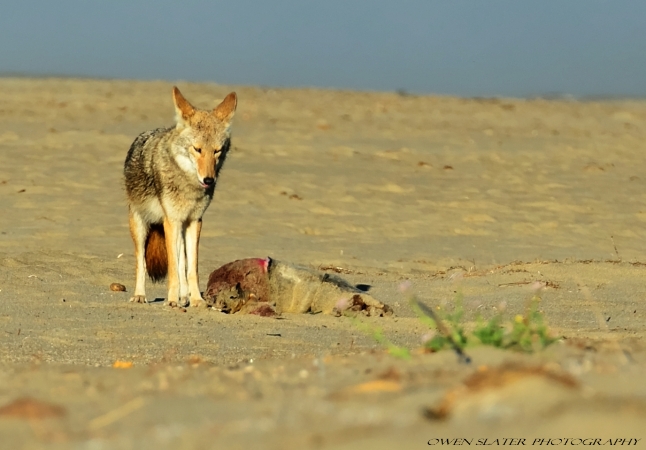
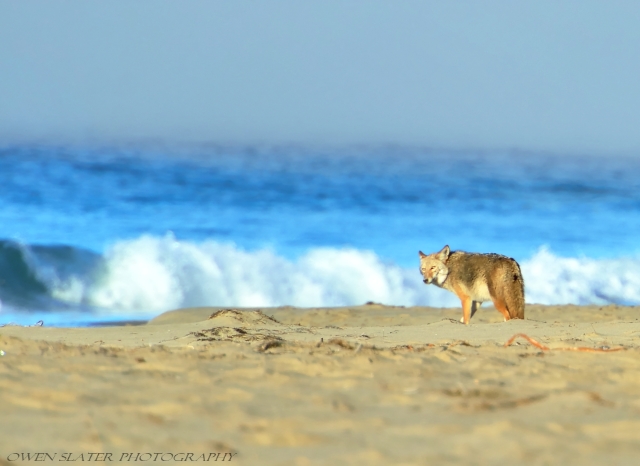
The beach combing coyote used its strong sense of smell to locate breakfast along the shores of Point Reyes. It paused briefly over the body of the deceased harbor seal pup before feasting on the left overs. Once full, it wandered off leaving the what remained for the turkey vultures, ravens and crows.

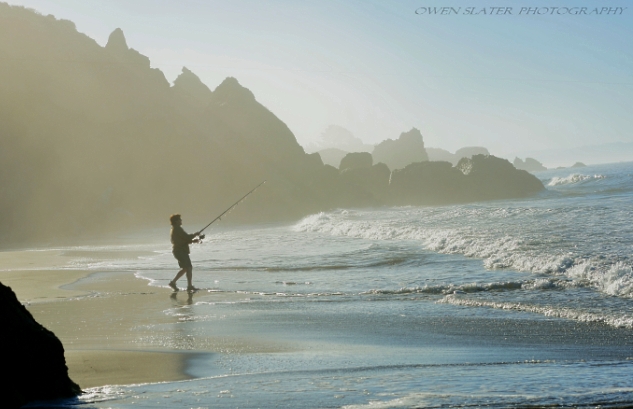
As the fog lifts over the Pacific ocean, a fisherman casts into the waters off the coast of Northern California. Shortly afterwards he reeled in what he initially thought was a big fish, only to find a tangled mess of dead seaweed on the end of his hook.


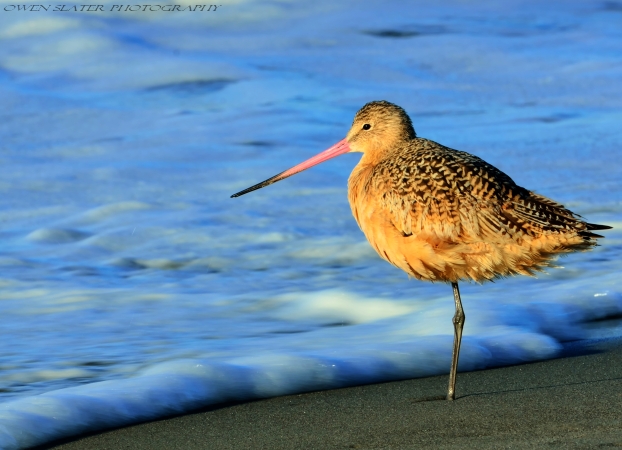
Marbled godwits are common along the coast of California. This one rested on one leg on the shores of Stinson beach as the sun rose above the hills. Many areas along the coast have implemented strict laws regarding where dogs can be walked or let off leash in an effort to give the native wildlife a chance to rest, nest and feed without being disturbed by the curious canines.

Beach combing coyote


With over 25 centimeters of snow to fall within the next day in Calgary, I find myself thinking back to about a week ago when I was on a warm beach in California! On this particular morning, I watched a beautiful sunrise before coming across a lone coyote feeding on the carcass of a harbor seal pup. After eating its fill it walked about 100 feet away from me combing the beach for other washed up delicacies.


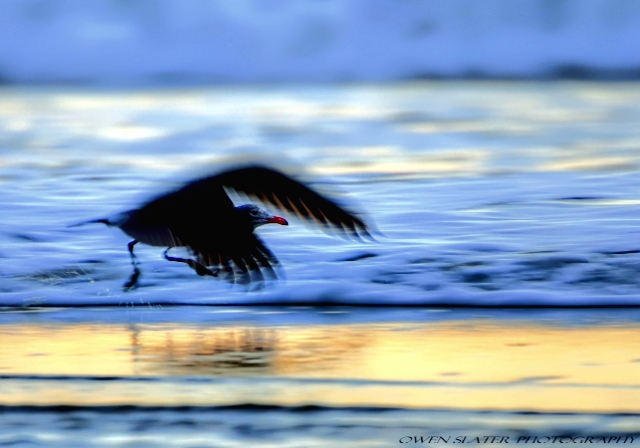
 On a recent trip to California I went on a short road trip up to Point Reyes. Along the way I stopped at Stinson beach. Just as the sun was setting I found some Heermann’s gulls to photograph. I have been trying for quitesome time to get a good photo of a bird in flight with the wings in motion and the head in focus.  Add in the droplets of water being kicked off the bird’s feet as it springs into the air, the sunset reflecting off of the water and the motion of the incoming wave and I’m thrilled with the result!