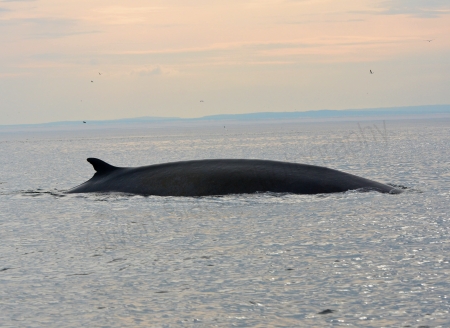
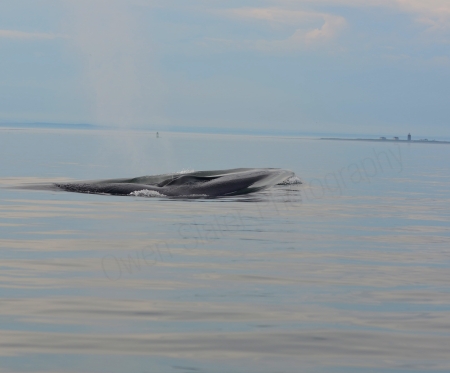
With no other boats around and a quiet, calm morning on the water we were able to slowly drift in the current beside this fin whale while she swam along. I can still clearly remember the sound of her breaking through the water’s surface and forcibly exhaling before taking another breath and slipping back beneath the water.
Category: North American Wildlife

This magnificent female fin whale has been returning to the St. Lawrence every year since 1989! While it’s hard to appreciate the scale in this photo, this whale is huge. Fin whales are second to only blue whales in terms of length (up to 27 metres or close to 90 feet) and weight (45,000-64,000 kg or 50-70 tons). You would think with this much mass that they would be very slow swimmers, but they are actually one of the speediest, reaching speeds of up to 37 km/hr or about 20 knots. This one was taking a bit of a break from feeding on krill and was just lounging around when we visited it.

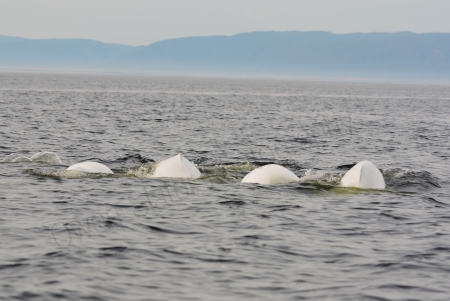
While not a great photo of these belugas, it was still a very neat experience. In addition to the four adults, two infants were present as well. This sub-population is geographically isolated from the populations in the north and has been struggling to survive of late. There are only about 1000 individuals in and around the estuary and despite efforts to protect them over the past decade their numbers have not increased, which is not surprising given that they have some of the highest levels of pollutants (mercury, PCBs, etc.) recorded in marine mammals. Hopefully with the creation of the marine national park and additional measures (limiting pollutants from factories, reducing the amount of boat traffic in critical areas of their habitat) this population will start to rebound.
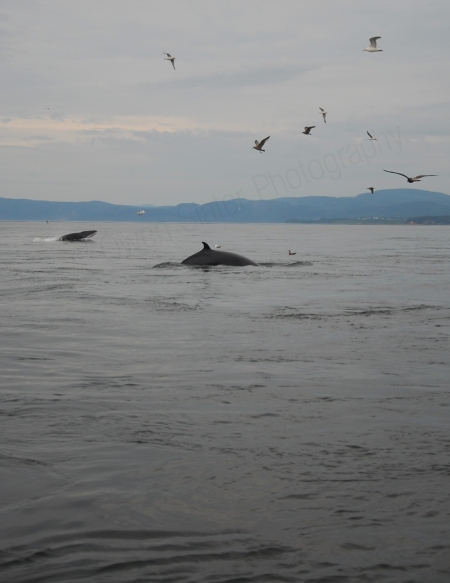
Apparently the St. Lawrence estuary is still a relatively unknown location for whale watching at this time of year (though they get about 1.1 million visitors per year), which is surprising given how numerous the whales are during August through September. A total of 13 different whale species can be seen in the estuary. They come for the abundant food created by the nutrient rich, cold, oxygen saturated waters. In under two hours we spotted minke, fin, and beluga whales as well as grey seal and harbor porpoise. With the early morning start (7am) we were the only boat around, the waters were calm and the whales were actively feeding. This photo, as with many, was a bit of good luck. With the wide angle lens on the camera focused on the closet whale, the one in the background burst through the water just as the photo was taken and captured the head and white chin of these whales.

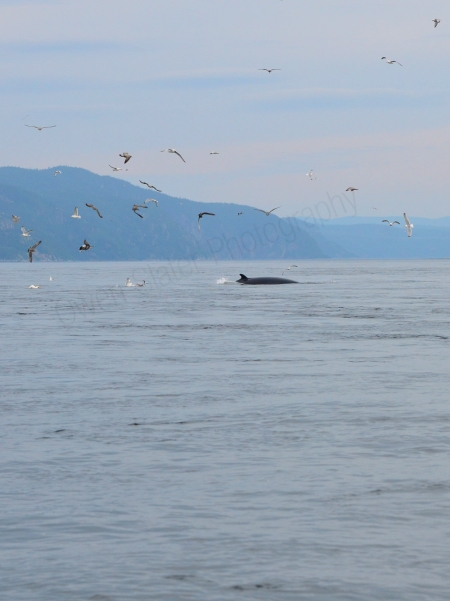
The best way of predicting where the minke whales would surface was by watching the herring gulls. The gulls, initially circling above, would spot concentrations of krill, land and start feeding just before a whale would explode through the water surface and gulp down as many of the invertebrates as they could. The gulls would quickly have to get out of the way or risk being collateral damage from the feeding whales!

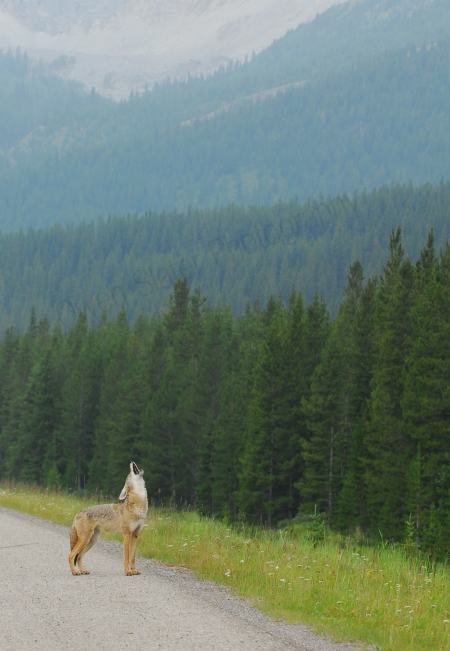
Most wildlife I see outside the national parks almost always runs off into the forest to get a safe distance away from people. Coyotes are no exception. They are incredibly smart, and so adaptive that some have learned to live exclusively in major cities preying on urban wildlife (and the occasional cat or dog). Efforts to rid them from the country side have failed and in fact it usually results in the coyotes adapting to the point that their numbers increase. This lone coyote was sleeping on the shoulder of the road. I slowly approached then stopped my car and turned off the engine. The coyote continued to sit on the road but eventually got up, stretched and yawned and then proceeded to howl. It did this several times, but without getting a response back, it slowly wandered off in search of some unsuspecting ground squirrels.

Last year was a very wet summer in southern Alberta and the result was a lot more insects. I have been trying for years to get photos of dragonflies in flight but they are so quick and their flight so erratic that I never managed to get a photo I was happy with. After going down to the shore of a pond to photograph a moose I noticed what seemed like hundreds of dragonflies flying around. Each dragonfly seemed to have a defined aerial territory that it would defend against if another dragonfly entered it’s airspace. After chasing off the invaders they would return to the same general area to hover and wait. After watching the same dragonfly for some time I figured out where along the shore I should sit to have the best chance of photographing it while it was hovering. One afternoon and hundreds of photographs later I managed to get a few I liked. This photo was taken with the pond and clouds reflecting in the water behind the dragonfly. As for the type of dragonfly, it is either a paddle-tailed or lancet-tipped darner. Apparently you can ID them based on the tail anatomy but unless you find a dead one it’s pretty hard identifying them in flight even with still photographs.

I took this photo last summer in Banff National Park along the 1A highway. I’m not sure what the flower is but the bumble bee certainly liked it. It went from flower to flower for well over 10 minutes.

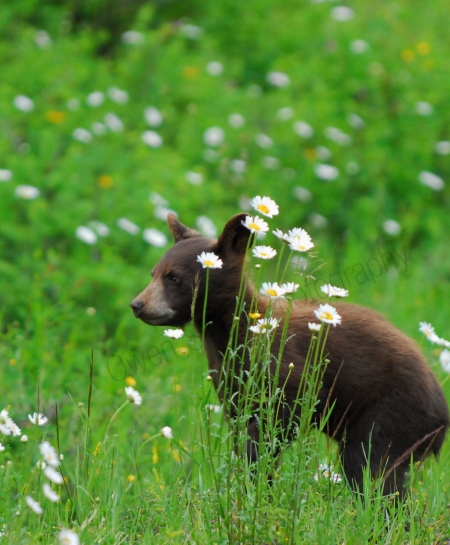
One of my favorite photos from the trip. This little black bear was the last to cross the road after it’s mother and sibling had already made it across. Instead of running into the forest, as soon as it crossed the road it stopped behind the daisies until the mother came back, licked it’s face, made sure that I wasn’t too close and then they wandered off to eat.

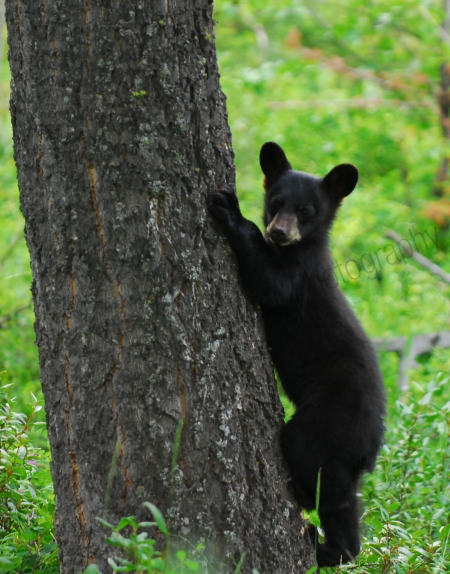
This is the sibling of the cub in the first photo. The mother kept them in the same area near the Waterton town site for several days so I was able to follow them from a safe distance for some time to get these photos. At one point this cub chased a squirrel up and around a tree.

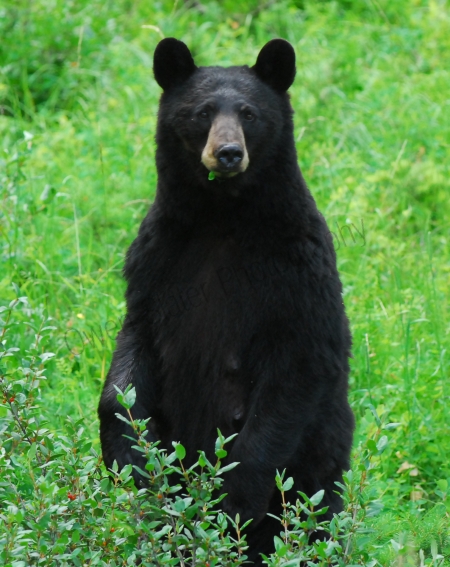
With the mother already across the road she went up on her back legs to check to see that her cubs were following. This black bear has her territory surrounding the Waterton townsite and over the course of two days I saw her wandering past the information centre, Prince of Whales hotel and Linnet Lake and she never once approached people despite numerous people getting too close to her on foot.

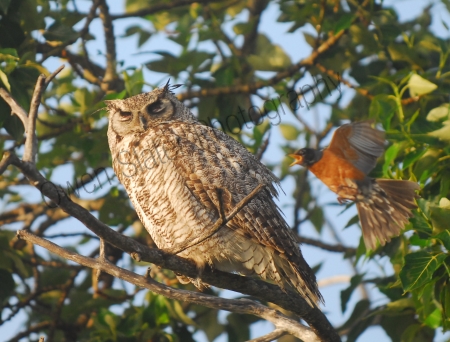
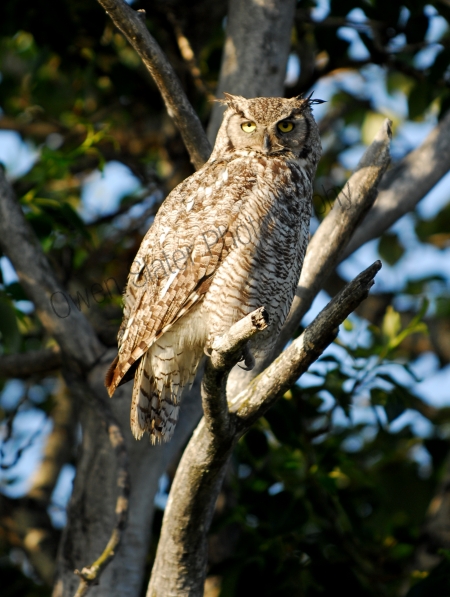
Another one of my favorites! This Great Horned owl was sitting in a tree only about 40 feet from the main gate early in the morning. Two of her recently fledged offspring flew off when I arrived, but this one stayed. I photographed her for almost an hour, and during that time various song birds would see her and try to disturb her enough to fly off. This robin was the most persistent and made several fly-by attempts to get the owl to leave but the owl just closed her eyes during the fly-bys. The robin eventually flew off and even I left before the owl as the sun got too high in the sky and started washing out all the colours.