Category: Birds


Please click on the image to view a much larger version.

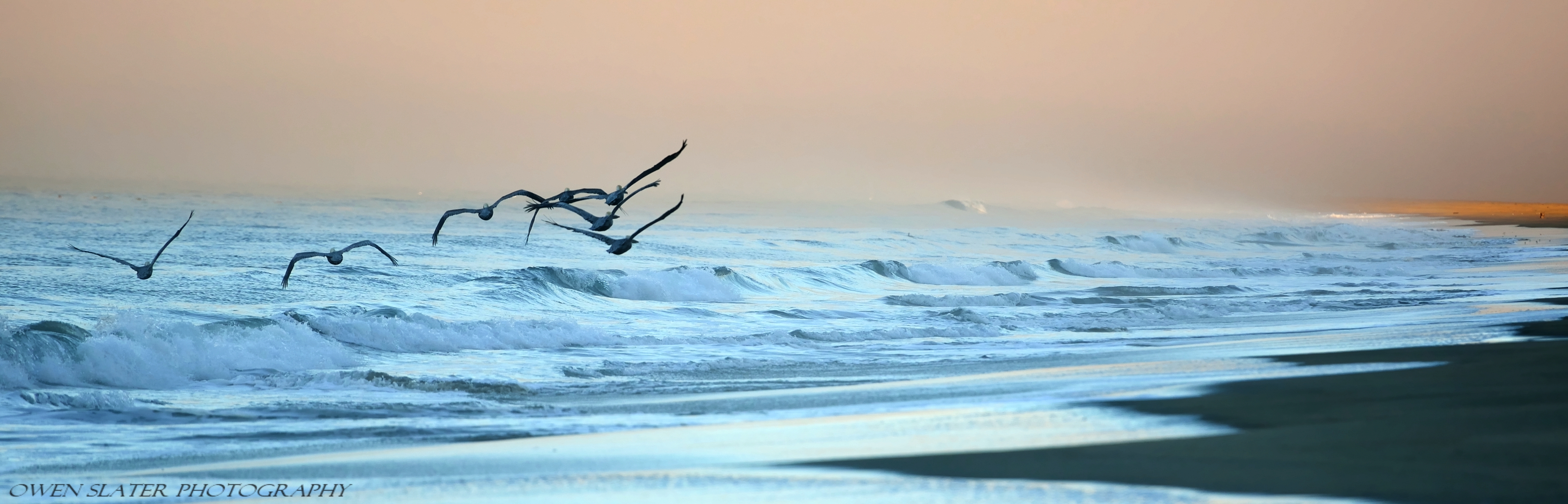
Similar to surfers, pelicans have figured out how to harness energy from waves. However, it is actually more closely related to what a pilot does during take off and landing than to surfing. Interestingly, it appears pelicans are one of only a few coastal birds to have figure this out.  By flying so close to the rolling wave, they are able to gain lift, speed and decreased wind resistance created by the air that gets trapped between the water surface and the underside of the wing. This air cushion essentially supports the bird’s weight just above the water’s surface. As the wave increases in height the pelican rises up parallel to the wave to maintain lift. Just prior to the wave breaking, the bird will then descend along the leading edge of the wave, gaining speed along the way much like a surfer does. By doing this they can greatly increase their flight speed without ever having to flap their wings.  The key for the pelican is to build up as much speed as possible before the wave breaks. Just as the wave starts to crash over itself the pelican resumes flying to get above the resulting air turbulence. As the next incoming wave moves into shore they reposition themselves along its leading edge and repeat the maneuver. In this way they can travel much longer distances much more quickly and with less effort than other birds. While pelicans and albatross were showing us how to use this effect well before we recognized its existence, it wasn’t until the Wright brothers came along that anyone used it. Even then, no one knew what it really was. Now the phenomenon is well described and in the aviation world it’s known as ground effect. Anyone that has flown in an airplane has felt this either at take off or landing. In large planes it is most noticeable just before landing, when the plane seems to hover just above the ground and actually gain speed just prior to touchdown. In small planes it is more noticeable at take-off, when the pilot maintains the airplane just off the ground to help increase the ground speed before ascent.  Next time you fly watch for this effect and you will surely notice it if you haven’t already.
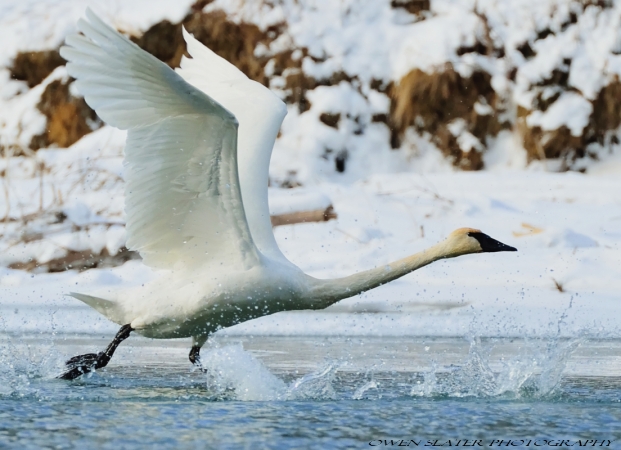
Back in Alberta last weekend, a trumpeter swan propels itself up and out of a narrow section of the Bow river that hadn’t frozen over yet.


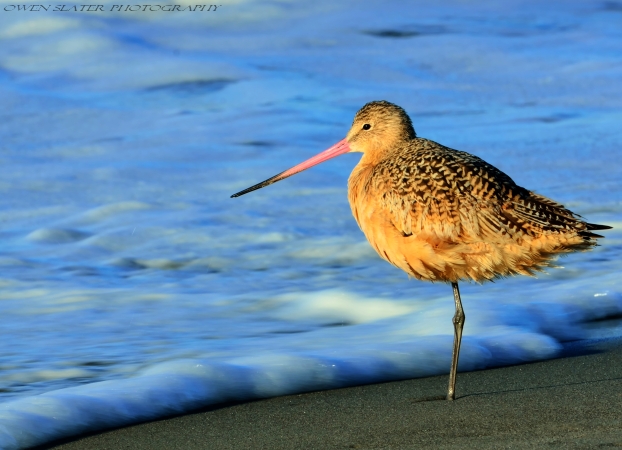
Marbled godwits are common along the coast of California. This one rested on one leg on the shores of Stinson beach as the sun rose above the hills. Many areas along the coast have implemented strict laws regarding where dogs can be walked or let off leash in an effort to give the native wildlife a chance to rest, nest and feed without being disturbed by the curious canines.


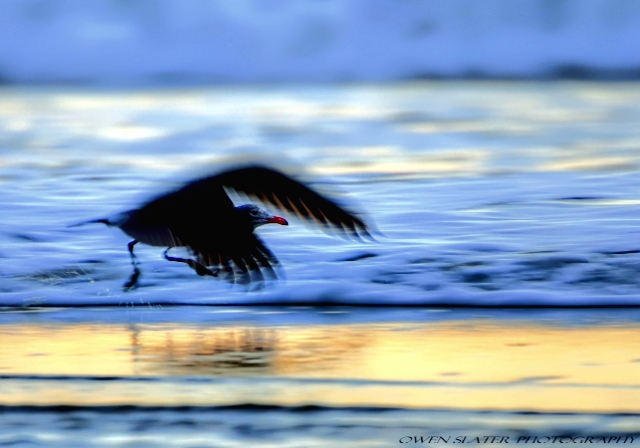
 On a recent trip to California I went on a short road trip up to Point Reyes. Along the way I stopped at Stinson beach. Just as the sun was setting I found some Heermann’s gulls to photograph. I have been trying for quitesome time to get a good photo of a bird in flight with the wings in motion and the head in focus.  Add in the droplets of water being kicked off the bird’s feet as it springs into the air, the sunset reflecting off of the water and the motion of the incoming wave and I’m thrilled with the result!

I have watched this nest periodically over the summer, hoping to catch the fledglings as they take to the air. I lucked out, as I saw each one of them practice their newly discovered flying abilities.  This particular bird  did a low fly by over the heads of the two others, who ducked to get out of the way as they watched it soar past.

A red tail hawk tries to dry out from another prolonged downpour in Banff National Park this spring. With record snowfalls over the winter and several days of rain this spring, many of the low lying valleys are or were underwater and a few roads were temporarily closed due to mud and rock slides.

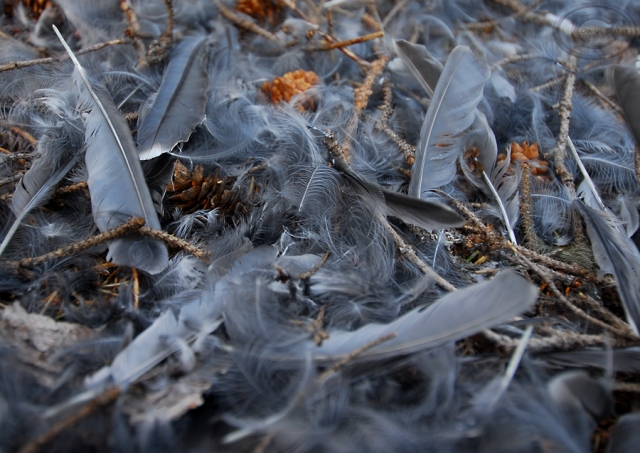
This clump of feathers appeared almost like a ground nest, but in fact the feathers are all that remain of a grey jay that was likely consumed by a fisher or a pine marten.

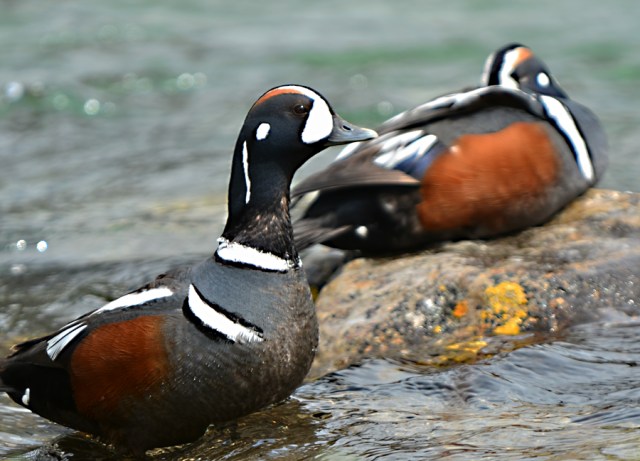
These two males took a break from feeding along the Bow river in Banff National Park.  Harlequin numbers have been down over the past few years and this year an effort is underway to try and catch as many as possible for banding and placement of radio-transmitters to help researchers figure out why.

This photo is from last year as well. The cliff swallows routinely nest under the bridge just before the main gate and whenever I heavy truck goes over the bridge they on mass, fly out from underneath. For a few minutes they circle from above to make sure it is safe to return to their nests so I set up on the bridge with my wide angle lens on a bright sunny morning and didn’t have to wait too long before a truck went past and I was able to catch them in flight with the mountain range in the background.

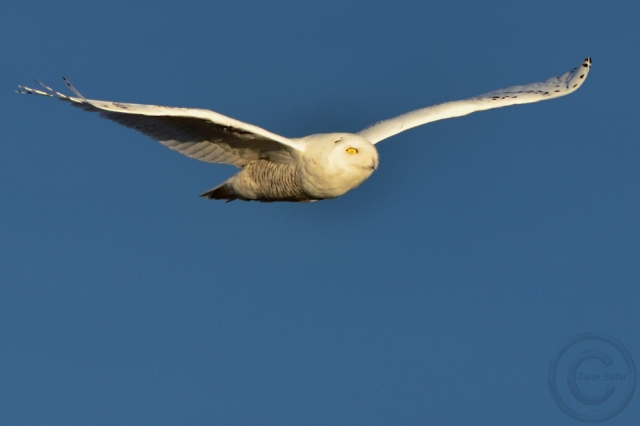
It was a great year for snowy owl sightings in and around Calgary. A bumper crop of lemmings in the north last year resulted in a population explosion of snowies that were seen as far south as Texas. One even made it over to Hawaii where it was promptly shot! I photographed this one several times throughout the winter near the town of Balzac.

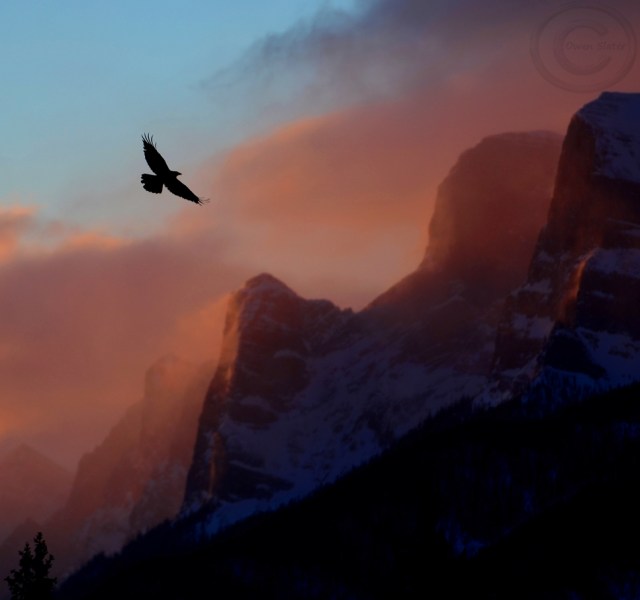
I took this photo back in January in Banff National Park. I was photographing the light hitting the mountains when I spotted this raven off in the distance. As luck would have it, it was just high enough in the ski with just enough light to freeze it mid flight as it flew across the frame. The mountain in the background is Mount Rundle.

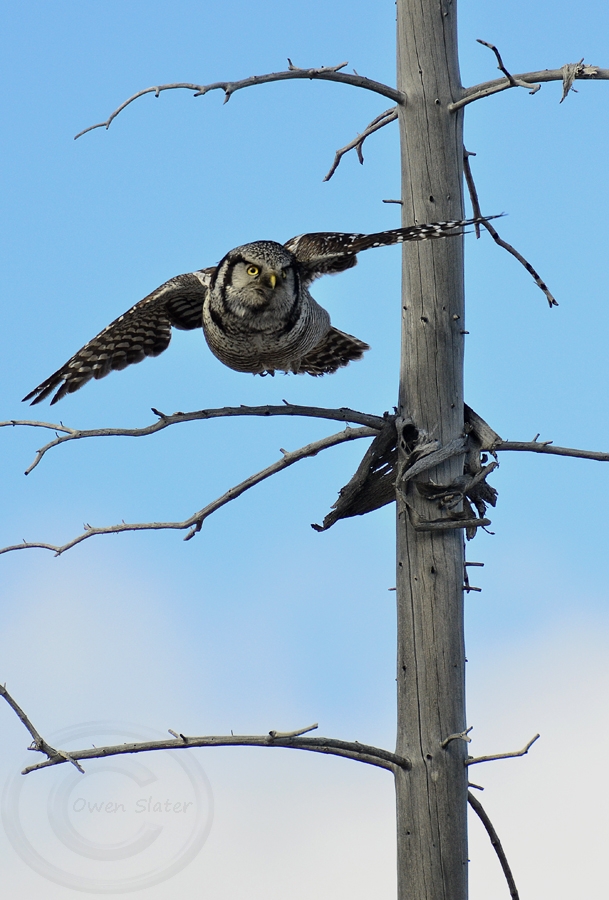
Just north of the little community of Burwash Landing is an area known for Northern hawk owls. True to it’s reputation, I spotted at least five different owls within a kilometer. This particular one was very tolerant of me and allowed me to slowly approach without being disturbed. Once I was in a good spot for photos I sat and waited for when it took off. Obviously, birds are much more likely to fly away from a person if they feel at all threatened so keeping far enough away to not disturb them is key. Also working in my favor on this day was that another hawk owl flew behind me and landed in a nearby tree. The first owl started calling and repositioned itself on the branch facing me. I made sure I had it positioned in the frame with a high shutter speed and within seconds the owl launched off the perch and flew directly overhead.

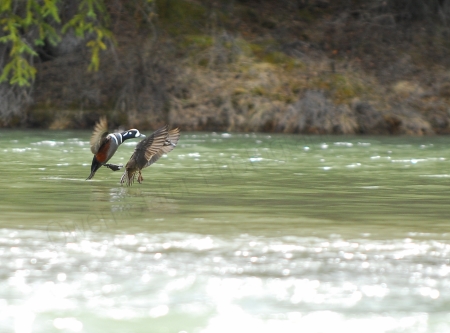
This spring I saw numerous Harlequin ducks which are one of my favourites. These birds fly over the Rocky Mountains each spring to spend a few months in Alberta surfing the fast flowing waters for food and to nest before migrating back to the coast in the fall to spend the winter in the ocean.

DSC_1194

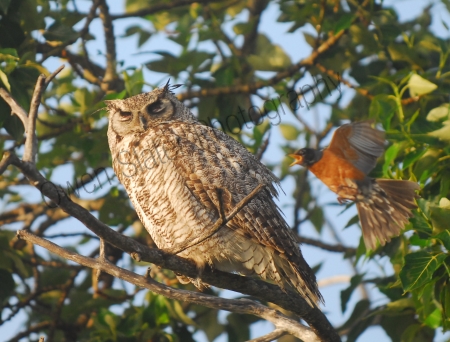
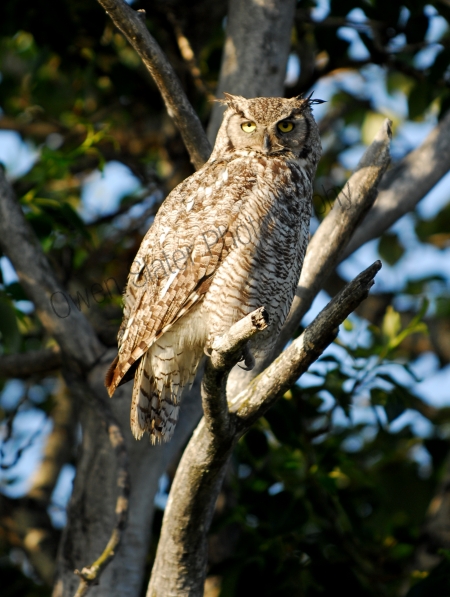
Another one of my favorites!  This Great Horned owl was sitting in a tree only about 40 feet from the main gate early in the morning.  Two of her recently fledged offspring flew off when I arrived, but this one stayed.  I photographed her for almost an hour, and during that time various song birds would see her and try to disturb her enough to fly off.  This robin was the most persistent and made several fly-by attempts to get the owl to leave but the owl just closed her eyes during the fly-bys.  The robin eventually flew off and even I left before the owl as the sun got too high in the sky and started washing out all the colours.

DSC_1219